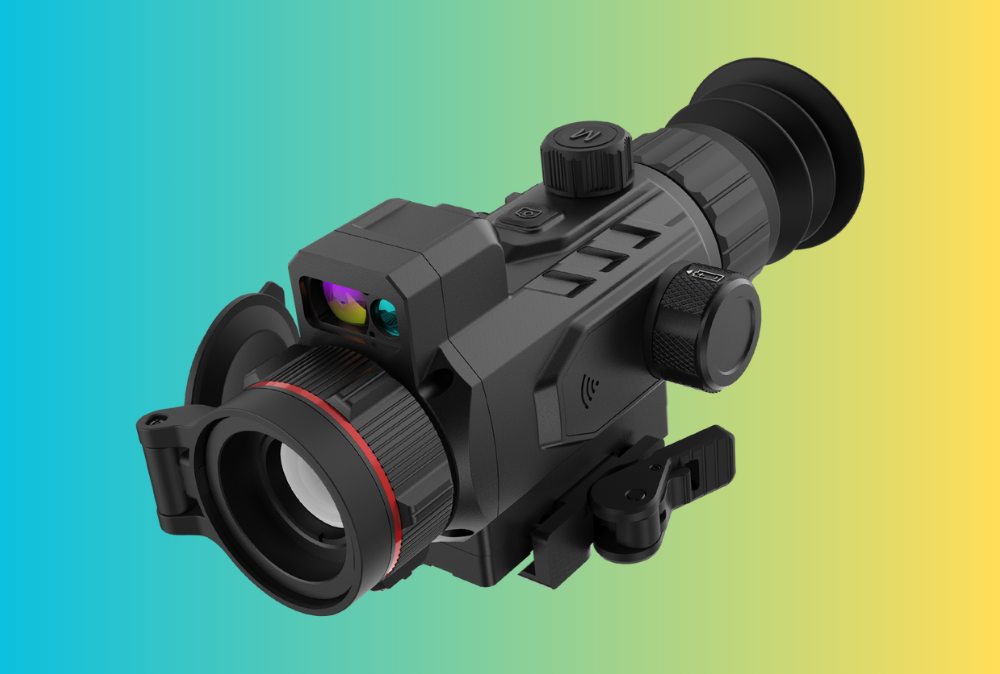
Every brand wants to own the phrase best thermal scope for the money. It shows up in Google searches, YouTube video titles, and comparison blogs. Buyers type it when they are ready to purchase, and reviewers use it when they crown a “value winner.” For a B2B product team, that phrase is not just marketing fluff; it is a design brief. It quietly defines your minimum acceptable performance, your feature set, and your margin structure for entry-level SKUs.
Table of Contents
ToggleThis article looks at how to turn “best thermal scope for the money” into a set of practical spec templates. Instead of chasing whatever a reviewer likes this season, you create a stable baseline: clear technical floors, reasonable feature ceilings, and a price band that still supports the rest of your portfolio.
Understanding the “Best for the Money” Promise
When consumers search for the best thermal scope for the money, they are usually not asking for the cheapest option. They are asking for the point on the curve where performance stops feeling compromised and starts feeling “good enough” for serious use. That is exactly where many mid-range thermal riflescopes live: resolutions around 384×288, NETD sensitivity in the <25–40 mK range, and detection ranges that are genuinely useful in the field.
Review and buying guides increasingly define entry and mid-range tiers by both price and capabilities. A typical structure today might describe “value” scopes as those under a certain price threshold (for example, under $3,000) that still offer a 384-class sensor, solid optics, and core comfort features like decent battery life and basic recording. That is how your buyers are being trained to think even before they see your brand.
From a brand standpoint, this promise has two sides. On one side, it is a huge opportunity: if your entry-level SKU is perceived as the best thermal scope for the money in its class, you become the default recommendation. On the other side, it is a risk: if you under-spec or cut the wrong corners, you create a product that gets attention because of its price but damages trust because of its performance. The goal is to capture the upside without stepping into the trap.
Market Relevance and Where Entry-Level SKUs Sit
Entry-level thermal scopes today are no longer toy-like gadgets. They are credible tools that many hunters and professional users rely on. Typical buyers in this segment include:
new thermal users who are upgrading from lights or night vision and want a scope that “just works” without a deep learning curve;
ranchers, outfitters, and pest-control operators who need several scopes for employees or rental fleets and cannot equip every rifle with a flagship;
budget-conscious enthusiasts who can justify a mid-range thermal once, but not a premium 640 unit.
Buying guides now routinely describe a mid-tier band as the “sweet spot” where performance and cost balance well: resolutions of 384×288 or 640×512, first serious features, and better battery systems compared with entry units. For your brand, your entry-level “best for the money” SKU usually sits at the bottom of that sweet spot. It must be affordable enough to attract people up from true budget devices, but strong enough that they do not feel the need to upgrade immediately.
This is why defining spec templates matters. If you leave every entry-level project to be negotiated between sales and purchasing, you tend to get a race to the bottom: slightly cheaper sensors, slightly smaller lenses, slightly shorter warranty. If you start with a template anchored around the best thermal scope for the money concept, you set a floor that sales cannot move below without explicitly debating the brand consequences.
Technical Insights and Key Specifications
Building a Performance Floor Around 384×288
Market reality today is that a modern 384×288 sensor with a 12–17 μm pixel pitch and NETD in the <25–40 mK range is the workhorse of the value segment. You see this pattern in many popular scopes and monoculars: Pulsar’s Thermion 2 XQ50 PRO, the Talion XQ38, various AGM and DNT models, and others all cluster around 384×288 resolution paired with good optics and reasonable NETD.
In practice, this combination delivers enough detail for most hunters to detect and recognize targets at realistic distances. Reviews of 384×288 scopes often emphasize that image quality feels “clear” and “high quality” for typical night hunting scenarios when coupled with a decent 35–50 mm germanium lens. That is an important clue: buyers at this level are not comparing your entry SKU to no thermal at all; they are comparing it to what they see in other brands’ mid-range devices.
A robust performance floor for a best thermal scope for the money template therefore usually includes:
a 384×288 sensor at 12 or 17 μm pixel pitch;
NETD that is conservative and honest; ideally <40 mK and better where possible;
a lens in the 30–40 mm range for versatile field of view and detection;
a frame rate of 50–60 Hz so that panning and tracking feel smooth.
You can certainly design value products below this floor, but then you are no longer in the “best for the money” segment. You are in the “cheapest that still works” segment, and the brand story changes accordingly.
Feature Expectations at the Value Tier
Entry-level buyers in 2025 are arriving with expectations shaped by smartphones and content platforms. For many of them, “best thermal scope for the money” implicitly includes recording and basic connectivity, because competitive models at this price point already offer these features. Products like ATN’s ThOR 4 384 series, for example, combine 384×288 sensors with internal recording, Wi-Fi streaming, ballistic calculators and recoil-activated video in a package aimed at the value-conscious buyer.
You do not have to copy every feature, but your spec template should treat certain items as standard, not premium:
internal video recording at a resolution that matches or slightly exceeds the display;
a reasonably high-resolution AMOLED or OLED microdisplay so the thermal image does not feel “wasted”;
simple, stable Wi-Fi or app connectivity for those who want it, even if they are a minority;
a battery system that can realistically support a night’s use, whether via removable packs or well-designed internals.
At the same time, you should be careful not to over-feature the entry tier. If you add every flagship capability, you will either hurt margin or make your mid-range and premium scopes hard to differentiate. A good template defines which features are non-negotiable, which are optional, and which should be reserved for higher tiers.
Spec Templates for Entry-Level SKUs
To make all of this more concrete, it helps to think in terms of a few archetypal spec templates. The table below sketches three patterns you can use when defining “best thermal scope for the money” SKUs, based loosely on what current market offerings already show as credible in this band.
| Template Name | Sensor & Optics | Detection & FOV (typical) | Feature Emphasis | Target Role |
|---|---|---|---|---|
| Practical Baseline | 384×288, 17 μm, 25–35 mm F1.0 lens | ~1,200–1,500 m detection, wide-to-mid FOV | Simple recording, basic Wi-Fi, solid battery | First thermal, fleet / ranch tool |
| Balanced Bestseller | 384×288, 12–17 μm, 35 mm F1.0 lens | ~1,500–1,900 m detection, mid FOV | Better display, PiP, user modes, external battery | Main “best for the money” SKU |
| Feature-Rich Value Flag | 384×288, 12 μm, 35–40 mm lens | ~1,800–2,000 m detection, mid-narrow FOV | Strong recording suite, app integration, picture profiles | Bridge between value and premium lines |
The Practical Baseline is your anchor. If you cannot hit this template at a given price point with honest specs and a warranty you can stand behind, you probably should not call the SKU best thermal scope for the money. The Balanced Bestseller is often where you will win most reviews and word-of-mouth. The Feature-Rich Value Flag is more specialized but can help you cover the upper range of value buyers who do not quite step into 640 resolution.
You can tune each template to your brand’s strategy, but having them on paper gives product managers and sales teams a common language. It also lets you use the phrase “best thermal scope for the money” consistently in internal discussions: you are not just reacting to what bloggers say; you are shaping the category.
Integration and OEM/ODM Considerations
When these scopes are sold through OEM or ODM channels, the spec template becomes even more valuable. Your partners may rebrand the hardware, but they still rely on you for the architecture: sensor selection, optics, power system, firmware, and mechanical design.
A well-designed “best for the money” platform can serve multiple labels as long as you keep a stable core. If your entry-level OEM chassis shares its main components with your higher-end devices—same sensor family, similar housing, common software base—you simplify your own manufacturing and your partners’ training and support. That is why many brands build families where a 384 microbolometer sits in different housings or lens configurations to cover both rifle scopes and monoculars.
From a system integration viewpoint, you also want your value-tier scopes to behave like members of a larger ecosystem. Menu logic, reticles, and streaming protocols should align with your more advanced Thermal Rifle Scopes so that documentation and firmware tools can be reused. When you later introduce higher-resolution or feature-rich variants, partners should feel that they are stepping up within the same family, not learning a new product altogether.
This is where it can be helpful to frame your entry platform within broader Thermal Imaging Modules or solutions documentation. If the same core appears in handhelds, clip-ons, and dedicated scopes, integrators understand that they are buying into an architecture rather than a one-off device. For customers who want deeper cooperation, you can then position a formal OEM/ODM Partner Program as the structure through which they influence future spec templates, including what “best for the money” means in their own markets.
Cost, Compliance, and Lifecycle ROI
From a finance perspective, the temptation with an entry-level SKU is always to shave cost until the price tag looks irresistible. The danger is that you silently convert “best thermal scope for the money” into “cheapest thermal scope we could build,” and those are not the same thing.
If you look at current comparison guides, you will see that the most credible “best for the money” picks are rarely the absolute cheapest scopes on a list. Instead, they are models that hit a mid-range price band and over-deliver on image stability, usability, and reliability.That is the point to aim for: a price that fits the value category, but a spec sheet and field experience that feel slightly “too good” for the money.
To get there, your spec template needs to include both technical and financial guardrails. On the technical side, you define minimum resolution, NETD, lens quality, and feature set, and you resist relaxing those just to hit a lower cost target. On the financial side, you define target gross margin and expected support cost. A cheaper design that adds five points to your RMA rate or doubles call volume can easily destroy the small margin you gained at the factory gate.
Compliance and documentation belong to this ROI picture as well. Entry-level scopes are often the first product users see from your brand, and they may be shipped into a wider range of markets than high-end units. If EMC, safety, and materials compliance are weak, you risk customs delays and regulatory friction that erase any advantage from a low bill of materials. Having the same disciplined certification approach on your value tier that you have on your premium products is a quiet but powerful brand signal.
Over the full lifecycle, the most profitable “best thermal scope for the money” is usually the one that combines a stable BOM, conservative but attractive performance, and predictable support costs. It does not try to win every spec race; instead, it wins the race to be the product dealers recommend when a customer says, “I want something good, but I don’t want to overspend.”
Partnering and Next Steps
For many brands, the next move is not to launch yet another unspecific “budget thermal,” but to sit down and define, explicitly, what best thermal scope for the money will mean for them for the next three to five years. That conversation should include product management, engineering, sales, and support.
Engineering can propose a baseline architecture—sensor, lens family, power system, housing—that can support both entry and mid-range devices. Product management can map that architecture onto the spec templates sketched above and align them with your overall Thermal Rifle Scopes lineup. Sales can provide feedback on price bands and competitor positioning. Support can highlight common failure modes and user frustrations that must be avoided at all costs in the entry tier.
Once you have a shared definition, you can build around it. That might mean preparing standard data sheets that show how your Practical Baseline and Balanced Bestseller templates translate into real SKUs. It might mean aligning your Thermal Camera Solutions content so that integrators understand where these scopes fit in multi-sensor systems. It certainly means having a clear path for customers and partners to engage with engineering, whether through direct technical contact or through a structured OEM/ODM Partner Program.
In a crowded market, the phrase best thermal scope for the money will keep appearing in searches and review headlines. The brands that benefit most will be those who treat that phrase as a design target, not a slogan. If your entry-level spec templates are anchored correctly, every time someone types those words into a search bar, they are unknowingly stepping into the product space you have already defined—and that is how entry-level SKUs start pulling your whole brand upward instead of dragging it down.