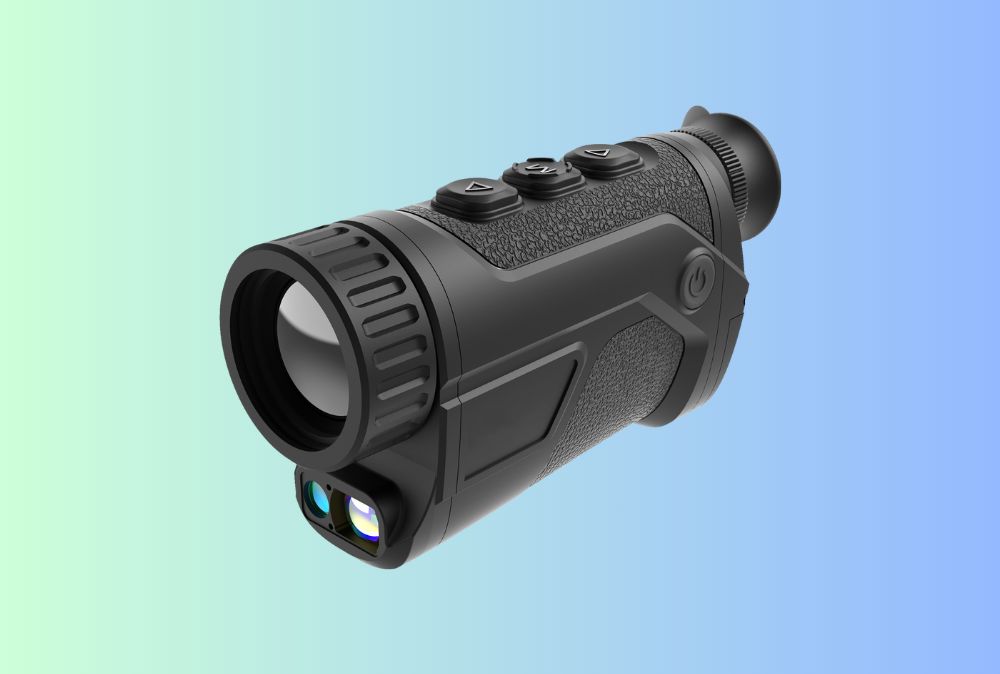
Every brand wants to own the phrase best thermal monocular. It appears in Google searches, retailer filters and comparison blogs. But your catalog is not a single SKU. You need an entry model for first-time buyers, a solid mid-range workhorse, and a flagship that justifies its price next to rivals from Pulsar, AGM or FLIR.
Table of Contents
TogglePublic buying guides usually slice the market into budgets like “under $600,” “$500–$1,500,” “$1,500–$3,500” and “premium $3,500+,” each with typical resolutions and features. Your job as an OEM buyer or brand owner is to translate those vague claims into a feature ladder that makes sense for your customers and dealers.
This article breaks that process into concrete steps: define use cases, decide what each price tier must deliver, and map those decisions onto sensors, lenses, NETD and features. We’ll also show where it makes sense to build on a reusable thermal camera module platform, and when to step up to a full thermal monocular OEM/ODM program.
1. Why “Best Thermal Monocular” Is Different at Every Budget
If you read major comparison pieces for thermal handhelds, you’ll see a consistent pattern. Entry-level devices in the budget range (roughly $500–$1,500) typically use 160×120 or 256×192 sensors, basic lenses and limited features, but still give users their “first wow” moment—spotting animals at a few hundred yards in total darkness. Mid-range models around $1,000–$2,500 move up to 320×256 or 384×288 sensors, faster refresh and better image processing. High-end and professional devices with 640×480 cores, long detection ranges and integrated rangefinders often start around $3,000 and can climb much higher.
To consumers, all of these may be labelled “best thermal monocular for the money” at their respective price point. Internally, you need more precise language:
- Best starter thermal: a product that makes thermal accessible without overwhelming features or price.
- Best all-rounder: a device most regular outdoor users would be happy to own for years.
- Best premium / professional: a halo product that demonstrates your technical capability and supports demanding use cases.
The key is to avoid random spec jumps between these tiers. Instead, each step should add clearly visible value without cannibalising the tier above or below.
2. Map User Personas to Price Tiers First
Before you decide which sensor belongs at which price, anchor each tier to a user persona. This makes internal debates much easier—you are not arguing about 256 vs 384 pixels in the abstract, but about “does this solve Emma’s camping problems or Miguel’s night hunting needs?”
Budget Tier: Curious Beginners and Campers
This group is buying their first thermal imaging monocular. They read blog posts, watch YouTube comparisons and search for phrases like “best thermal monocular under $1000” or “budget thermal spotter.”
Their priorities:
- see people, animals and vehicles at safe distances around camp or property;
- keep the device small, simple and affordable;
- charge via USB-C and not worry about exotic batteries.
Here, “best” doesn’t mean maximum range. It means reliable detection at 150–300 m, easy controls and a price that feels similar to a high-end binocular or action camera.
Mid-Range Tier: Regular Hunters and Wildlife Enthusiasts
These customers already know thermal works. They might have used a friend’s device or owned an entry-level unit. They want:
- better detail on animals and terrain;
- smoother panning, especially for tracking running game;
- more robust housings and weather ratings.
They are willing to pay for a 384×288 12 μm class sensor and higher-end optics because they spend many nights a year outside. Guides and expert reviews emphasise that this resolution and pitch, paired with NETD below ~35 mK, is now the “sweet spot” for serious outdoor users.
Premium Tier: Guides, Outfitters and Security Users
At the top end, “best thermal monocular” usually means:
- 640×480 or 640×512 sensors;
- long detection ranges (often 1,500+ yards in marketing specs);
- sub-25 mK NETD;
- integrated LRFs or multi-use mounting options.
These users are less price-sensitive but very quality-sensitive. Many are comparing you directly with named models from Pulsar, N-Vision, Trijicon, etc. They expect image quality close to a premium thermal rifle scope and durability that withstands hard nightly use.
Once these personas are clear, you can decide what your best thermal monocular means at “starter,” “core” and “flagship” price points.
3. The Spec Levers You Can Move Between Tiers
With personas defined, you can treat resolution, lens, sensitivity and feature set as levers. Each tier moves the levers in a predictable way.
3.1 Sensor Resolution and Pixel Pitch
Industry guides consistently show how resolution correlates with price bands: 160×120 / 256×192 at the bottom, 320×256 / 384×288 in the middle, and 640×480+ at the top. Smaller 12 μm pixels let you reach similar detection ranges with shorter lenses compared to older 17 μm designs, which helps keep premium devices compact.
How to allocate:
- Budget: 256×192 or 320×256, 12 μm, no more than 25 mm lens.
- Mid-range: 384×288 12 μm with 19–25 mm lenses.
- Premium: 640×480/512, 12 or 17 μm with 25–35 mm lenses.
Whenever possible, build multiple products on the same core families so you can reuse engineering work and testing across your thermal optics portfolio.
3.2 Lens, Field of View and Detection Range
Lens focal length is your second big lever. Guides from brands like Pulsar emphasise matching lens and FOV to terrain and use case: wider FOV for forest and mixed terrain, narrower for open fields and long-range scanning.
In practice:
- Budget tier: short focal lengths (15–19 mm) with wide FOVs for easy scanning around camp, homestead or trail.
- Mid-tier: 19–25 mm lenses for a balance of FOV and detection range; this is where many “best thermal monocular for hunting” recommendations live.
- Premium: 25–35 mm lenses, sometimes with optional extenders, for users who really need long-range spotting.
You don’t need a 50 mm lens at every price point; save truly long-range optics for a small, specialised flagship SKU.
3.3 NETD and Overall Sensitivity
NETD (noise-equivalent temperature difference) tells you how small a temperature contrast the system can detect. Typical uncooled thermal cameras sit around 40–50 mK, while high-end imagers advertise <35 mK, <25 mK or even 18 mK. Lower NETD improves performance in fog, humidity and low-contrast scenes—exactly the conditions where wildlife and security users struggle.
Allocate it like this:
- Budget: system NETD ≤ 40 mK (often sufficient for first-time users).
- Mid-range: ≤ 35 mK.
- Premium: ≤ 25 mK, with marketing that explains why that matters.
3.4 Smart Features and LRF Integration
Feature creep can destroy a clean price ladder. Use these guidelines:
- Budget: essential palettes, simple recording, USB-C, maybe basic Wi-Fi streaming.
- Mid-range: better recording, robust app, picture-in-picture, more sophisticated image modes.
- Premium: optional rangefinding, advanced analytics and tight coupling with other devices—e.g. a Thermal + LRF Fusion & Ballistics workflow for users who also own matching rifle scopes.
Don’t rush rangefinders into every monocular. As discussed in riflescope contexts, LRFs shine for hunting and tactical applications but add cost, regulatory overhead and complexity; they’re rarely necessary for casual camping.
4. Turning Specs into a Clear Feature Ladder
With levers defined, you can turn “best thermal monocular” into tiered promises instead of one vague superlative.
Entry: “Best First Thermal Experience”
This is the monocular a store associate or guide recommends to someone buying thermal for the first time. Your promise:
“This is the best thermal monocular in our range if you want to see heat around camp or property without spending rifle-scope money.”
- 256/320 resolution, short lens, wide FOV.
- Simple interface, minimal button count.
- Robust core specs (IP rating, drop resistance) but stripped-down software.
Price-sensitive buyers get genuine thermal performance with a gentle learning curve and minimal support needs.
Core: “Best Thermal Monocular for Everyday Use”
This becomes your hero SKU—the one that appears in catalog covers, dealer ads and influencer videos. Here, “best” means:
“This is the best thermal monocular for most outdoor users—strong image quality, useful range, still manageable price.”
- 384×288 sensor, 19–25 mm lens, 50 Hz refresh.
- NETD ≤ 35 mK.
- Strong app support, recording, streaming.
- Ergonomics good enough for all-night use.
When reviewers and bloggers compile lists like “best thermal monoculars across budgets,” this is the model that should appear in the mid-range section.
Flagship: “Best Thermal Monocular We Know How to Build”
Your top tier shows partners and end users what your engineering can do:
“This is the best thermal monocular we can make today—used by guides, outfitters and serious security users.”
- 640×480/512 core, excellent NETD, premium lens.
- Options for helmet or weapon mounting; sometimes dual-use with clip-on roles.
- Optional integrated LRF; tight integration with your scopes and software ecosystem.
In marketing, this is the unit that competes with well-known models featured in specialist reviews and range tests—the one people ask to see at trade shows even if they eventually buy the mid-tier.
5. Avoiding Cannibalisation Between “Best” Models
Once you have three tiers, you need to prevent them from eating each other’s sales. Common pitfalls:
- Over-speccing the entry model so that mid-tier devices feel overpriced.
- Too many variants at one price point, confusing dealers.
- Tiny differences between tiers (“this one just has Wi-Fi”) that don’t justify the price gap.
A practical rule: at each step up, offer at least two clearly visible benefits any user can spot in 30 seconds through the eyepiece or in the spec table: e.g. much smoother image + longer detection range; noticeably sharper detail + built-in recording.
On your website, your thermal monoculars category page should echo this logic—grouping products by “First Thermal,” “All-Rounders” and “Premium / Pro” rather than by arbitrary model numbers. That helps both end users and distributors understand why each exists.
6. Using Modules and OEM Integration to Hit Each Tier Efficiently
Very few brands want to design sensors, optics and firmware from scratch. Instead, they build families on shared cores and modules.
A module-centric approach—starting from a proven thermal camera module family and wrapping it in platform-specific housings—lets you:
- reuse image pipelines across handhelds, riflescopes and clip-ons;
- share QA processes and test tooling;
- shorten time-to-market when a new detector generation arrives.
When you work with an OEM that offers structured module integration for OEMs, you can define each “best thermal monocular” tier as a combination of:
- module class (256/384/640, NETD);
- lens options;
- housing and power configuration;
- firmware feature set and app hooks.
For premium SKUs targeting hunting and tactical users, consider how those monoculars will connect with your riflescopes and ballistic tools. A shared roadmap that spans handhelds, scopes and rangefinding—similar to a unified “Thermal Optics + Ballistics” ecosystem—gives distributors a compelling story they can explain in a few sentences instead of a spec lecture.
7. Accessory and Service Layers: The Hidden Part of “Best”
In many reviews, “best thermal monocular” is as much about experience as raw performance. Warranty length, after-sales support, included accessories and firmware updates all influence rankings.
For your tiers:
- Ensure every unit ships ready to use: battery, charger, lanyard, simple pouch, and—ideally—a small thermal accessories starter kit such as lens cloths and protective caps. A well-curated accessories catalog like the one on your thermal accessories page also gives dealers margin-rich add-ons.
- Align warranties with expectations: three years for entry, five for mid and premium if costs allow.
- Publish firmware and manuals via a unified Downloads area so dealers can easily help customers update devices in the field.
From a B2B perspective, these “soft” factors often determine which brand a retailer pushes when several products look similar on paper.
8. Making “Best Thermal Monocular” a Repeatable Design Rule
By now, “best thermal monocular” should no longer mean “whatever has the highest spec in the catalog.” Instead, it becomes a repeatable rule inside your company:
- At each price band, best = the cleanest match between user persona and spec levers.
- Entry = best first experience; mid = best option for most; premium = best we can build.
- No tier jumps without at least two easily visible advantages.
This makes future roadmap conversations easier. When a new 384 core with better NETD arrives, you know immediately which tier it belongs to and which existing model it replaces, rather than bolting it on as yet another confusing SKU.
Ready to map “best thermal monocular” to your own line?
If you’re planning or refreshing a best thermal monocular strategy across several price tiers, it helps to look at concrete platforms, not just theory. Our engineering team can walk you through reference designs, module options and branding paths that fit your market.
You can start by exploring our Thermal Monoculars OEM/ODM program and wider Thermal Optics family, then tell us about your target tiers and volumes. Share a few project details—regions, price bands, annual unit plans—through the Get a Quote form, and we’ll come back with concrete spec proposals and sample plans you can evaluate with your team and key dealers.