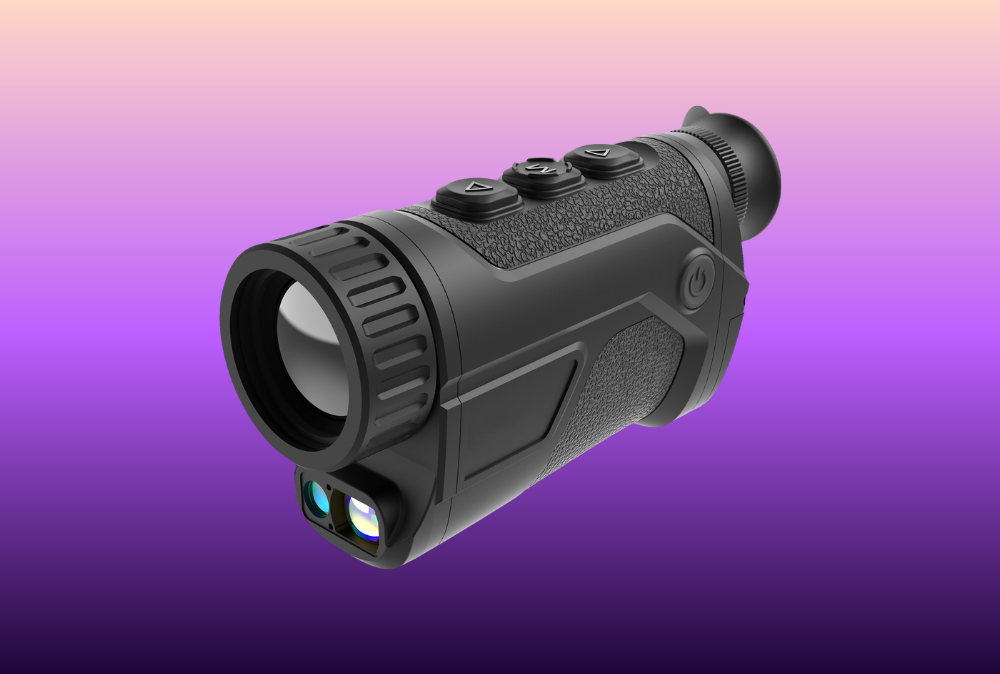
The temptation is obvious. Search any marketplace and you’ll see a cheap thermal monocular with a 256×192 sensor, video recording and Wi-Fi, often priced under the mid-range binoculars on your shelf.
Table of Contents
ToggleFor an outdoor or security brand, that price band is attractive. It lets you offer “real thermal” to campers, small farms and first-time night hunters without pushing them into the same budget as a full rifle scope. The risk is also obvious: if your low-cost line has fragile housings, unstable firmware or unrealistic marketing claims, you’ll quickly trade margin for RMA hell—support queues, angry reviews and dealers who quietly stop reordering.
This article is a guardrail playbook. It explains where you can safely save cost on an entry-level thermal monocular—and where you absolutely should not. It’s written for brand owners and OEM buyers who want to launch a profitable budget line that still feels like part of a serious Thermal Monoculars family, not a disposable gadget.
1. What “Cheap Thermal Monocular” Really Means in the Market
Before you spec anything, you need a realistic market definition of “cheap.” Retail listings and specialist shops place budget thermal monoculars roughly in the US$400–US$1,000 range, depending on resolution, lens size and brand. Devices with 256×192 thermal sensors and short lenses often cluster at the lower end of that band, while 384×288 thermal cores with 25 mm lenses trend closer to US$800–US$1,400.
In this band, you are competing against:
- big consumer brands offering multipurpose handheld thermal monoculars;
- hunting-focused models aimed at hog and coyote shooters;
- security and farm users buying “good enough” cheap thermal imaging monoculars for perimeter checks.
What “cheap” does not mean here is toy-like quality. Users expect:
- clean images at realistic detection ranges;
- usable battery life;
- warranties of at least three years, because competitors are moving that way.
So your design target is not “the lowest-cost device you can possibly ship.” It is “the lowest cost that still feels like a real product from a serious brand.” That distinction is what keeps RMAs under control.
2. Why Budget Thermals Come Back: Failure Patterns You Must Design Around
Study warranty data across thermal categories and a pattern emerges. One manufacturer’s analysis of thermal scope warranty claims shows that about 65% of manufacturing defects show up in the first 12 months, another 22% between 12–24 months, and only 13% after two years of regular use.
Combine that with public forum stories about warranty fights and out-of-warranty failures and you get a short list of RMA drivers for cheap thermal monoculars:
- sensor or display failures due to heat, shocks or weak solder joints;
- power system issues (loose battery contacts, cheap connectors, unstable charging);
- housing cracks and IP leaks causing moisture damage;
- firmware freezes and Wi-Fi bugs that make devices feel “unreliable”;
- unrealistic marketing about range or image quality, leading to “this thing is junk” returns even when the hardware is fine.
A profitable thermal monocular OEM program accepts that some failure rate is inevitable but aggressively pushes these issues down:
- design and component choices that keep early-life failures rare;
- honest positioning so customers don’t feel misled;
- support and warranty terms that are clear, finite and easy to manage.
The rest of this article walks through those levers.
3. Spec Floors You Should Not Cross (Even on a Cheap Line)
There are three places where cutting too far almost guarantees high returns: sensor class, thermal sensitivity and lens/FOV.
3.1 Sensor Resolution and Pixel Pitch
You can build a working cheap thermal monocular on a 160×120 core, but outdoor users now see that as “toy resolution” once they compare it with modern 256×192 and 384×288 units. Retail listings from mid-tier brands show how the market has moved: 256×192 and 384×288 12 μm sensors are now the de-facto baseline for serious entry-level devices.
A practical floor for a brand that wants to be taken seriously:
- 256×192 12 μm as the minimum for true low-cost SKUs;
- 384×288 12 μm for mid-band models you still describe as “affordable” but not “cheap.”
Going below that may save a few dollars but will cost you in returns and reputation.
If you are designing around a shared thermal camera module, choose families that scale across resolutions so you can reuse firmware and optics across the cheap and mid-range parts of your catalog. A module-based approach makes it easier to step customers up from a budget handheld to a mid-tier monocular or even rifle scope later.
3.2 NETD: Don’t Ignore Thermal Sensitivity
NETD (noise-equivalent temperature difference) measures how small a temperature difference the camera can distinguish. Lower values mean better sensitivity and cleaner images in low-contrast scenes. Technical articles from MoviTherm, Sierra-Olympia and Pulsar all explain NETD as “the smallest temperature difference an imager can pick up,” with lower mK values producing more detailed, stable images, especially in bad weather.
For low-cost devices:
- Aim for system NETD ≤ 40 mK as an absolute floor.
- Target ≤ 35 mK if you want your budget thermal monocular to feel competitive on image quality.
You can still call it “cheap” while insisting on a modern, sensitive detector. Cutting to noisy, high-NETD cores might save you on BOM but will drive “image too grainy / can’t see anything in humidity” complaints.
3.3 Lens and Field of View: No Fake 2,000 m Detection Claims
Many cheap listings trumpet man-size detection ranges of “2,000 m+,” achieved by assuming large targets in perfect conditions. In reality, devices with small lenses (e.g. 15–19 mm) and 256×192 thermal sensors give reliable human or hog detection more in the 200–600 m band, depending on conditions and NETD.
For an entry-level thermal monocular aimed at campers, hobby hunters and small farms, that’s fine—if you say so honestly:
- clearly present “typical detection” and “comfortable identification” ranges;
- avoid spec sheet claims that only hold on test benches.
A comfortable spec floor for a cheap line:
- Lens: 15–19 mm on 12 μm cores (wide enough for scanning);
- Horizontal FOV: at least 13–17° so users can scan woods and fields easily;
- Detection claim: conservative numbers (e.g. 300–500 m for large animals / people), aligned with what users see through the device.
4. Mechanical and Power Design Choices That Keep RMAs Low
Budget electronics fail first where mechanical and electrical tolerances are tightest. For a cheap thermal monocular, three areas matter most: housing, sealing and power.
4.1 Housings That Survive Real Life
Cheap housings crack when dropped, flex around the lens (breaking collimation), or allow micro-movement that eventually loosens connectors. Reviews of low-cost thermals often mention flexy shells, creaky seams and buttons that start to misbehave after a season.
Guardrails:
- Use fibre-reinforced polymers or aluminium skeletons under rubber armour, not bare ABS.
- Design the lens cell as a mechanically isolated module; avoid transmitting torsion from the housing directly into the optical stack.
- Define drop test standards (e.g. multiple 1 m drops onto plywood over concrete) and insist that your private-label thermal monocular survives with only cosmetic marks.
4.2 Real IP Ratings, Not “Splash Resistant” Marketing
Moisture is a silent killer. Inexpensive scopes and monoculars that claim vague “weather resistance” but never passed a real IP test are over-represented in RMA data.
For a brand device, aim for at least IP66 or IP67 on all hunting and security thermal monocular models. That implies thought about:
- gasket design around USB-C and micro-SD doors;
- press-fit eyecups and focus rings that don’t suck humidity into the housing;
- breathable membranes to equalise pressure without pulling in water.
Cheap doesn’t have to mean sloppy here; adding one extra gasket often costs cents, not dollars.
4.3 Power System: Batteries, Connectors and Charging
Low-cost devices frequently fail at the power path: loose battery caps, misaligned springs, cheap USB sockets that crack off the board.
Guardrails:
- Choose robust USB-C connectors rated for many insertions and mount them to metal brackets or mid-frames, not just FR-4.
- If you use replaceable 18650 cells, over-design the cap threads and seal to tolerate repeated tightening with gloves.
- Specify honest, conservative run-time in your marketing—assuming cold temperatures and aggressive use of Wi-Fi. Users will forgive “advertised 6 hours, real 5” far more than “advertised 10, real 3.”
5. Firmware, UI and App Guardrails for First-Time Thermal Users
Even if the hardware survives, flaky firmware can generate endless “no fault found” RMAs that destroy your support budget.
5.1 Keep the UI Simple and Predictable
Most buyers of a cheap thermal monocular are first-time users. They don’t want to manage complex zeroing tools, ballistic profiles or obscure picture modes. Manuals from premium manufacturers emphasise simple, repeatable workflows for basic tasks: power on, focus, change palette, adjust brightness and start recording.
Design rules:
- Put power, palette and zoom on physical buttons with clear tactile shapes.
- Hide advanced settings (e.g. pixel correction, calibration modes) in a deeper menu, not on the main screen.
- Offer a one-button “factory reset” to clear weird states without shipping the unit back.
5.2 Robust Calibration and Sleep/Wake Behaviour
Cheap devices often struggle with shutter calibration (“NUC”), getting stuck or producing flicker. Others drain their batteries in standby or fail to wake properly.
Guardrails:
- Choose system firmware that handles automatic NUC quietly and predictably; let advanced users switch to manual only if they know what they’re doing.
- Implement a simple, reliable sleep mode that suspends the sensor and display but wakes instantly with one keypress—critical for hunting thermal monocular use.
- Log error codes internally so your service team can see if a device is genuinely faulty or just mis-used.
5.3 Apps and Wi-Fi: Nice to Have, Not Core Functionality
Streaming to phones is popular, but buggy apps are a support magnet. Whenever possible:
- Treat Wi-Fi and apps as optional extras, not core features; the monocular should be fully usable without them.
- Reuse the same app stack across your Thermal Optics family so you maintain one codebase, not three.
- Document clearly which phone OS versions you support; don’t promise compatibility with everything.
6. Quality, Compliance and Warranty Strategy for Low-Cost Lines
A “cheap” product that fails compliance audits or creates regulatory headaches is not cheap at all.
6.1 Safety and RoHS: Non-Negotiable Baselines
Modern electronics safety for AV and ICT-class devices is governed by IEC 62368-1, a hazard-based safety standard that focuses on identifying energy sources and introducing appropriate safeguards.
In parallel, the EU’s RoHS directive restricts the use of ten hazardous substances—like lead, mercury and certain flame retardants—in electronic equipment to protect human health and the environment.
Even for a cheap thermal imaging monocular, your OEM brief should explicitly require:
- documented compliance with IEC 62368-1 (or regional equivalents);
- RoHS and WEEE statements for all electronics;
- traceable test reports for core components.
Publishing high-level certification info on your Certificates and Quality pages builds trust and gives distributors something concrete to show during their own audits.
6.2 Warranty Length and Structure
Thermal buyers have learned to expect 3–5 year warranties on serious optics. Forum discussions even suggest that “5 years is a lifetime for electronics” in this young category, with some brands treating 5-year coverage as their default thermal policy.
At the same time, analysis of warranty data shows that nearly 90% of manufacturing defects appear in the first 24 months, which means extending coverage beyond 3–5 years gives diminishing returns.
A pragmatic policy for a cheap thermal monocular line:
- 3 years standard warranty on electronics and detector;
- clear, written exclusions for abuse and non-approved modifications;
- paid repair or discounted upgrade options beyond warranty.
Spell this out on your Warranty and Support pages so dealers know exactly what they are promising when they sell your entry-level line.
6.3 Incoming QA and Burn-In
Because most defects show up early, adding a short burn-in phase at the factory can dramatically cut RMAs:
- run each unit for several hours cycling through calibration and recording;
- perform a quick hot/cold check on a simple test target;
- log the serial and test result with the thermal camera module ID.
Yes, this adds a little cost. But catching weak solder joints, bad displays or power issues before shipment is much cheaper than handling RMAs across continents.
7. Choosing and Managing OEM Partners for Cheap Lines
Launching a cheap thermal monocular is often done via an OEM/ODM partner rather than full in-house development. That can work well if you keep control of the architecture and tests.
7.1 Reuse Proven Platforms, Don’t Customise Everything
Start from a known-good reference design—either from a Thermal Monoculars — OEM/ODM catalog or from a modular platform built around your own detectors. Ask:
- How many units of this platform have shipped already?
- What failure rates have they seen in similar markets?
- Which parts (lens, housing, board) are truly new in your variant?
Minimise “new” elements on the cheap line; reserve more radical industrial design for mid and high tiers where margins absorb risk.
7.2 Use Integration Services, Not One-Off Hacks
If your roadmap includes binoculars, clip-ons or scopes, try to build the cheap monocular on the same module and firmware family. Integration services like a structured OEM integration program can help you:
- share calibration tools across product lines;
- run common regression tests when firmware updates ship;
- maintain a consistent UX across devices.
That cohesion matters for long-term support: when the same 12μm thermal monocular core appears in multiple products, you can justify investing in better tools, documentation and training.
7.3 Service Logistics: Repair vs Replace
Cheap lines should generally bias toward replace over repair. If a US$400 monocular with a cracked display comes back under warranty, shipping it twice and spending bench hours may exceed its remaining value.
Plan ahead:
- keep a pool of “RMA reserve” units in major markets;
- refurbish salvageable returns into discounted “B-stock” or training units;
- recycle unsalvageable devices responsibly to stay aligned with RoHS/WEEE principles.
8. Turning a Cheap Monocular into a Profitable Ecosystem
A well-designed cheap thermal monocular is not just a low-margin product; it is a feeder into your broader ecosystem.
Position it as:
- the first thermal device many customers buy;
- the handheld companion to your hunting scopes and clip-ons;
- the platform that introduces users to your app and image signature.
Support that with:
- clear upsell paths on your Thermal Optics page;
- accessory bundles—cases, lanyards, battery packs—within your Accessories catalog;
- consistent documentation across all models so users feel at home when they upgrade.
If you get this right, every cheap thermal monocular sold plants a seed for future sales in scopes, binoculars and premium handhelds—making the line profitable even at modest hardware margins.
Ready to Launch a Cheap Thermal Monocular Without Killing Your Support Team?
If you’re sketching a cheap thermal monocular program and want it to stay profitable after year one, now is the time to bake in these guardrails—spec floors, QA steps, warranty structure and ecosystem thinking.
Our team can help translate this playbook into concrete platforms, whether that means tweaking an existing handheld from our Thermal Monoculars — OEM/ODM range or building a new budget model on a shared module architecture.
Tell us a bit about your target price points, volumes and sales channels through the Get a Quote form, and we’ll come back with specific sensor–lens options, test plans and launch timelines designed to keep RMAs low and dealer confidence high.