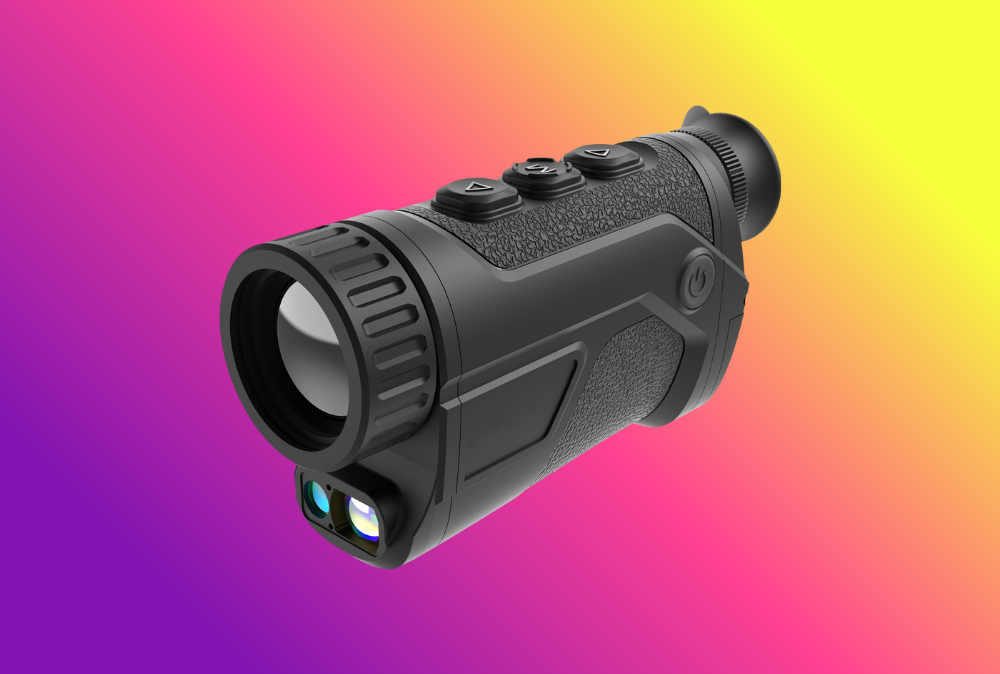
When you sell a budget thermal monocular, your margin per unit is thin and your buyer is often touching thermal technology for the first time. What happens in the first 60 seconds—when they open the box, lift the device and see how everything fits—will heavily influence whether they keep it, return it or recommend it.
Table of Contents
ToggleFor consumer electronics, packaging is no longer “just a box.” Studies on the electronics sector show that packaging now plays a key role in both protection and perceived value, and can even be the deciding factor between similar products. Well-chosen accessories do the same: they reduce drop damage, extend runtime and make it easier for dealers to build profitable bundles around a single device.
This guide looks at how outdoor and security brands can turn a budget thermal monocular into a complete, premium-feeling kit—without blowing up the BOM. We’ll talk protection, unboxing, compliance, accessory strategy and how all of that connects back into a structured OEM program such as your Thermal Monoculars — OEM/ODM and Thermal Optics lines.
1. What Budget Buyers Actually Expect from a Thermal Monocular Kit
In the sub-US$1,000 band, most customers are not gear reviewers. They’re landowners scanning fence lines, campers wanting to “see heat,” or hunters upgrading from entry-level night vision. They search for phrases like “budget thermal monocular” or “cheap handheld thermal,” then compare whatever is on the shelf or landing page.
Yet their expectations are shaped by the broader electronics market:
- Packaging should protect the device and look intentional, not generic.
- The kit should feel complete—they don’t want to discover on day one that they need to buy a cable, lanyard or case just to use it safely.
- Basic documentation (a quick-start sheet, warranty card, safety notice) should be clear and available in their language.
For you as a brand owner, the goal is to make your budget thermal monocular feel like the “smallest member of a serious family” rather than a random import. The box and accessories are the cheapest way to communicate that.
2. Packaging Is Part of the Product, Not Just Logistics
Packaging has three jobs: protect, present and reassure. In consumer electronics, research shows that good packaging not only reduces damage and returns, but also influences purchasing decisions and brand loyalty by shaping the unboxing experience.
For thermal monoculars, the stakes are higher than for a phone case:
- Devices contain delicate thermal camera modules and displays that dislike shocks, moisture and static.
- Customers may be unfamiliar with thermal technology and actively looking for cues that this is “serious equipment.”
- Distributors and dealers handle boxes roughly; your packaging must survive pallets, couriers and back-room storage.
Thinking of the box as part of the product forces better decisions about materials, layout and information.
3. Protection First: Mechanical Guardrails for Budget Packaging
A budget thermal monocular is still a high-value electronic device. Excess damage in transit will wipe out any saving you made on cheaper material. Electronics packaging guidance highlights three themes: anti-static measures, shock absorption and moisture protection, all aimed at preventing expensive returns.
3.1 Internal Structure: Insert, Not Loose Void Fill
Loose bubble wrap or air pillows feel cheap and shift during transit. For optics, you want a fixed insert that:
- holds the monocular in one orientation;
- supports it at several points along its length;
- leaves dedicated cavities for cable, charger, and other accessories.
Options that balance cost and protection:
- Die-cut cardboard or molded pulp: recyclable, good for brands that focus on Sustainability;
- Low-density EVA or cross-linked PE foam in a simple cavity: more premium feel, better long-term protection if users store the monocular in the box between trips.
For budget lines, a cardboard tray with foam “touch points” is often ideal: you keep materials costs low but still immobilise the device.
3.2 Drop, Crush and Temperature Considerations
Thermal imagers can be damaged by repeated drops or by pressure on the lens barrel. Packaging guidelines for electronics emphasise simulating real-world events—1 m drops, stacking loads, temperature and humidity cycles—to avoid surprises in the field.
For your packaging spec:
- Define a drop test (for example, six 1 m drops on different edges and faces with the product boxed).
- Set a stacking load requirement so units at the bottom of a pallet won’t crush.
- Consider a simple moisture barrier (e.g. a polybag + desiccant sachet) if you ship through humid climates.
These tests can be built into the same quality system that governs your devices, as described on your Quality and Manufacturing & Quality pages.
4. Unboxing and Branding: Premium Feel on a Budget
Once basic protection is handled, the box has to look and feel like it belongs with the rest of your brand. Packaging research points out that design and graphics strongly influence perceived quality and the emotional “wow” of unboxing, even when the underlying product is identical.
4.1 Structural Choices
You don’t need Apple-level tooling. For a budget thermal monocular, two structures usually work well:
- Top-lid rigid box (shoebox style): costs more but feels premium and is easy to reuse as a storage case.
- Flip-top corrugated mailer with a printed outer sleeve: cheaper, strong, and shipping-friendly.
Inside the lid, a short message (e.g. brand story, safety reminder, or link to Support) gives purpose to otherwise empty cardboard.
4.2 Graphics and Information Hierarchy
Low-cost doesn’t mean clutter. Front and sides should answer five questions at a glance:
- What is it? (e.g. “Budget Thermal Monocular – 256×192 / 15 mm”)
- Who is it for? (camping, farm, entry-level hunting)
- What’s the single strongest benefit? (“See heat at night up to 300 m”)
- What system is it part of? (your Thermal Optics family)
- Where do I go for help? (web address or QR to Support).
Use the back panel for more detailed specs and a simple diagram of the contents. A tiny “good / better / best” ladder showing this model relative to your mid and premium Thermal Monoculars subtly encourages upgrades.
4.3 Low-Cost Premium Touches
A few inexpensive elements dramatically upgrade perception:
- Colour-coded tiers: one colour band for budget monoculars, another for mid-range and premium.
- Printed quick-start card in the lid, showing only the core steps: charge, power on, focus, change palette.
- A small sticker that reminds users to register for warranty online (linked to your Warranty page).
None of these meaningfully increase material cost, but they make your budget thermal monocular feel like a considered product, not a white-label.
5. Labels, Standards and Documents: Compliance on the Box
Packaging also carries safety and environmental information. For any electronic imaging device, you must consider at least two regulatory frameworks:
- IEC 62368-1, the hazard-based safety standard that now governs most ICT and AV equipment;
- The RoHS Directive, which restricts hazardous substances like lead, mercury, cadmium and certain flame retardants in electronic equipment.
B2B buyers expect clear evidence that your products adhere to these standards. Practical steps:
- Put the correct safety and recycling icons on the outer box (CE, UKCA where applicable, WEEE bin, RoHS mark).
- Include a short safety summary referencing IEC 62368-1 (“designed and tested to applicable IEC 62368-1 safety requirements”).
- Add a QR code that links directly to your Certificates and Downloads pages, where full declarations and manuals live.
This keeps the printed box clean while still giving regulators and corporate customers the detail they need.
6. Accessories: The Cheapest Way to Make a Budget Monocular Feel Complete
Accessories are where many brands lose or make money. Hunting and thermal retailers stock entire categories of add-ons—lanyards, tripod adapters, soft cases, external batteries—because they materially improve usability.
For a budget thermal monocular, the right accessory set:
- reduces drop and moisture damage;
- extends runtime and comfort;
- increases perceived value without touching the core electronics.
6.1 Must-Include Accessories
These should be in every box, even on your lowest-priced SKU:
- Neck lanyard or wrist strap
- Lanyards designed specifically for thermal optics reduce accidental drops and allow hands-free carrying.
- Soft protective pouch or mini case
- Even an inexpensive padded pouch dramatically cuts scratches and lens damage when users toss the monocular into a pack. Many hunting accessory shops now sell third-party soft cases precisely because OEM kits skip them.
- USB-C cable and basic charger guidance
- You can omit the wall charger to save cost, but never omit the cable or charging instructions.
- Lens cloth and simple cleaning note
- A small microfiber cloth plus a few lines about not using T-shirts on the germanium lens can literally save hundreds of RMAs.
- Printed quick-start guide + warranty / safety card
6.2 Smart Optional Accessories for Upsell
For dealers and your own web shop, design a range of optional items, ideally grouped under an Accessories category that works across monoculars and scopes:
- External battery packs or Picatinny battery modules that can power multiple thermal devices;
- Tripod adapters for static wildlife watching or security use;
- Hard cases for professional or tactical users;
- Helmet or head mounts for users who want hands-free scanning;
- Custom lanyards that incorporate power leads (where supported).
These products offer higher margins and help position your brand as a complete solution provider rather than a single-product seller.
6.3 Bundles and Planograms for Retailers
Retail and big-box partners love simple bundles:
- Starter Kit: budget monocular + pouch + lanyard.
- Hunting Kit: monocular + pouch + extended battery + tripod adapter, displayed alongside Thermal Rifle Scopes.
- Security Kit: monocular + hard case + external power + extra charger.
You can pre-pack some bundles at the factory and leave others to be assembled at the store level, depending on channel needs. Clear labels on the outer carton (“Includes Soft Case & Lanyard”) help staff and customers see the difference instantly.
7. Packaging & Accessory Playbook by Price Tier
Within your budget line, you probably still have two or three price points. Your packaging and accessory policy should change deliberately across them, not randomly.
Here’s a simple template:
| Tier | Typical Street Price | Box Type | Included Accessories | Optional Bundles |
|---|---|---|---|---|
| Entry Budget | Lowest price point | Printed corrugated mailer + die-cut insert | Lanyard, pouch, USB-C cable, lens cloth, quick-start, warranty card | Add-on Starter Kit (extra pouch, cap, spare battery) |
| Core Budget | +US$150–250 | Rigid top-lid box with foam/board insert | All entry items + upgraded padded pouch, better lanyard, maybe basic tripod adapter | Hunting Kit with external battery + rail/helmet mounts |
| Upper Budget / Mid Tier | top of “budget” band | Premium rigid box, colour-coded tier, more graphic detail | All core items + hard case or high-end pouch, extra battery, extended strap | Security Kit with hard case, vehicle charger, tripod, compatible with higher-end optics |
Publish this internally so product, marketing and packaging teams work off the same assumptions. Make sure the accessories themselves share design language (same logos, fabrics, buckles) so the entire kit feels coherent.
8. Connecting Packaging and Accessories to Your OEM Roadmap
If you’re using a modular platform—based on shared thermal camera modules and structured Module Integration for OEMs—you can reuse packaging and accessories across families:
- The same box format and insert sizes can serve multiple budget thermal monocular SKUs and even entry-level clip-ons.
- Accessories like lanyards, cases and batteries can be cross-listed for monoculars, binoculars and pistol sights, simplifying inventory.
- Manuals and safety sheets can share sections, updated centrally on Downloads.
This modular thinking is exactly how premium brands keep their ecosystems coherent. It also makes it easier to explain “why choose us” on your Why Choose Us and Company pages: you’re not just re-labelling hardware, you’re designing a full user journey from box to field.
Ready to Design a Budget Thermal Monocular Kit That Feels Premium?
If you’re planning a budget thermal monocular line—or refreshing an existing one—packaging and accessories are the fastest levers you can pull to upgrade perception and reduce returns without touching the sensor.
Our team can help you turn this guide into concrete box layouts, accessory sets and OEM bill-of-materials that match your price targets. Start by exploring our Thermal Monoculars — OEM/ODM range and broader Thermal Optics family, then share your project details through the Get a Quote form.
Tell us your target price points, channels and expected volumes, and we’ll come back with packaging concepts, accessory matrices and rollout timelines that make your “budget” thermal monoculars feel anything but cheap.