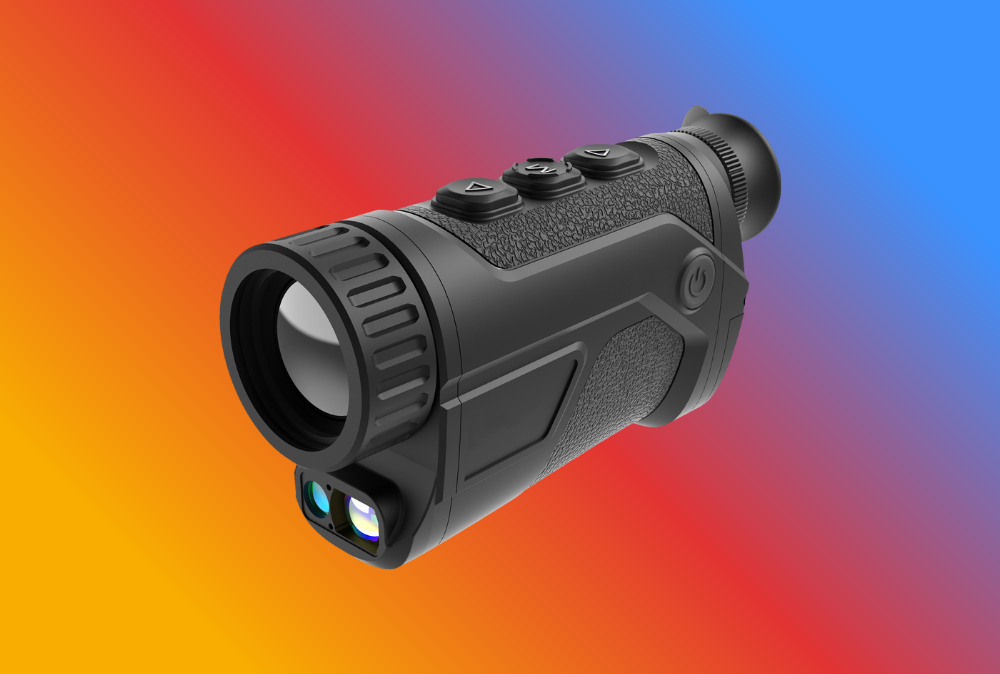
In every market, there is pressure to launch a thermal monocular cheap line. Dealers ask for “something under X dollars.” Competitors dump boxes of anonymous devices at trade shows. Online buyers chase discount codes and flash sales. It is easy to think that if you do not follow the race to the bottom, you will lose share.
Table of Contents
ToggleBut for a B2B brand, the real risk is the opposite: you cut too much, launch the wrong cheap thermal monocular, and spend the next two years fighting RMAs, one-star reviews, and angry distributors. A bad “cheap” SKU damages your premium optics more than any competitor ever could.
This article looks at what a budget thermal monocular can safely compromise—and which elements you must keep, even in your lowest price segment, if you want to protect your brand in hunting, security, or patrol markets.
1. Why Cutting Too Deep on Thermal Monocular Cost Backfires
On paper, the logic of a low cost thermal monocular line is simple. You remove advanced features, shrink the lens, choose a lower resolution core, and save money. In practice, the first thing to disappear is not cost—it is trust.
Dealers quickly learn which product numbers trigger returns, complaints about image quality, or unexplained failures. When a “cheap” line disappoints, buyers rarely blame only that SKU. They start to question your entire portfolio, including your flagship rifle scopes and binoculars.
There are three common traps in thermal monocular cheap projects:
- Over-promising range with weak hardware
Marketing claims copy premium specs (long detection distances, “pro” image quality) while the actual device uses a small sensor and narrow field of view. Users feel cheated within minutes of comparing the product with anything better. - Sacrificing reliability and QC
To hit a price, brands accept inconsistent modules, thin housings, or weak sealing. Devices work for a few weeks and then accumulate hot pixels, fogging, or boot failures. Warranty costs explode. - Destroying user experience
A cheap handheld thermal monocular that is slow to boot, confusing to use, or painful on the eye will never be carried on real hunts or patrols. It becomes a toy, not a tool—and your logo is on it.
The goal is not to avoid the entry-level market but to design it intentionally. A well-specified entry level thermal monocular can be honest about its limits, profitable, and still act as a strong “first step” into your ecosystem.
2. Defining “Good Enough” for a Budget Thermal Monocular Line
Before you brief any OEM, you need to define what “good enough” means for your budget thermal monocular family.
2.1 Clarify the Main Use Cases
Ask where this product will realistically live:
- As a first thermal device for weekend hunters who mostly scan out to 300–500 m.
- As an inexpensive observation tool for gate guards, small farms, or outage response teams.
- As a backup or training unit alongside more advanced optics.
The user’s mission determines which compromises are acceptable. For example, a hunter buying an affordable thermal monocular for hunting can accept limited long-range ID, but not a device that crashes or has painful eye relief. A security contractor buying a few units for static guards needs basic ruggedness and battery life more than fancy palettes.
2.2 Decide How It Relates to Your Premium Line
Your thermal monocular cheap range should complement—not cannibalize—your premium handhelds and weapon sights. A clear ladder might look like:
- Entry level thermal monocular – compact, 256×192 or 384×288, modest lens, simplified firmware.
- Mid-range multi-role monocular – 384×288 or 640×512, better lens, more robust housing.
- Professional flagship – 640×512, long lens options, advanced connectivity, and full system integration.
In this ladder, entry level devices are honest tools, not marketing tricks. They deliver consistent performance for basic tasks and naturally upsell users into premium models when they want more range or features.
3. The Non-Negotiables: What Cheap Thermal Monoculars Must Still Include
Even when you aim for the best price on a thermal monocular cheap line, some fundamentals must not be touched. Think of them as “brand safety rails.”
3.1 A Sensible Imaging Core and Lens
You can step down in resolution—but not into uselessness. For a low cost thermal monocular aimed at typical field use, a 256×192 core may work only for very short distances. In many markets, 384×288 at 12 µm with a modest 19–25 mm lens is the minimum combination that feels genuinely useful.
Key points you should not compromise away:
- Reasonable detection and recognition range for human-sized or animal targets at 200–400 m.
- Stable, repeatable image quality; not “sometimes OK, sometimes terrible” depending on sample.
- Sensible field of view: wide enough to scan, not so narrow the user gets lost.
If you build a cheap thermal monocular for coyote hunting, for example, it is better to be honest about 400–500 m capability with solid clarity than to claim 1,200 m using lab detection numbers that your hardware cannot support.
3.2 Basic NETD and Image Processing Quality
You can accept a slightly higher NETD than in your premium products, but you cannot ignore thermal sensitivity completely. A cheap handheld thermal monocular with poor NETD will melt into grey mush in humid weather or warm nights.
At minimum, specify:
- NETD that is still appropriate for outdoor use (for many markets, <50 mK is a sensible upper limit for entry level).
- Stable automatic gain control so scenes do not “pump” brightness constantly.
- One or two palettes tuned for practical use, not dozen gimmick modes.
If your brand is known for long-range imaging, your cheapest monocular must still feel like part of that family—even if it cannot see as far.
3.3 Rugged Housing and Real IP Protection
Going cheap often means thinner plastics, weaker mounts, and corners cut on sealing. That is exactly how brands end up with fogged lenses, cracked housings, and water-damaged boards.
Even on thermal monocular cheap SKUs:
- Use housings that can survive normal drops and vehicle transport.
- Ensure real ingress protection suitable for rain and dew; IP ratings should be tested, not just printed.
- Specify eyecups and diopter mechanisms that will not break after a few trips.
A device that fails mechanically screams “toy.” No amount of internal performance can fix that perception.
3.4 Safe, Practical Power System
Cheap batteries are a hidden brand killer. Loose cells, unreliable contacts, or badly managed charging circuits can cause sudden shutdowns—or in extreme cases, safety incidents.
Your entry-level range should still include:
- A stable power design with either proven removable cells or integrated packs that support several hours of use.
- Clear low-battery warnings rather than abrupt cut-off.
- Basic protection against reverse polarity or unsafe charging.
No one will praise your budget thermal monocular because the battery works—but they will absolutely remember if it fails at the worst moment.
3.5 Simple, Intuitive UI
Complicated menus are not a premium feature; they are a liability. For cheap products used by occasional users, clarity is more valuable than options.
Design the firmware so that:
- Boot time is reasonable; the unit feels responsive.
- Two or three buttons cover all essential operations.
- Icons and labels are consistent with your other optics.
Think in terms of tasks: “scan a field,” “check a noise near the fence,” “verify an animal before shooting.” If a new user cannot perform these tasks within the first ten minutes, something is wrong—no matter how low the price.
3.6 Honest Warranty and QC
Some brands try to protect margin by shortening warranty on cheap lines. That signal alone can damage trust. Instead, focus on setting realistic QC thresholds and volumes.
Even on thermal monocular cheap projects, insist that the OEM:
- Calibrates every unit with defined acceptance criteria.
- Logs serial numbers and test results.
- Supports a warranty period that matches your market’s expectations.
You can adjust policies for heavy professional use vs casual hunting, but you should not treat entry-level buyers as expendable. Many will become your premium customers later.
4. Where You Can Save Cost Without Killing Your Brand
Not everything is sacred. There are smart ways to design a low cost thermal monocular line that keeps your brand safe while staying competitive on price.
4.1 Cosmetic Flex and Packaging
You do not need milled magnesium housings or luxury boxes. Plastic housings can be robust when properly designed. Foam inserts and basic printed cartons are more than enough—especially if the product is sold mainly online or through budget channels.
Save money on:
- Fancy retail packaging and glossy inlays.
- Non-essential cosmetic machining or paint effects.
- Deeply customized waterproof cases that buyers may never use.
Keep a small budget for protective lens caps and basic pouches; these protect both the device and your perceived quality.
4.2 Accessories and “Nice to Have” Features
Your best-selling thermal monocular OEM lines may include tripods, mounts, external power ports, and advanced remote controls. On an entry-level SKU, many of these can become optional accessories rather than standard content.
Consider stripping back:
- Integrated Wi-Fi streaming and advanced app features (or use a simpler shared app).
- Complex reticle sets if the monocular is not designed for weapon mounting.
- Built-in ballistic calculators that belong in scopes, not cheap spotters.
Instead, provide a clean core device that does its main job well. If needed, you can still upsell accessories via your Accessories range.
4.3 SKU Strategy and Shared Platforms
You can save significant cost by reusing proven platforms across multiple SKUs. For example, three variants of the same cheap thermal monocular for coyote hunting can share housing, UI, and main boards, differing only in lens length or sensor resolution.
Working with an OEM that already offers modular designs—similar to how you might approach Thermal Monoculars — OEM/ODM—lets you launch multiple price points without multiplying engineering risk.
4.4 Manufacturing Location and Volume Planning
Cost is also driven by how you place orders. Instead of pushing your supplier for extreme discounts at very low volumes, consider:
- Committing to realistic annual volumes split into several batches.
- Aligning your cheap line with other products that use the same thermal monocular private label platform.
- Giving longer-term forecasts so the factory can plan sensor and lens purchases efficiently.
A cooperative approach builds room in the budget to keep quality where it needs to be.
5. Briefing OEMs for a Safe “Cheap” Line
Once you know what cannot be sacrificed, the next step is to write a clear brief for your OEM partners.
Start by explaining the mission profile: for example, an affordable thermal monocular for hunting in temperate climates, meant for spotting at 300–500 m, with occasional use in rain or light snow. State clearly that this is your entry-level line and that protecting brand trust is more important than absolute lowest cost.
Your brief should cover:
- Target sensor and lens combos capable of real-world performance aligned with your claims.
- Minimum NETD and frame rate requirements.
- Housing robustness and expected IP rating.
- Basic power, runtime, and battery type.
- Firmware philosophy: simple, stable, aligned with your premium models.
You can reference successful mid-range designs as benchmarks, pointing the supplier to the performance you see in your current Thermal Monoculars and asking how they would scale down without losing the corporate identity.
Ask directly which parts of the bill of materials they recommend simplifying and which they view as risky to cut. Their answers will tell you a lot about their experience with cheap thermal monocular for patrol teams and other demanding environments.
6. Communicating Range, Limits, and Value Honestly
Even a well-designed thermal monocular cheap line can still cause damage if it is marketed dishonestly. The key is to align claims with real-world behaviour instead of copying detection numbers from lab reports.
For example:
- Use conservative detection and recognition distance figures tested in your climate.
- Emphasize the device’s role: “compact field spotter” rather than “long-range sniper tool.”
- Compare it positively to previous generations of entry-level devices, not to your flagship.
Train dealers to explain clearly what the unit is and is not designed to do. A hunter who buys a small budget thermal monocular knowing it is for quick checks at moderate range will be happy. The same hunter, told that this tiny device is “like a military scope,” will be disappointed.
You can also use your content to set expectations. For example, blog posts comparing different price tiers and explaining when to upgrade encourage users to stay within your ecosystem when they want more capability.
7. Protecting Brand Reputation Through Service and Lifecycle Support
Cheap does not mean disposable. If your entry line fails in the field, your premium lines will be judged by association.
Make sure that:
- Your Warranty terms are clear, fair, and consistent across product tiers.
- You keep spare parts and service capacity for entry-level models, not just top-end optics.
- Firmware updates that improve stability are delivered reliably, even for low-priced devices.
At the same time, plan the lifecycle of each cheap SKU. Decide how long you will keep it in the market, when you might replace it with an improved platform, and how you will handle transitions so dealers are not left with obsolete inventory.
A transparent roadmap, backed by documented quality processes like those described in your Manufacturing & Quality section, reassures partners that even your cheapest products are part of a serious long-term strategy.
8. CTA: Designing Cheap Monoculars Without Cheapening Your Brand
Launching a thermal monocular cheap line is not about stripping everything until only price remains. It is about understanding which elements create real user value—and which can be simplified without breaking trust.
If you are planning your next low cost thermal monocular project and want to avoid the usual pitfalls, consider working with an engineering-driven OEM that already understands private-label requirements. Review the handheld platforms in our Thermal Monoculars family, explore modular options through Thermal camera module integration, and contact our team to design an entry-level range that is affordable on the price tag—but never cheap on your brand.
FAQs: Cheap Thermal Monocular Lines for B2B Brands
Q1: Is a 256×192 sensor acceptable for a thermal monocular cheap line?
It can be, if your use case is limited to very short ranges and simple observation tasks. For most hunting and security markets, a 384×288 core offers a better balance between cost and usefulness, especially when paired with modest lenses.
Q2: How many features can we remove before users feel cheated?
You can safely drop advanced connectivity, complex reticles, and premium packaging. You cannot sacrifice basic image quality, ruggedness, or battery reliability. If those fail, users perceive the entire brand as “cheap,” not just that SKU.
Q3: Should cheap units have a shorter warranty than premium optics?
You may differentiate slightly by product category, but radically shorter warranties signal that you do not trust your own devices. It is usually better to maintain a consistent baseline warranty and manage cost through better QC and realistic field specifications.
Q4: How do we stop cheap models from cannibalizing premium sales?
Position them clearly as tools for beginners or occasional users, with honest performance limits. Use your marketing and dealer training to show when a user should upgrade to more advanced models—such as during the transition from casual hunting to serious guiding or patrol work.
If you’re planning a thermal monocular cheap range but don’t want to cheapen your brand, explore our Thermal Monoculars — OEM/ODM options, review our Manufacturing & Quality standards, and contact our team to design an entry-level line that stays affordable, reliable and profitable.