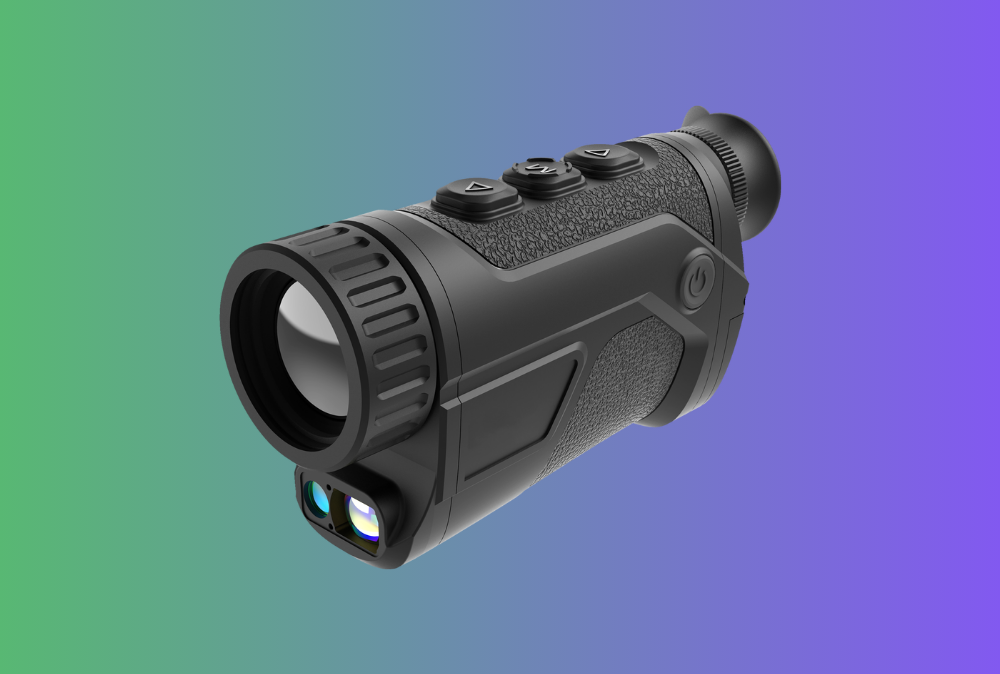
If you run a security or maintenance brand, a handheld thermal imager can turn you from “camera supplier” into a complete solutions provider. In this guide, you’ll see how to define the right specs, choose a China OEM factory, and launch a private-label handheld thermal imager line that your dealers actually reorder instead of returning.
Table of Contents
ToggleLast updated: November 2025 | Estimated reading time: 11 minutes
In this guide, you will learn:
- How a handheld thermal imager OEM model works for security and maintenance brands
- How to define realistic specs and options for your handheld thermal imager line
- How to select a handheld thermal imager manufacturer in China without gambling on quality
- How to structure testing, certification and after-sales so RMA doesn’t kill your margin
- What 2025 handheld thermal imager OEM trends mean for your roadmap
What does a handheld thermal imager OEM model look like for your brand?
In a good OEM model, a handheld thermal imager becomes your product, but engineering and manufacturing stay with the specialist factory. You bring the brand, channel and customer intimacy; your OEM partner brings the thermal imaging module, electronics, mechanics and production system.
Typical building blocks of a handheld thermal imager OEM project:
- Platform choice: sensor resolution, lens options, main board, battery structure
- Brand layer: housing color, logo, labels, boot logo, UI language and menu layout
- System layer: data export, software integration, API / SDK for your own platform
- Quality & service: test standards, warranty terms, spare parts and training
From your side this is not just “slap my logo on it”. Done right, your OEM partner behaves like an extended engineering team, helping you build a handheld thermal imager product family that fits your security patrol or maintenance workflows instead of forcing you into a generic catalog unit.
OEM vs ODM vs “catalog sticker”: which cooperation type fits you?
You will hear three words again and again: catalog, OEM and ODM.
- Catalog sticker – Take a standard handheld thermal imager, change logo and box.
- Pros: lowest NRE, fastest time-to-market.
- Cons: zero differentiation in crowded security tenders.
- OEM / light ODM – Start from a proven platform, tweak lens, firmware and ID.
- Pros: best balance of cost, lead time and differentiation.
- Cons: some constraints from existing platform architecture.
- Deep ODM – New industrial design, board design and firmware for your brand.
- Pros: maximum control and “flagship” positioning.
- Cons: higher volume, longer timeline and more engineering discussions.
| Evaluation Dimension | Security / Patrol Brands Focus | Maintenance / Inspection Brands Focus | What it means for you |
|---|---|---|---|
| Time to market | 3–6 months to catch projects and tenders | Can accept longer if tied to training rollout | The more tender-driven you are, the more OEM > ODM |
| Need for differentiation | Patrol, police, border control use cases | Temperature accuracy, reporting, analytics | Heavy competition pushes you beyond catalog sticker |
| Annual volume & budget | Larger volume, strong price pressure | Smaller runs but higher value per device | <300 units / year → start with proven OEM platform |
Practical tips for you
- If this is your first handheld thermal imager: start with catalog or light OEM on a stable platform, then move to deeper ODM after the first revenue cycle.
- If you already have a strong dealer network: invest in UI / workflow customization so the handheld thermal imaging camera feels native to your existing software and SOP.
- If you live in tender business: build OEM specs directly from tender requirements (temperature range, certifications, IP rating, data export) instead of copying competitors blindly.
Real-world example:
A European security brand used a China handheld thermal imager OEM platform to extend from CCTV into mobile patrol tools. Within the first year they shipped ~600 units through existing dealers, kept RMA below 1%, and unlocked new service contracts built around night patrol packages.
Internal link suggestion:
“Want to understand module-level options first? Check our Thermal Imaging Module OEM Guide for Device Brands.”
How should you define the handheld thermal imager spec for your use cases?
Most handheld thermal imager OEM projects fail on paper, not in the field. Over-specced units kill your margin; under-specced ones kill user trust. Instead of starting with sensor resolution, start with simple questions: who uses it, where, at what distance, and for how many hours per shift?
Key dimensions to clarify:
- Use scenarios – security patrols, plant perimeter, border monitoring, electrical inspection, building envelope checks, HVAC, mechanical maintenance, etc.
- Working distance – mostly 5–30 m on switchgear and panels, or 50–150 m on fences, gates and rooftops?
- Function priority – image quality vs temperature accuracy vs reporting and connectivity.
- Carry and ergonomics – one-hand grip, glove operation, shoulder strap, tripod mount, etc.
That information gives your OEM factory enough context to recommend realistic handheld thermal imager configurations instead of just pushing the highest resolution.
Core spec checklist for handheld thermal imager OEM projects
Use this checklist when you talk with a handheld thermal imager manufacturer in China:
| Spec Area | Typical Options | Common Trade-offs | What it means for you |
|---|---|---|---|
| Sensor resolution & pixel | 256×192, 384×288, 640×512 | Higher res = clearer image + higher cost | 384×288 fits most patrol & maintenance tasks |
| Lens & field of view | 6–9 mm wide, 13–19 mm mid, >25 mm long | Narrow FOV sees farther but loses context | Patrol: mid; inspection: wider FOV |
| Temperature range & accuracy | e.g. –20°C…550°C, ±2°C or ±2% | Wider range can reduce accuracy in sweet spot | Match to your real operating temperature bands |
| Battery & power | 4–6 h runtime, swappable pack, USB-C / dock | Higher capacity = more weight and size | Patrol teams love hot-swappable battery packs |
| UI, palettes & reporting | White-hot, black-hot, ironbow, isotherms, app | Rich UI can confuse first-time users | Pre-sets tuned for “security” vs “inspection” |
Practical tips for you
- Avoid spec inflation: if your teams work within 30 m, a 640×512 + long-focus handheld thermal imager is overkill and eats margin without visible benefit.
- Write 3–5 real “job tickets”: for example “night perimeter patrol in 0–10°C”, “indoor panel inspection at 2 m”. Share them with the OEM factory and let them propose options.
- Plan for a family, not a single hero model: design a common platform, then create “Standard” and “Pro” handheld thermal imaging camera variants with lens, Wi-Fi and analysis features as upsell levers.
Real-world example:
An industrial service company initially demanded 640×512 sensors. After reviewing real inspection distances (5–20 m indoors), they switched to a 384×288 handheld thermal imager platform, cut unit cost by ~30%, and still met all reporting requirements.
How do you choose a handheld thermal imager manufacturer in China?
Price matters, but total cost of ownership matters more. A cheap handheld thermal imager that fails in month 9 is more expensive than a robust one that runs for 5 years. When you evaluate a China factory, look beyond the quotation sheet.
Focus on four areas:
- Domain experience
- Do they already supply handheld thermal imagers for security patrols or industrial maintenance?
- Can they share anonymized case studies or reference projects?
- Module and system capability
- Do they control thermal imaging modules and, if needed, laser rangefinder modules in-house?
- Can they provide SDKs, protocols and integration support, not just hardware?
- Quality system and testing
- Do they run burn-in, temperature cycling, vibration and drop tests on every batch?
- Do they have clear acceptance criteria or only “visual inspection”?
- Project management and communication
- Is there a dedicated OEM project manager and technical contact?
- Are sample, pilot run and mass production milestones clearly defined?
Long-tail keywords you naturally cover here: handheld thermal imager OEM China factory, handheld thermal imaging camera manufacturer, handheld thermal imager supplier for security brands.
Simple vendor scoring tool (self-test)
Use a 1–5 score for each line and see who really deserves your logo:
| Dimension | 1–2 points | 3–4 points | 5 points |
|---|---|---|---|
| Security & maintenance experience | No relevant projects | Some projects, limited volume | Multiple long-term handheld thermal imager clients |
| Module + device capability | Only buys finished cores | Assembles cores into devices | Designs modules and devices + offers SDK |
| Certifications & compliance | No export track record | Basic CE / FCC via third parties | Strong multi-region certification experience |
| Project management & communication | Slow, unclear answers | Acceptable, but reactive | Proactive with clear timelines & documentation |
- Rule of thumb: vendors scoring 16 or more should go into sample testing; those under 12 are backup suppliers only.
Practical tips for you
- Always start with a controlled pilot batch: 50–100 handheld thermal imagers are enough to see if quality and support are real.
- Ask to meet engineers, not just sales: if you never speak with firmware or hardware engineers, long-term OEM / ODM work will be painful.
- Ask about roadmap: a serious handheld thermal imager manufacturer will share what they plan for the next 12–24 months (new sensors, connectivity, AI features).
Real-world example:
A maintenance brand first chose the lowest-price handheld thermal imager supplier and saw RMA rates around 8%. After switching to a factory with in-house modules and better testing, per-unit cost rose ~10% but RMA dropped below 2% and dealer confidence recovered.
Internal link suggestion:
“To see how we handle combined optics and electronics, read Thermal + LRF Fusion Solutions for Patrol and SAR Teams.”
How can you control testing, certification and after-sales risk?
For a handheld thermal imager line, bad after-sales can erase two or three years of profit. You want to design field testing, factory testing and service into the project from day one, not as an afterthought.
Key blocks to define with your OEM partner:
- Field test plan
- Run at least 2–3 field pilots in your real environments: night patrol, rainy conditions, indoor switchgear rooms, rooftop inspections.
- Use a simple issue log: serial number, environment, duration, symptom, picture / video.
- Outgoing test and sampling
- Agree on mandatory checks: basic image quality, temperature reference test, button / trigger function, battery endurance, connectivity.
- Decide if you require third-party lab reports or random sampling by your team.
- Certifications and markings
- Plan CE / FCC / UKCA / local approvals early; avoid last-minute surprises before tenders.
- If you include a laser rangefinder, confirm laser class, labeling and user instructions.
- RMA and spare parts strategy
- Define warranty terms: for example 24 months for the handheld thermal imagers, longer for cores.
- Decide what can be replaced in the field (battery, rubber armor, lens cover) and what must go back to the factory (detector, main PCB).
Practical tips for you
- Put quality clauses and RMA thresholds in writing, as part of the OEM agreement.
- Ask for a change notification process: any hardware or firmware change must be communicated and tested, not silently pushed into production.
- Keep a small buffer stock of key spare parts in your region to shorten repair times and protect your brand.
Real-world example:
One brand agreed on a clause that if a batch’s RMA exceeded 3%, the handheld thermal imager factory would replace or repair units at their cost. This pushed the factory to add high-low temperature aging tests, and real RMA dropped to under 1%.
2025 handheld thermal imager OEM trends you should watch
In 2025, handheld thermal imager OEM projects are moving from “just hardware” to “connected tools in a workflow”. Security brands want patrol devices that talk to VMS and incident management systems; maintenance brands want handheld thermal imaging cameras that fit into digital work orders and asset management.
Key trends at a glance
- Smarter image processing: on-device enhancement, noise reduction and auto-range make mid-resolution cores look much better to end-users.
- Connectivity and apps as default: Wi-Fi / Bluetooth plus mobile apps enable instant upload of thermal images and reports instead of manual SD card handling.
- Scenario-based presets: “Perimeter patrol”, “Electrical cabinet”, “Building envelope” presets reduce menu complexity and training time for new users.
For your brand, this means:
- It is easier to use a single handheld thermal imager platform to create multiple SKUs by changing software options and presets.
- Your real differentiator may be integration into your platform, cloud or reporting tools, not just optics or resolution.
Frequently Asked Questions {#faq}
Q1: What minimum order quantity do I need for a handheld thermal imager OEM project?
Many China factories set MOQs between 100 and 300 units for branded handheld thermal imagers using an existing platform. Deep ODM with unique housing or tooling usually requires higher yearly volumes.
Q2: How long does it take from first contact to mass production?
If you use a proven handheld thermal imager platform and keep customization moderate, a realistic timeline is 2–4 weeks for first samples, 4–8 weeks for pilot run, then mass production. New tooling or complex software adds extra months.
Q3: Can one handheld thermal imager serve both security and maintenance customers?
Yes, as long as you design the UI and presets carefully. Many brands use one hardware platform and ship different firmware profiles or menu presets for security patrols versus electrical maintenance.
Q4: Do I need my own software for handheld thermal imagers?
You don’t have to. You can start with the OEM factory’s PC or mobile software and later integrate via SDK or open protocols. If you already operate a cloud or platform, plan that integration from day one.
Summary and recommendations
A successful handheld thermal imager OEM program is built on three pillars: clear use-case-driven specs, the right China manufacturing partner, and disciplined testing and after-sales design. Instead of chasing the highest resolution or the lowest price, you focus on what your patrol officers, inspectors and service teams actually need in the field, then lock that into an OEM platform you can grow over years.
Concrete next steps for you:
- Write down 3–5 real-world jobs your handheld thermal imaging camera must handle, with distance, environment and reporting needs.
- Shortlist 2–3 handheld thermal imager manufacturers in China and score them with the vendor tool above.
- Request samples built to your draft spec, run structured pilots, and refine the spec based on feedback.
- Once you pick a long-term partner, formalize quality, certification and RMA rules, then plan a small family of models instead of a single one.
About Gemin Optics
Gemin Optics focuses on thermal imaging modules, laser rangefinder modules and complete thermal devices for OEM and ODM partners worldwide. We combine module-level design with complete handheld thermal imager development, so you can build a coherent product line instead of isolated models. Our engineering teams work with security, maintenance and industrial brands to balance performance, cost and long-term serviceability on a shared platform.
If you’re planning your next handheld thermal imager project, our OEM team can help you review use cases, define a realistic specification, and choose the right platform for your market and volume expectations.
Recommended internal links
- Thermal Imaging Module OEM Guide for Device Brands – deeper dive into core modules behind handheld thermal imagers
- Laser Rangefinder Module Integration for Security Systems – how to add distance measurement to your devices and kits
- Thermal + LRF Fusion Solutions for Patrol and SAR Teams – ideas for complete field kits beyond a single handheld unit