If you plan to sell your own-branded handheld thermal camera, the worst mistake is to start from a generic consumer device and simply add a logo. Private-label programs live or die on uptime, repeatability and support. In this guide, we unpack what truly makes a handheld thermal camera ready for OEM and private label work: from sensor and housing decisions to firmware, testing, documentation, and how your China factory behaves when units are in the field.
Table of Contents
ToggleIn this guide you will learn
- How private-label requirements change the design of a handheld thermal camera
- Which hardware and firmware features separate OEM platforms from cheap gadgets
- How to judge if a handheld thermal camera manufacturer in China is ready for OEM/ODM
- What kind of testing, certification and documentation you should demand
- How 2025 trends in handheld thermal imaging affect your private-label roadmap
Why are private-label handheld thermal cameras different from consumer devices?
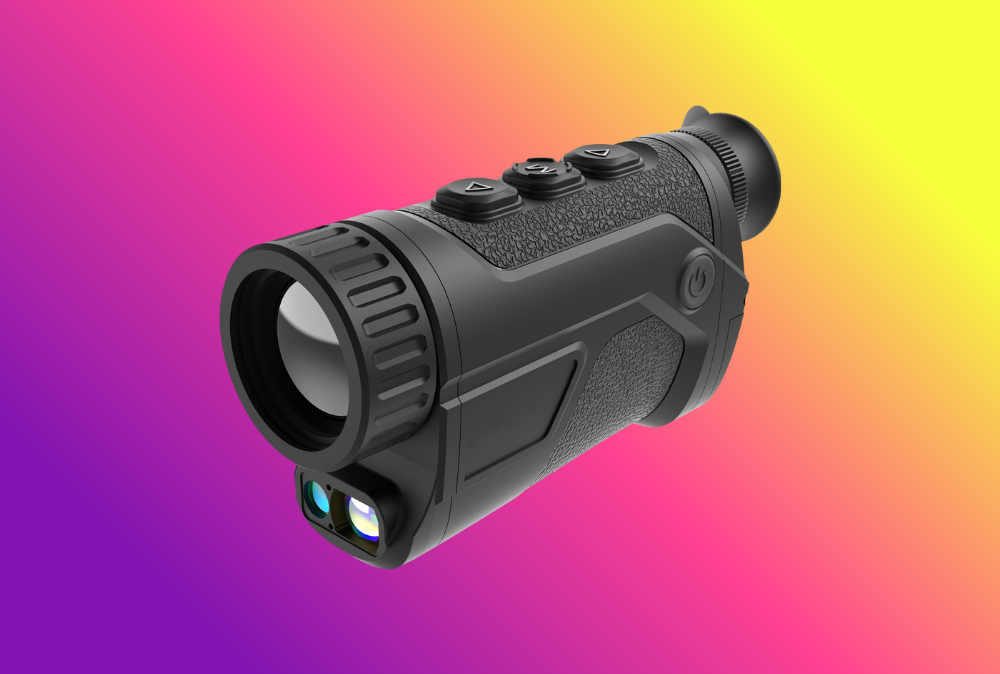
A handheld thermal camera for private label programs is a B2B tool, not a weekend gadget. Your logo will sit on the housing, but your brand will sit behind every inspection report, patrol route and RMA ticket.
A private-label-ready handheld thermal camera must do three things well:
- Deliver consistent performance across hundreds or thousands of units
- Survive real-world abuse in security and maintenance work
- Come with the documentation, certifications and roadmap your brand needs
Consumer-focused handheld thermal imaging cameras can tolerate a few dead units and some noisy reviews. In B2B maintenance contracts or security tenders, one bad batch can cost a multi-year agreement. That is why private-label programs rely on proven OEM platforms, robust thermal camera module integration, and factories that understand lifecycle management, not just assembly.
Which hardware foundations make a handheld thermal camera private-label ready?
At the heart of every handheld thermal camera sits a combination of thermal imaging camera core, optics, processing and power system. For private label, you care less about chasing extreme specs and more about robust, repeatable choices.
Core hardware elements to get right
- Detector & pixel pitch
Mid-resolution cores such as 256×192 or 384×288 often give the best balance of image quality, cost and power for handheld thermal camera OEM platforms. - Lens and field of view
Security patrols need enough range to spot people and vehicles; maintenance teams need a field of view that shows the full panel at close range. - Housing and ruggedization
A private-label handheld thermal camera should offer at least basic drop resistance and some protection against dust and rain. - Power architecture
Swappable batteries, 4–6 hours of runtime and standard USB-C or docking options are practical minimums for B2B use.
| Hardware Area | Consumer Gadget Level | Private-Label-Ready Level | What it means for you |
|---|---|---|---|
| Thermal core | Lowest-cost sensor, limited traceability | Stable sensor family, documented specs and lifecycle | Easier multi-year support and cross-model roadmap |
| Optics & FOV | One lens fits all | Lens options tuned for patrol vs maintenance | You can build variants without redesigning the platform |
| Housing | Basic plastic shell | Reinforced shell, tested drops and environmental sealing | Fewer field failures and complaints from professional users |
| Power | Fixed battery, mixed cells | Qualified cells, hot-swap options, clear safety reports | Simpler logistics, easier compliance and transport |
A serious OEM will be able to show how their handheld thermal camera platform is built on internal thermal camera module integration, with the same core also used in thermal monoculars or other product lines. That reuse is a strong signal that the hardware has already been proven in the field.
What firmware and workflow features matter for private-label handheld thermal cameras?
Even a solid hardware platform will fail in a private label program if the firmware feels like a hobby project. For B2B, usability and repeatable workflow often matter more than raw resolution.
Firmware and UI requirements for OEM platforms
A private-label-ready handheld thermal imaging camera typically includes:
- Intuitive UI with minimal steps for common tasks (capture, measure, annotate).
- Relevant palettes like white-hot, black-hot and ironbow, plus simple explanations for non-experts.
- Measurement tools such as spot, area, min/max and isotherms that match your industry.
- File management and reporting that export consistent image + data packages.
- Connectivity options (USB, Wi-Fi, Bluetooth) tailored to your system integration plans.
For example, a handheld thermal camera for electrical maintenance may highlight over-temperature alarms on busbars and provide CSV or PDF reports, while a unit for security patrols focuses on detection, quick snapshots and integration with a VMS or incident log.
Table: Firmware checklist for private-label readiness
| Firmware Feature | Why it matters in private label | What to check with your OEM |
|---|---|---|
| Menu structure | Reduces training time and misuse | Can we customize menu items and hide unused functions? |
| Palette & alarms | Helps users interpret scenes quickly | Are palettes and thresholds configurable per project? |
| File naming & metadata | Makes reports searchable and auditable | Does each image carry date, time, user and serial data? |
| SDK / protocol availability | Enables integration into your cloud or app | Do you offer SDK / protocol docs for handheld devices? |
When evaluating a handheld thermal camera OEM platform, always request a firmware demo and ask how much can be customized without breaking upgrade paths.
How do manufacturing and quality systems support private-label handheld cameras?
For a private label program, your risk is not just “does this sample work?” but “will unit number 1,000 behave like unit number 1?” The answer sits in the factory’s quality system.
What you should expect from a private-label-ready factory
A handheld thermal camera manufacturer in China should be able to show:
- Documented incoming inspection for detectors, lenses and critical electronic parts.
- Process controls during assembly, including ESD handling and calibration stations.
- End-of-line tests covering image quality, temperature reference checks and power tests.
- Environmental and mechanical testing (temperature cycling, vibration, drop tests).
- Traceability that links every handheld thermal camera to production data.
Factories that also build core modules often have more mature processes. You can verify this by asking how they manage production for their thermal camera module lines and whether the same controls apply to finished devices.
| Quality Element | Basic Level | Private-Label-Ready Level | What it means for your brand |
|---|---|---|---|
| Testing | Power-on + quick image check | Calibrated tests with written pass/fail criteria | Predictable performance, fewer disputes |
| Environmental checks | Only storage conditions | Sample units run through temp/humidity and vibration | Better reliability in harsh field environments |
| Traceability | Serial label only | Serial + digital record of key components and tests | Faster root cause analysis when issues do appear |
| Documentation | Basic spec sheet | Full datasheets, test reports, change notifications | Easier compliance, especially in regulated markets |
Reviewing the factory’s manufacturing and quality documentation can often tell you more than a showroom visit.
What commercial and support conditions make a handheld thermal camera fit for private label?
Even the best hardware is not enough. For a private-label handheld thermal camera OEM platform, commercial terms and support processes must match your business model.
Key commercial factors
- Realistic MOQ and step-up pricing
You need starting MOQs that let you test markets (for example 100–300 units) and clear volume steps for 500, 1,000 and beyond. - Spare parts and service model
The OEM should offer spare detectors, lenses, housings and boards, plus guidance on which parts your service centers can replace locally. - Roadmap and lifecycle
A private-label line needs at least a few years of component stability. Ask how long the core platform will be supported and what the transition plan is. - Change notification
Any hardware, firmware or supplier change should trigger a formal PCN with enough time for you to validate.
From a B2B buyer’s point of view, you are not just selecting a device—you are selecting a handheld thermal camera OEM partner for the next product cycle. Strong documentation, predictable lead times and clear RMA rules are at least as important as the initial quote.
What 2025 trends affect private-label handheld thermal camera programs?
The handheld thermal camera category is changing fast, and those changes affect which platforms are “future-proof” for private label.
Trends you should factor into your decisions
- Better performance from mid-range cores
Image processing and noise reduction mean 384×288 sensors can now satisfy many use cases that once needed 640×512, keeping private-label pricing competitive. - Deeper integration with apps and cloud
Many OEM platforms now offer mobile apps and APIs so handheld units can feed inspection reports, alarms and images directly into asset or patrol systems. - Scenario-based presets
Devices ship with configuration profiles like “electrical cabinet”, “building envelope” or “perimeter patrol”, which reduce training time and errors. - Multi-product ecosystems
Brands increasingly want a consistent look and feel across handheld cameras, thermal monocular OEM/ODM lines and even rifle or clip-on sights, all built on common modules.
For your private label strategy, this means picking a handheld thermal camera platform that can scale into a family, not just a single SKU.
Frequently Asked Questions {#faq}
Q1: How many units do I need to start a private-label handheld thermal camera line?
Most factories set MOQs between 100 and 300 units for an existing handheld thermal camera OEM platform with your logo and UI changes. Deep housing or hardware modifications generally require higher annual volume commitments.
Q2: Can I use the same handheld thermal camera for both security and maintenance?
Yes, if the OEM platform supports flexible firmware. Many brands run one hardware base and ship different firmware profiles or presets for security patrol, industrial maintenance or building diagnostics.
Q3: What certifications should a private-label handheld thermal camera have?
At minimum, look for CE and FCC for most export markets. Depending on your region or vertical, additional safety and environmental standards may apply. Your manufacturer should help you understand which reports are already available for the platform.
Q4: How long should the platform stay in production for a private-label program?
Ideally, a handheld thermal camera platform should be supported for several years so you can build reputation and stock spare parts. Ask the OEM for a written lifecycle plan and how they handle component obsolescence.
Q5: Can handheld thermal cameras share modules with other products in my portfolio?
Often yes. A modular design lets the same detector and electronics power handheld cameras, monoculars or other optics. This simplifies your spare parts strategy and strengthens your negotiation position with the factory.
Summary and next steps
A handheld thermal camera ready for private label programs is more than a device that boots and shows a heat picture. It is built on stable modules, tuned optics and rugged housing; it runs firmware that supports your workflows; it comes from a factory with real quality systems; and it is backed by commercial terms, documentation and a roadmap your brand can trust.
As a next step, you can:
- Map your top three use cases and distances for handheld thermal cameras.
- Shortlist OEM platforms that match those use cases rather than chasing maximum resolution.
- Evaluate factories on quality systems, lifecycle and support—not just price.
- Run a pilot batch and collect structured field feedback before committing to full rollout.
How Gemin Optics supports private-label handheld thermal camera programs
At Gemin Optics, we combine in-house thermal camera module design with OEM/ODM development for finished devices. That means your private-label handheld thermal camera can share cores and software with other products in your portfolio, simplifying support and long-term planning. Our teams focus on security, maintenance and outdoor use cases, and we work with you to balance performance, cost and lifecycle.
If you are considering a new private-label handheld thermal camera line, our OEM specialists can help you define specifications, choose the right platform and plan testing and after-sales from day one. You can learn more about our capabilities on our thermal camera module integration page or simply contact us to discuss your project.