If you want one handheld thermal imaging camera line to serve electrical contractors, solar EPCs, building inspectors and security dealers, guessing the spec from a competitor brochure is risky. Each industry has its own standards, inspection routines and ROI story. In this guide we break down how to design a spec ladder that works across multiple verticals, using real market data and reference standards so you can brief your OEM factory with confidence instead of trial and error.
Table of Contents
ToggleIn this guide you will learn
- Why multi-industry distribution needs a spec ladder, not a single hero model
- How NFPA 70B, IEC 62446-3 and predictive maintenance ROI shape your spec
- How to align detector, lens, temperature range and accuracy with real use cases
- How to design ergonomics, workflow and connectivity for different industries
- How to turn these decisions into a clear OEM brief for your China manufacturer
Why multi-industry spec is different from single-vertical design
Global thermal imaging is no longer a niche market. Recent research estimates the overall thermal imaging market at around USD 7.7–12 billion in the mid-2020s, with CAGRs in the 7–11% range driven by security, industrial and energy applications. Precedence Research+1 Within that, handheld thermal imaging equipment alone is projected to grow at roughly 9%+ CAGR through 2030. Mordor Intelligence
This growth is not dominated by one sector. Your distributors will likely sell handheld thermal imaging cameras into at least four segments:
- Electrical safety & NFPA 70B–driven maintenance
- Predictive maintenance in factories and process plants
- PV solar inspections under IEC 62446-3
- Building diagnostics and HVAC commissioning
Designing a handheld thermal imaging camera for only one of these is relatively easy. Designing a spec ladder that lets one product family cover all of them—without being too expensive for entry-level users or too weak for professional work—is where the real OEM strategy lies.
Map your target industries and their standards first
Before touching detector resolution or lens length, you need to anchor your spec in the standards and ROI stories your distributors use to sell.
Electrical maintenance & NFPA 70B
The 2023 edition of NFPA 70B shifts infrared thermography from “nice to have” to a consensus standard for electrical maintenance. It requires that all electrical equipment be inspected at least every 12 months, with higher-risk equipment requiring infrared inspections as often as every 6 months. FLIR+1
Fluke and other industry sources highlight why: proper thermographic preventive maintenance can deliver 10× ROI, cut maintenance costs by 25–30%, reduce breakdowns by 70–75% and lower downtime by 35–45% compared to run-to-failure approaches. Fluke Corporation
For you, that means your handheld thermal imaging camera line must:
- Offer reliable temperature measurements on energized equipment
- Support Delta-T analysis (temperature difference between components and ambient)
- Capture and store data in a way that supports NFPA 70B-compliant reports IRINFO.ORG Infrared Thermography
PV solar inspections & IEC 62446-3
In the PV world, IEC TS 62446-3:2017 defines how to use thermal imaging for outdoor inspection of solar modules and plants, including minimum technical characteristics for thermal cameras and acceptable weather conditions. IEC Webstore+1
A multi-industry handheld thermal imaging camera spec therefore needs:
- Enough resolution to spot string-level and module-level anomalies
- A temperature range suitable for hot PV modules in full sun
- Optics that can cover large arrays from safe distances
Predictive maintenance & cross-industry ROI
Studies on predictive maintenance show savings of 18–25% in overall maintenance costs, 30–50% reduction in unplanned downtime, and positive ROI for around 95% of organizations, many within 12 months. WorkTrek+1
Your distributor’s story is simple: “this handheld thermal imaging camera helps you catch hot spots before they become six-figure failures.” The spec must therefore support:
- Frequent, fast inspections across many assets
- Easy interpretation by technicians who are not thermography experts
- Integration into digital maintenance workflows
Build a spec ladder, not a single “average” handheld thermal imaging camera
Trying to design one “average” handheld thermal imaging camera for every industry leads to the worst of both worlds: too expensive for basic jobs, too limited for serious contracts. A better approach is to define a three-tier spec ladder built on a common platform.
Example spec ladder for multi-industry distribution
| Tier / Model role | Typical users & jobs | Detector & optics | Temperature & accuracy | What it means for you |
|---|---|---|---|---|
| Entry | Electricians, HVAC techs, building inspections | 160×120 or 256×192, wide lens | –20…250°C, basic ±2°C | Low entry price, training tool, upsell path to mid tier |
| Workhorse | Electrical maintenance, PV O&M, light industrial PdM | 256×192 or 384×288, 9–13 mm lens | –20…550°C, better stability in 0…150°C range | Main volume driver for dealers, satisfies NFPA 70B and IEC 62446-3 jobs |
| Pro / Specialist | Large plants, utilities, advanced thermographers | 384×288 or 640×512, optional tele lens | Extended range with tighter accuracy & focus | Used as flagship for demanding contracts, supports higher margin & rental programs |
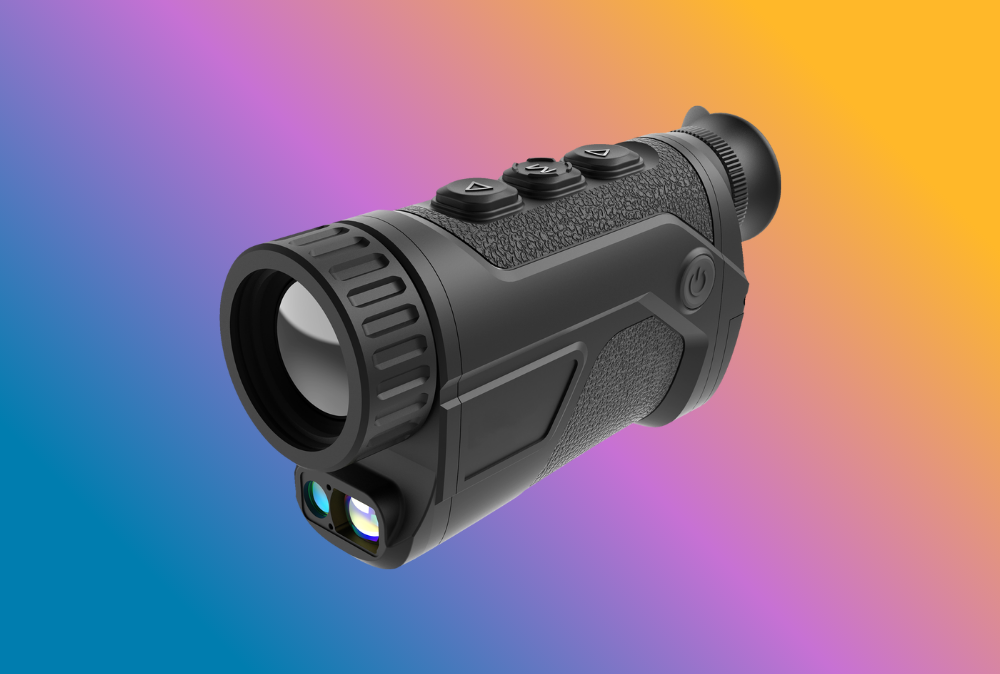
You can implement all three on one thermal camera module platform, varying lens, firmware options and housing details. Using a common core simplifies calibration, testing and long-term support; it also lets you reuse hardware in other products like thermal monoculars.
Spec decision 1: detector, pixel pitch and NETD
For multi-industry distribution, the question is not “what’s the highest resolution?” but “what resolution makes failures obvious enough at typical working distances?”
- Entry tier: 160×120 or 256×192 detectors often suffice for finding major hot spots on panels, motors and building envelopes.
- Workhorse tier: 256×192 or 384×288 strikes a good balance for PV strings, busbars and rooftop inspections at 5–30 m.
- Pro tier: 640×512 is useful for utilities, wind turbines and large industrial assets where you need more pixels on target.
Pair these with a reasonable NETD (noise-equivalent temperature difference) so subtle temperature differences stand out; mid-range NETD values around 40 mK already deliver very usable images for predictive maintenance when combined with good processing.
Spec decision 2: lens, field of view and working distance
Your handheld thermal imaging camera portfolio must handle cramped switchgear rooms, rooftop PV arrays and building facades.
Practical lens guidelines
- Wide lens (~45–50° HFOV): great for indoor cabinets and HVAC, but reduces target resolution at distance.
- Medium lens (~25–35° HFOV): good compromise for most outdoor electrical and PV inspections at 10–30 m.
- Long lens (<20° HFOV): specialist use for wind turbines, transmission lines or high masts.
Instead of putting an expensive zoom lens on every unit, let your Pro tier carry a telephoto option, and keep Entry and Workhorse models with fixed lenses that match their core jobs.
Spec decision 3: temperature range, accuracy and standards alignment
NFPA 70B and IEC 62446-3 do not mandate exact camera models, but they do expect you to read meaningful Delta-T values and identify abnormal heating. IRINFO.ORG Infrared Thermography+1
For a multi-industry handheld thermal imaging camera ladder:
- Entry: –20…250°C, with stable behaviour around typical electrical and HVAC ranges (0…120°C).
- Workhorse: –20…550°C, enough for hot electrical joints and PV modules in full sun.
- Pro: extended high range if your distributors target foundries, refractory linings or turbines.
Accuracy specs like ±2°C or ±2% are widely accepted in predictive maintenance. More important is repeatability: can a camera show the same results on repeated passes so trends are meaningful?
Spec decision 4: ergonomics and workflow for different industries
A multi-industry handheld thermal imaging camera must be usable by people who scan all day, not just demo it at trade shows.
Key ergonomic points
- One-handed operation with a stable grip and trigger that’s usable with gloves.
- Weight and balance tuned for long shifts; many technicians carry cameras on a shoulder strap.
- Simple menu logic: presets such as “Electrical”, “Mechanical”, “Building”, “PV” can hide complexity.
- Display readability in sunlight and dark electrical rooms.
Workflow matters just as much:
- Electrical techs need fast capture, Delta-T comparison and annotation for NFPA 70B reports.
- PV inspectors need consistent image settings so module comparisons are valid across an array.
- Building inspectors benefit from easy switching between indoor and outdoor palettes.
A well-designed handheld thermal imaging camera platform lets you tailor these presets per model or even per customer firmware, while reusing the same internal thermal camera module integration architecture. See thermal camera module integration for how this looks in practice.
Spec decision 5: connectivity, reporting and integration
Multi-industry distributors increasingly sell “packages” that combine hardware with software, training and service contracts. Your handheld thermal imaging camera spec should support that.
Connectivity matrix
- USB-C – baseline for data offload and firmware updates.
- Wi-Fi / Bluetooth – enable mobile apps and live streaming for remote experts.
- Standard file formats – JPEG with embedded radiometric data, or proprietary formats plus export tools.
Predictive maintenance programs often report 30–40% savings in energy and maintenance when implemented properly. Ocean.me+1 To play in that space, your handheld thermal imaging camera must make it easy to turn images into structured data and reports.
From a spec perspective:
- Define what file naming, tagging and metadata are required (asset ID, inspector, location).
- Decide whether you need an SDK or open protocol so integrators can plug into CMMS/EAM systems.
- Ensure your OEM can maintain these interfaces for the life of the product.
Turning specs into a factory-ready OEM brief
Once you’ve defined tiers and features, you need to translate them into a brief your China OEM can build against.
Checklist for a clear OEM brief
- Target industries & standards
- List NFPA 70B electrical, IEC 62446-3 PV, and typical building/HVAC scenarios explicitly.
- Spec ladder summary
- One page showing Entry / Workhorse / Pro, key detector, lens and temperature specs.
- Mandatory vs optional features
- “Must have” vs “nice to have” to avoid gold-plating every model.
- Quality & testing expectations
- Reference your required tests and link them to your own manufacturing & quality philosophy.
- Roadmap & lifecycle expectations
- How long you expect the platform to stay in production; what a controlled upgrade looks like.
This is also a good place to explain how handheld cameras fit into your broader portfolio of thermal rifle scopes and thermal monoculars OEM/ODM, so the factory understands your long-term vision.
2025 trends that influence your spec decisions
The handheld imagers segment is projected to grow from roughly USD 3.9–4.3 billion in the mid-2020s to around USD 8–13 billion by the early 2030s, with CAGRs around 9–10.5%. Grand View Research+2Consegic Business Intelligence+2 Much of this growth is in “smart” connected devices.
Trends you should account for:
- Mid-tier performance keeps improving – thanks to better processing, 256×192 and 384×288 detectors now solve many jobs that once required higher resolutions.
- Connectivity becomes expected – app-based reporting and cloud storage are standard talking points in tenders and distributor brochures.
- Verticalized firmware – menus and presets tailored to PV, electrical or building inspections are a key differentiator.
- Ecosystem selling – distributors want families of products that share accessories, batteries and software.
Rather than chasing every trend, design your handheld thermal imaging camera platform so you can switch on certain features—like Wi-Fi or advanced analytics—in higher tiers or future revisions without redesigning the hardware.
Frequently Asked Questions {#faq}
Q1: What resolution should I choose for a multi-industry handheld thermal imaging camera line?
For most distributors, a 256×192 or 384×288 detector is the sweet spot for Workhorse models. You can add a 160×120 Entry model for price-sensitive users and a 640×512 Pro model for demanding utilities or wind applications.
Q2: How many models do I need to cover most markets?
Three tiers based on one common platform—Entry, Workhorse and Pro—usually give enough flexibility. You can then create channel-specific bundles (e.g. PV kit, electrical kit) without changing the underlying hardware.
Q3: Do I need Wi-Fi on every handheld thermal imaging camera?
Not necessarily. Many entry-level users are happy with USB offload. For customers running predictive maintenance programs or cloud-based reporting, at least the Workhorse and Pro models should offer Wi-Fi or Bluetooth plus a basic app.
Q4: How important are standards like NFPA 70B and IEC 62446-3 in spec work?
Very important for credibility and sales. Your spec should at least allow users to follow these standards—adequate resolution, stable temperature readings, and reporting that supports Delta-T and anomaly documentation.
Q5: Can one handheld thermal imaging camera platform support other product types?
Yes. A modular design lets you reuse the same core in devices such as handheld monoculars, weapon sights or fixed cameras. This reduces engineering cost and gives your distributors a unified story across applications.
Summary and next steps
A well-designed handheld thermal imaging camera portfolio for multi-industry distribution starts from standards and ROI, not from pixel counts. By mapping electrical, PV, building and industrial needs; creating a three-tier spec ladder; and defining ergonomics, connectivity and reporting requirements, you give your OEM manufacturer a roadmap that can support distributors for years instead of one season.
Next steps for you:
- List your top three target industries and main standards (NFPA 70B, IEC 62446-3, etc.).
- Draft an Entry / Workhorse / Pro spec table tailored to your markets.
- Review it with a qualified OEM partner who understands thermal camera modules, integration and quality.
- Run pilots with real dealers and refine before locking in volume commitments.
How Gemin Optics can help
Gemin Optics combines in-house thermal camera module design with device-level OEM/ODM development. That lets us build handheld thermal imaging camera platforms that scale across industries and product families while sharing cores, accessories and software.
If you are planning a multi-industry handheld thermal imaging camera line for your distributors, our team can help you translate market requirements and standards into a practical spec ladder and a manufacturable design. Visit our why choose us page to see how we approach OEM partnerships, or contact us to discuss your next program.