Table of Contents
ToggleChoosing the best thermal imaging camera for industrial use is not about chasing the highest resolution or the newest gadget. It’s about finding a camera strategy that fits your plant’s risk profile, inspection routes, and budget – from entry-level tools for basic surveys to expert-grade systems integrated into your condition monitoring program.
This article looks at industrial thermography from a maintenance manager’s and OEM buyer’s point of view. We’ll map camera specs to real-world risks, show how to think in tiers from entry to expert, and explain how a China-based factory or OEM/ODM supplier can support your roadmap.
1. Why Industrial Thermal Imaging Strategy Matters
1.1 From “nice-to-have” to mandatory
Infrared thermography used to be an optional add-on in many plants. That has changed.
-
- NFPA 70B, now a standard for electrical equipment maintenance, requires infrared inspections of all electrical equipment at least once every 12 months, with higher frequencies for equipment in poorer physical condition.
-
- The ISO 18434 series describes how infrared thermography should be used as part of machinery condition monitoring and diagnostics programs, emphasizing proper procedures and interpretation.
Thermal imaging is no longer just “good practice”; it is part of how plants demonstrate due diligence for safety and uptime.
1.2 What’s at stake for maintenance managers
If you pick an industrial camera that doesn’t truly fit your use cases, your team may struggle with:
-
- Missing hot spots because resolution, sensitivity, or FOV are inadequate.
-
- Spending too long on routes because of poor ergonomics or slow boot times.
-
- Failing audits because reports don’t align with NFPA 70B or ISO 18434 expectations.
On the other hand, a well-planned portfolio – from entry-level to expert thermal imaging camera industrial use models – can:
-
- Shorten inspection routes without sacrificing coverage.
-
- Improve early fault detection in electrical, mechanical, and process equipment.
-
- Provide defensible, repeatable data for safety and maintenance decisions.
2. What a Thermal Imaging Camera for Industrial Use Actually Does
2.1 Basics in plain language
A thermal imaging camera for industrial use sees heat instead of visible light:
-
- Objects above absolute zero emit infrared radiation.
-
- The camera’s detector, usually an uncooled microbolometer, is sensitive in the long-wave infrared (LWIR) band around 8–14 µm.
-
- Each pixel measures the radiation from a tiny patch of the scene, and firmware converts this data into a temperature-coded image.
In industrial maintenance, cameras are used to:
-
- Detect overheating in electrical circuits, switchgear, and transformers.
-
- Spot abnormal heating in motors, bearings, and mechanical drives.
-
- Monitor process temperatures in furnaces, ovens, kilns, and reaction vessels.
2.2 Industrial vs consumer or “gadget” cameras
Many low-cost cameras target DIY or building diagnostics. For serious thermal imaging camera industrial use, you typically need:
-
- Higher temperature ranges (often up to 550–650 °C or beyond for process equipment).
-
- Better thermal sensitivity (NETD) and calibration to see subtle anomalies.
-
- Rugged housings and ingress protection (IP) ratings aligned with IEC 60529.
-
- Support for industrial protocols, reporting tools, and sometimes hazardous-area approvals.
That’s why the “best thermal imaging camera for industrial use” is not always the one at the top of consumer comparison charts.
3. Core Specs: How to Read “Best” for Industrial Use
3.1 Detector resolution and pixel pitch
Resolution determines how many temperature measurement points you get in each image:
-
- Entry: around 256×192 pixels.
-
- Mid-range: 320×240 or 384×288.
-
- Expert: 640×480 or 640×512.
Higher resolution helps when you:
-
- Need to resolve small connectors or cable lugs from a safe distance.
-
- Want to cover larger areas in a single frame, shortening routes.
-
- Plan to crop images for reports without losing detail.
Pixel pitch (e.g. 12–17 µm) also matters; smaller pixels at a given lens focal length can give finer spatial resolution.
Checklist question:
For your highest-risk assets (e.g. MV switchgear), can you still clearly see the smallest connections when you stand at a safe working distance? If not, you may need a higher-resolution or longer-focal-length camera.
3.2 NETD (thermal sensitivity)
NETD (Noise Equivalent Temperature Difference) indicates the smallest temperature difference a camera can distinguish. Industrial cameras often quote NETD values around ≤50 mK, with premium models at ≤40 mK or better.
Why it matters:
-
- Subtle temperature differences, such as early-stage bearing faults or slight phase imbalance, may only be a few tenths of a degree above normal.
-
- Better sensitivity produces cleaner images and more reliable trending in condition monitoring programs.
For most maintenance programs, NETD ≤50 mK is a good target; demanding applications (R&D, process control) may justify ≤40 mK.
3.3 Temperature range and accuracy
Your thermal imaging camera for industrial use must cover the expected surface temperatures:
-
- Building and HVAC: below 150 °C.
-
- Electrical and mechanical maintenance: up to 250–350 °C.
-
- Kilns, furnaces, and casting: often 600 °C and higher.
Many industrial models provide multiple ranges (e.g. −20–150 °C, 0–650 °C), switching automatically or manually.
Accuracy and repeatability are equally vital. NFPA 70B and ISO 18434 emphasize that thermographic severity assessments depend on temperature differences, so the camera must deliver consistent results under known operating and environmental conditions.
Checklist questions:
-
- Are accuracy specs stated clearly (for example, ±2 °C or ±2% of reading)?
-
- Does the manufacturer specify calibration procedures and recommended intervals?
3.4 Optics, FOV, and working distance
The lens controls your field of view (FOV) and how close you need to be:
-
- Wide FOV (40–60°): good for close work in cramped spaces, building envelopes, and large surfaces.
-
- Medium FOV (24–32°): general-purpose maintenance.
-
- Narrow / telephoto FOV (6–15°): distant targets such as overhead busbars, stacks, or tall structures.
Industrial thermal imaging cameras and industrial thermal scanners may offer interchangeable lenses, or they may be fixed-lens. For fixed-lens devices, you must match FOV to typical distances and target sizes, or technicians will waste route time trying to get the right shot.
3.5 Ingress protection and ruggedness
The IP code defined in IEC 60529 describes how well an enclosure protects against dust and water ingress.
Typical expectations:
-
- IP54: protection against limited dust and splashing water – suitable for many indoor applications.
-
- IP65 / IP66: dust-tight and protected against water jets – better for outdoor or wash-down areas.
Industrial cameras should also be tested for drop resistance and vibration, referencing general environmental standards (such as IEC and MIL-STD test regimes) so that you can trust them in busy plants.
3.6 Hazardous-area considerations
For plants with flammable gases, vapors, or combustible dusts, cameras may need special approvals:
-
- ATEX in the European Union and IECEx internationally define categories and zones for equipment used in explosive atmospheres.
In such areas, the best industrial camera is the one that:
-
- Carries the correct zone and gas/dust classification.
-
- Remains practical for route work (weight, controls, battery) despite protective design.
4. From Entry-Level to Expert Models: Planning Your Camera Lineup
Instead of asking “which single camera is best?”, it’s more useful to plan a tiered lineup that matches how your plant or customer base actually works.
4.1 Entry-level: establishing basic coverage
Typical users:
Smaller plants, new thermography programs, or field service teams starting industrial work.
Typical specs:
-
- Resolution: 256×192 or 320×240.
-
- NETD: 60–80 mK.
-
- Temperature range: −20–250 °C.
-
- Fixed or limited FOV; IP54 housing.
Best fits:
-
- Periodic checks of distribution boards, small motors, and building envelopes.
-
- Initial NFPA 70B compliance in low-to-moderate risk facilities.
These devices keep budgets under control while building thermography habits. For OEM/ODM buyers, they’re often the backbone of an entry-level “industrial thermal imaging camera” line for general maintenance customers.
4.2 Mid-range: serious maintenance and multi-plant teams
Typical users:
Maintenance managers at larger plants, multi-site service contractors, and utilities.
Typical specs:
-
- Resolution: 384×288 or 320×240.
-
- NETD: ≤50 mK.
-
- Temperature ranges up to 650 °C.
-
- Manual or motorized focus, interchangeable lenses.
-
- IP54–IP65 housing and long-life batteries.
Best fits:
-
- Regular routes covering MV/LV switchgear, motors, bearings, and process lines.
-
- Condition-monitoring programs aligned with ISO 18434.
-
- Plants with high uptime targets and moderate to high energy levels.
For many industrial customers, this tier represents the best thermal imaging camera for industrial use in terms of ROI: high enough performance to support rigorous programs, but still affordable in fleet quantities.
4.3 Expert-level: risk-critical and integrated programs
Typical users:
Heavy industry, refineries, large utilities, OEM solution providers.
Typical specs:
-
- Resolution: 640×480 or 640×512.
-
- NETD: ≤40 mK.
-
- Wide temperature range with macro and high-temperature options.
-
- Advanced optics (macro lenses, long-range telephoto), high frame rates.
-
- ATEX/IECEx variants or fixed thermal imaging camera industrial use systems.
Best fits:
-
- High-energy assets with strict NFPA 70B regime and heavy consequence of failure.
-
- Continuous monitoring of kilns, furnaces, and conveyors using fixed cameras or line-scan industrial thermal scanners.
-
- OEM systems that embed thermal imaging and analytics into control platforms.
For OEM/ODM partners, this tier is where they differentiate their brand: combining high-end cores with customized housings, optics, and software to serve demanding verticals.
4.4 Planning an upgrade path
When you design a portfolio – either for your plant or as a China-made OEM product line – aim for:
-
- A common software platform so that entry and expert cameras share reporting tools.
-
- Compatible accessories (batteries, chargers, lenses) to simplify logistics.
-
- Clear positioning so users know when to step up from entry to mid-range or expert models.
5. Typical Industrial Use Cases and Matching Camera Tiers
5.1 Electrical power distribution
Thermal imaging is widely used to inspect electrical panels, transformers, cables, and breakers, identifying hot spots that indicate loose connections or overloads. APLiter+1
-
- Entry tier: low-voltage panels and small distribution boards.
-
- Mid tier: plant-wide LV/MV switchgear, MCCs, and bus ducts.
-
- Expert tier: high-energy substations, long busways, or live-tank breakers, sometimes supported by fixed cameras.
When NFPA 70B requires annual infrared inspections, mid-range to expert devices become the practical choice for electrical teams.
5.2 Rotating machinery and mechanical systems
ISO 18434 highlights infrared thermography as a tool for machinery condition monitoring, especially where surface temperatures relate to load and friction.
-
- Entry tier: spot checks on small motors and pumps.
-
- Mid tier: regular routes across critical motors, gearboxes, and bearings.
-
- Expert tier: complex drives with high consequence of failure or limited access, often combined with vibration and other sensors.
5.3 Process monitoring: furnaces, kilns, and reactors
In process industries, thermal cameras can provide continuous monitoring of temperature-critical operations, helping maintain product quality and safety.
-
- Mid tier: handheld cameras for periodic checks on furnace shells, heaters, and reactors.
-
- Expert tier: fixed thermal imaging camera industrial use systems or line-scan scanners mounted over kilns, ovens, and conveyors, feeding data into automation systems.
5.4 Buildings, utilities, and energy efficiency
Thermal imaging also supports leak detection, insulation checks, and HVAC diagnostics.
-
- Entry tier: building envelopes, roof moisture surveys, and simple HVAC inspections.
-
- Mid tier: larger campuses or data centers, where hot-spot detection in electrical distribution and cooling systems is critical.
Even here, using industrial-grade devices improves durability and data quality compared with consumer gadgets.
6. How to Choose a China Manufacturer or OEM/ODM Supplier
Once you know which tiers you need, the next step is selecting a China thermal imaging camera industrial use manufacturer or OEM/ODM supplier.
6.1 Engineering capability and modules
Look for a partner that offers both finished cameras and thermal imaging modules, so you can:
-
- Build your own branded devices around proven cores.
-
- Mix handheld cameras and fixed systems using the same imaging architecture.
A strong supplier will also provide laser rangefinder modules when distance and spot-size calculation matter, for example in high-risk electrical or process inspections.
6.2 Quality control and calibration
Ask potential China manufacturers how they:
-
- Calibrate cameras using blackbody references across multiple temperature points.
-
- Control NETD and sensitivity across production batches.
-
- Perform environmental tests (temperature cycling, humidity, vibration, IP testing) in line with IEC 60529 and related standards.
For OEM/ODM programs, you should see sample calibration certificates and test reports.
6.3 Compliance, documentation, and lifecycle
For global sales, verify that the supplier can support:
-
- CE, FCC, and regional approvals.
-
- ATEX/IECEx options for hazardous areas, where required.
-
- Long-term component and product lifecycle management (EOL notices, compatible successors).
6.4 OEM/ODM flexibility
The best China thermal imaging camera for industrial use OEM supplier will:
-
- Customize housings, branding, lenses, and UI to match your market positioning.
-
- Offer firmware features tailored to NFPA 70B and ISO-aligned workflows (asset tagging, ΔT calculation, severity levels).
-
- Provide integration tools so your developers can connect cameras to cloud platforms, SCADA, or CMMS systems.
7. Gemin Optics as Your Industrial Thermal Imaging Partner
Gemin Optics is a China-based manufacturer focused on thermal imaging and laser rangefinding technologies for OEM/ODM clients worldwide.
For partners who want to build or expand their thermal imaging camera industrial use portfolio, Gemin Optics can provide:
-
- Thermal imaging modules that serve as the core for entry-level, mid-range, and expert-grade industrial cameras.
-
- Laser rangefinder modules you can combine with thermal imaging for distance-aware inspections or integrated industrial solutions.
-
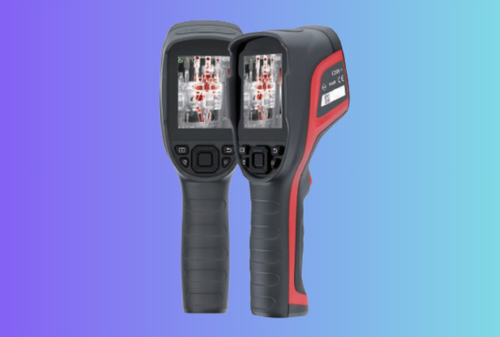
- Industrial handheld thermal imagers based on these cores, which can be private-labeled and tuned for specific verticals (power, petrochemical, manufacturing, utilities).
Because modules and devices share the same platforms, you can:
-
- Offer multiple models at different price points without starting from scratch each time.
-
- Maintain consistent training, reporting, and spare-parts strategies across your range.
-
- Scale from single-plant deployments to regional or global fleets.
For system integrators, Gemin Optics can also support fixed, online thermal monitoring configurations that complement handheld cameras – effectively bridging the gap between entry-level tools and expert-level automation systems.
8. Work with a China Best Thermal Imaging Camera for Industrial Use Manufacturer You Can Trust
Choosing the best thermal imaging camera for industrial use is not a one-time gadget purchase; it’s a strategic decision about how you manage risk, comply with standards, and support your maintenance teams for years.
By mapping your assets into tiers, understanding the specs that truly matter, and partnering with a capable China factory or OEM/ODM supplier, you can build a camera lineup that:
-
- Meets NFPA 70B and ISO 18434 expectations for electrical and machinery maintenance.
-
- Shortens inspection routes while improving coverage and early fault detection.
-
- Supports scalable, branded solutions for your customers or internal stakeholders.
If you are planning or updating your industrial thermography strategy, Gemin Optics can help you:
-
- Define entry-level, mid-range, and expert models that make sense for your risk map.
-
- Select appropriate thermal imaging modules, optics, and rangefinder combinations.
-
- Develop OEM/ODM products that carry your brand but are grounded in proven core technology.
You can reach out to the Gemin Optics team with your asset list, target specs, and annual volumes to explore how a China-based thermal imaging camera for industrial use manufacturer and supplier can support your next generation of industrial cameras and scanners.