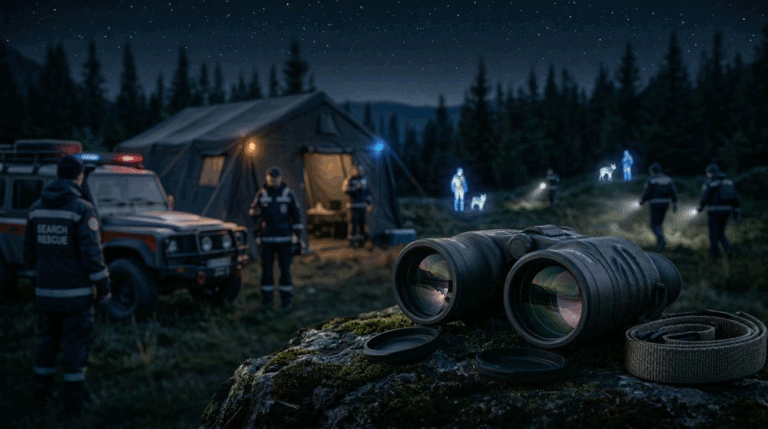
Lone workers are everywhere in modern industry: a technician climbing a stack at night, a power-line patrol in bad weather, a security guard doing perimeter rounds, an inspector walking pipelines kilometers from the control room.
Table of Contents
ToggleIn all of these situations, a wireless thermal imaging camera can play a double role:
- A diagnostic tool that spots abnormal heat, leaks or electrical faults before they become incidents.
- A connected safety device that sends images, alarms and location back to the control room, so lone workers are never truly “alone”.
Regulators and safety bodies increasingly expect employers to assess lone worker risks, maintain communication, and put monitoring and emergency plans in place—even though there is no single “lone worker” standard. OSHA’s general duty clause and guidance emphasize hazard assessment, communication and emergency response for those working alone or in isolation.At the same time, connected worker ecosystems built around wireless gas detectors and lone worker beacons have become common in high-risk industries.
This article looks at how to extend that connected safety concept to thermal camera wireless tools—turning a handheld imager into part of your lone worker protection strategy. It’s written for:
- HSE managers and safety engineers
- Maintenance and field service leaders
- OEM/ODM product managers planning a wireless thermal camera China product line
- Integrators building connected worker solutions
We’ll cover:
- Why thermal imaging belongs in lone worker programs
- What a wireless thermal imaging camera actually is (beyond “no cable”)
- Key specs and design choices for field safety
- Real-world use cases for lone workers
- How to choose a China wireless thermal imaging camera manufacturer or OEM/ODM supplier
- How Gemin Optics can help you build such solutions
1. Why Wireless Thermal Imaging Belongs in Lone Worker Safety
1.1 Lone workers face invisible risks
Lone workers are often exposed to:
- Overheating motors, bearings and conveyors in remote parts of a plant
- Hot electrical panels and overloaded connections in small substations
- Hidden process leaks, insulation failures or blocked lines
- Poor visibility at night, in bad weather or in unlit corridors
Thermal imaging is already widely used to identify overheating equipment, electrical faults and potential fire hazards in industrial inspections, improving safety and reducing accident risk.
Give that capability to a lone worker, and you:
- Let them scan for hot spots and abnormal patterns from a safe distance.
- Reduce the need for physical contact with hot or energized equipment.
- Catch early-stage failures before they escalate into emergencies in isolated areas.
1.2 Lone worker safety is a system, not a gadget
There is no single global “lone worker standard”, but regulators consistently stress that employers must:
- Assess lone worker risks
- Ensure reliable communication
- Provide a way to monitor status and respond quickly to emergencies
In high-risk sectors (oil & gas, mining, utilities), connected lone worker solutions already combine:
- Wearable gas detectors
- Man-down alarms
- GNSS location and two-way communication
- Cloud platforms for live monitoring and escalation
A wireless thermal imaging camera can plug into this ecosystem as an intelligent sensor with eyes—delivering both safety-relevant measurements and visual evidence from the field.
1.3 Functional safety mindset for connected tools
Standards like IEC 61508 define functional safety principles for electrical and electronic systems that perform safety-related functions, emphasizing risk-based design, lifecycle management and predictable failure modes.
Your wireless worker safety ecosystem may include certified safety PLCs, gas detection systems, emergency shutdown logic—and now a thermal camera wireless node. Even if the camera itself is not a safety-rated device, designing it with functional safety principles in mind (clear failure behavior, diagnostics, robust communication) makes it easier to integrate into a broader safety concept.
2. What Is a Wireless Thermal Imaging Camera?
2.1 Beyond “no cable”: architecture and connectivity
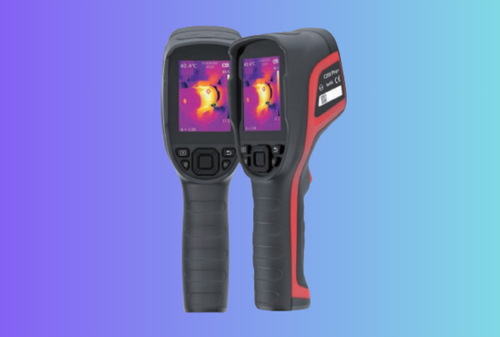
In this context, a wireless thermal imaging camera is a handheld or compact imager that can:
- Capture radiometric thermal images or streams, and
- Transmit them over a wireless link—WiFi, Bluetooth, cellular or a combination—to another device or cloud system.
Typical architectures include:
- Handheld with WiFi / cellular
- Looks like a classic industrial handheld thermal imager.
- Connects directly to plant WiFi or a smartphone hotspot to upload images and alerts.
- Companion wireless camera + smart device
- A small wireless thermal camera paired with a smartphone or rugged tablet.
- The app handles the UI, storage, geo-tagging and onward transmission.
- Embedded thermal nodes
- A thermal imaging module integrated into a custom housing, with wireless radios and lone-worker style functions (SOS, man-down, GPS) around it.
Wireless here doesn’t mean “WiFi only”. Many connected worker solutions blend WiFi, Bluetooth and cellular/satellite links, depending on how far from infrastructure you operate.
2.2 How a thermal camera wireless tool fits into the safety stack
For a lone worker, the wireless thermal camera isn’t the only safety tool they carry. It typically complements:
- Personal gas detectors (often wireless)
- Two-way radio or push-to-talk over cellular
- Lone-worker beacons or wearables
The unique contribution of the wireless thermal imaging camera is:
- Visual confirmation – Seeing the hot bearing, leaking valve or overheated cable instead of just a number.
- Spatial context – A thermal image or video that shows where the hazard is relative to structures and access routes.
- Remote decision support – Supervisors and engineers can see what the lone worker sees, without being there.
This is why some connected worker platforms already promote integrating thermal imagery with gas and location data in a single live monitoring interface.
3. Key Specs and Design Choices for Field Safety
A wireless thermal imaging camera must still be a good camera—but field safety adds extra requirements beyond pure image quality.
3.1 Thermal performance tuned for field inspection
For lone workers in the field, you want a balance of performance and portability:
- Resolution
- 160×120 – small, light, sufficient for close-range safety checks.
- 256×192 / 320×240 – strong baseline for most industrial routes.
- 384×288 – better for power lines, substations and larger equipment rooms.
- NETD (thermal sensitivity)
- Target ≤60 mK as a baseline; ≤40–50 mK gives crisper contrast on subtle anomalies.
Studies and industrial application notes highlight that thermal imaging used for safety and maintenance must resolve reliably the temperature anomalies associated with electrical faults, mechanical issues and fire risks.
For OEM/ODM buyers, this means specifying modules that can serve both safety-driven inspections and general maintenance work, not just low-cost “temperature gadgets.”
3.2 Wireless connectivity choices: WiFi, Bluetooth, cellular
Depending on where your lone workers operate, your thermal camera wireless strategy may use:
- WiFi
- Inside plants or facilities with good industrial WLAN coverage.
- High enough throughput for images and short video clips.
- Bluetooth
- Short-range link between camera and phone/tablet.
- Low power, ideal when the smart device handles cloud connectivity.
- Cellular / satellite (via a companion device)
- For remote locations (pipelines, wind farms, mining pits, offshore), where plant WiFi doesn’t exist.
- The camera sends data to a connected phone, gas detector or dedicated lone-worker hub, which then relays it via LTE or satellite.
A wireless thermal imaging camera China manufacturer should be able to help you map your target industries to a practical combination of radios and power budgets.
3.3 Rugged design, ergonomics and battery life
Lone workers often operate in harsh, isolated environments. Your wireless thermal camera should therefore offer:
- Ingress protection – IP54 or better for dust and water spray resistance.
- Drop survival – Tested for 1–2 m drops onto concrete.
- Operating temperature range – Suitable for cold nights and hot process areas.
- Glove-friendly controls – Large buttons, tactile feedback, clear UI.
- Battery life – A full shift of scanning plus wireless communication, with hot-swap battery options for longer routes.
Those are basic expectations for an industrial handheld thermal imager; for lone workers, they’re non-negotiable.
3.4 Safety-oriented features and integration hooks
To support lone worker safety directly, your wireless thermal imaging camera can also include or integrate with:
- Panic / SOS actions – A button or gesture on the camera that triggers an alarm via the companion app or connected worker platform.
- Man-down or no-motion detection – Often handled by the wearable gas detector or lone-worker device, but the camera can contribute motion data if equipped with accelerometers.
- GNSS / indoor location tagging – So every thermal image from a lone worker is geo-tagged or associated with a zone.
- Open APIs / SDKs – Allowing your connected worker platform or CMMS to ingest images, measurement data, status and alarms.
This is where standards like IEC 61508 and industrial cybersecurity frameworks (e.g., IEC 62443) become relevant: they don’t dictate camera design, but they strongly influence how your overall connected safety system should behave.
4. Field Use Cases: How Wireless Thermal Cameras Protect Lone Workers
4.1 Remote electrical substations and switchgear rooms
Many utilities and industrial sites rely on lone workers to patrol remote substations and switchgear rooms. The risks include:
- Overheated connections and bus bars
- Failing breakers and transformers
- Rodents or moisture causing partial discharges or hot spots
With a wireless thermal imaging camera:
- The lone worker can scan panels and bus compartments non-intrusively, staying outside arc-flash boundaries.
- Abnormal hot spots can be captured and sent immediately to a protection engineer for review.
- If a severe anomaly (e.g., suspected imminent failure) is detected, the worker can trigger an SOS and share thermal images before deciding whether to isolate the equipment or evacuate.
This mirrors how wireless gas detectors and lone worker monitors already provide real-time visibility for remote electrical and process workers.
4.2 Night-time security and perimeter patrols
Security guards doing night patrols are classic lone workers. Thermal imaging has long been used for security and surveillance because it sees heat signatures in low light and adverse weather.
A wireless thermal camera in this context enables:
- Detection of intruders in dark or foggy conditions without extra lighting.
- Immediate sharing of thermal footage with the control room when suspicious activity is seen.
- Recording of visual evidence for incident reports.
For OEMs and distributors, adding wireless connectivity and lone worker features to a security-oriented thermal camera wireless platform can be a compelling value proposition for guarding companies and critical infrastructure sites.
4.3 Tank farms, terminals and pipelines
In oil & gas, chemical storage and logistics, lone workers inspect:
- Tank farms and floating roofs
- Loading arms and manifolds
- Long stretches of pipeline and transfer lines
Thermal imaging is useful for detecting abnormal heating, insulation failures and some types of leaks or blockages.
A wireless thermal imaging camera helps by:
- Allowing lone workers to scan from safe distances, without climbing as much or entering awkward positions.
- Transmitting images and GPS-tagged findings back to the control room or maintenance planning team.
- Providing rapid context when fixed wireless gas detectors or process sensors raise alarms, so supervisors can see what’s happening before sending more people into the area.
4.4 Wind farms, solar plants and remote renewables
Renewable assets are often spread out over large areas with minimal on-site staff. Lone technicians:
- Climb turbines or inspect nacelles and transformers.
- Patrol rows of PV arrays and combiner boxes.
- Check inverters and storage systems.
Thermal imaging can reveal overheating components, cabling issues, failing modules and even wildlife damage.
Using a wireless thermal camera paired with a smartphone:
- Technicians upload anomalies from the field with photos and location.
- Central engineering teams see issues across the entire fleet, rather than waiting weeks for manual reports.
- Lone worker safety is enhanced because technicians can share their view instantly if they encounter dangerous conditions (fire risk, structural problems, unexpected trespassers).
4.5 Confined space entry support (from outside the space)
Confined spaces are exactly the kind of environment where lone worker entry is restricted or prohibited under OSHA and similar regulations; communication and standby attendants are required.
Even so, a thermal camera wireless tool can help:
- The standby attendant scans hatches, access ladders and nearby equipment for abnormal heat or signs of trouble.
- Thermal imagery can be shared live with safety officers if any alarm (gas, man-down, no-motion) goes off, providing quick context for rescue decisions.
Here the wireless thermal imaging camera does not replace gas detectors or entry procedures; it adds an extra layer of situational awareness.
4.6 Harsh weather and emergency response
In severe weather, wildfire risk, or post-incident inspections, thermal imaging is invaluable for:
- Finding hot spots in structures after a fire.
- Locating overheated or damaged equipment after a storm.
- Navigating smoky or low-visibility areas.
Wireless connectivity lets incident commanders see what a lone scout or small team sees, in real time or near-real time, without sending a large group into a potentially dangerous environment.
5. Selecting a Wireless Thermal Imaging Camera China Manufacturer / OEM/ODM Supplier
If you plan to build your own wireless thermal imaging camera brand, you’ll likely partner with a China factory. The choice of manufacturer will determine how well your devices integrate into lone worker safety ecosystems.
5.1 Start with the thermal core
Whether you’re building a handheld or a compact companion device, start from robust thermal camera modules:
- Choose resolutions (from 160×120 to 640×512) appropriate to your customers’ inspection distances.
- Target NETD values and frame rates that support both safety checks and maintenance diagnostics.
- Select optics (FOV, focus style) for field use: close-range equipment checks, mid-range patrols, or both.
A modular strategy lets you create multiple wireless thermal camera variants (entry, mid, expert) without reinventing the core each time.
5.2 Wireless and safety integration capabilities
Your wireless thermal imaging camera China manufacturer should be comfortable with:
- WiFi, Bluetooth and (via partners or your own board) cellular/satellite modules.
- Antenna design for metal-heavy, noisy industrial RF environments.
- Integration with third-party connected worker platforms via open APIs.
Because many connected worker solutions combine gas detection, lone worker monitoring and location services with cloud backends, your OEM partner must understand how to make the thermal camera a first-class citizen in that ecosystem.
5.3 Functional safety and cybersecurity awareness
You don’t necessarily need a fully IEC 61508-certified camera, but you do want a manufacturer who:
- Understands functional safety concepts and can design predictable fault behavior.
- Can support your OT security requirements (secure boot, signed firmware, access control, encrypted wireless communication).
- Is willing to work within IEC 62443-style requirements for industrial device cybersecurity.
This matters because many buyers now evaluate connected devices not just on performance, but on how they fit into plant-wide safety and security standards.
5.4 OEM/ODM flexibility and lifecycle support
Finally, look at the basics of working with a wireless thermal imaging camera OEM supplier in China:
- Pilot and mass-production MOQs and lead times
- Options for private labelling, cosmetic and mechanical customization
- Firmware customization and SDK support for your app and platform teams
- Long-term availability of critical components and clear end-of-life roadmaps
Lone worker safety systems are multi-year investments; your thermal imaging devices must be supported on the same timescale.
6. Gemin Optics as Your Wireless Thermal Camera OEM/ODM Partner
Gemin Optics is a China-based manufacturer focused on thermal imaging modules, industrial handheld thermal imagers and laser rangefinder modules for B2B customers worldwide.
6.1 Building from modules to connected field tools
Using Gemin’s configurable thermal imaging modules as the core, you can:
- Design compact wireless thermal camera heads that pair with smartphones, gas detectors or lone-worker hubs.
- Choose optics, resolution and NETD based on your specific field scenarios.
- Integrate WiFi, Bluetooth or other radios and safety features around a proven thermal engine.
This approach is ideal if you want full control over the wireless thermal imaging camera UX, app and cloud platform.
6.2 Industrial handheld thermal imagers as platforms
If you prefer a handheld-first approach, Gemin’s offer a solid platform for:
- Adding wireless connectivity (WiFi / Bluetooth) for live data transfer.
- Customizing firmware presets, palettes and measurement modes for field safety work.
- Private-labelling devices as a “wireless thermal imaging camera China manufacturer” solution under your own brand.
You can position these devices as part of broader lone worker and predictive maintenance offerings in your target markets.
6.3 Long-term partnership and roadmap
Because Gemin Optics also supports fixed thermal monitoring systems and multi-sensor integrations, you can plan a longer-term path:
- Start with wireless thermal camera handhelds to support lone worker field inspections.
- Add fixed thermal nodes for 24/7 monitoring of critical assets, using similar modules and APIs.
- Present a unified, scalable thermal imaging portfolio to your industrial customers.
7. Work with a China Wireless Thermal Imaging Camera Manufacturer You Can Trust
Lone worker safety is moving from simple “check-ins” to connected, data-driven protection. Wireless gas detectors, lone-worker monitors and cloud dashboards are already in place across many industries.
Adding a wireless thermal imaging camera to that ecosystem lets you:
- Give lone workers a powerful tool to spot heat-related hazards early.
- Stream images and alerts back to supervisors in real time or near-real time.
- Document conditions before and after incidents for better investigations and continuous improvement.
Whether you’re a safety solution integrator, an industrial brand owner, or a distributor, partnering with a wireless thermal imaging camera China manufacturer that understands both thermal technology and connected worker ecosystems is essential.
Gemin Optics can help you:
- Translate your lone worker use cases into concrete thermal and wireless specifications.
- Choose between module-based and handheld-platform approaches.
- Develop a long-term roadmap for wireless thermal imaging in field safety and maintenance.
If you’re planning a new thermal camera wireless project or want to add wireless thermal tools to your connected worker portfolio:
- Contact the Gemin Optics team to discuss your wireless thermal imaging camera OEM/ODM requirements and project roadmap.
- Share your target industries, lone worker risk profiles and integration needs so we can propose practical, scalable solutions.