Industrial energy managers are under pressure from all sides: rising energy prices, decarbonization targets, and customers asking for proof of real efficiency gains. Many plants have responded by implementing ISO 50001 energy management systems and ISO 50002-style energy audits.
Table of Contents
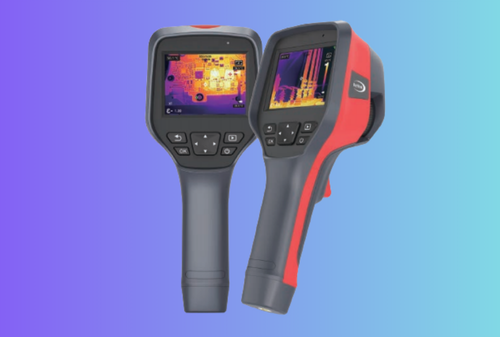
ToggleOn paper, the standard is clear: you need a systematic way to identify significant energy uses, reduce losses, and prove continual improvement. In practice, you need tools that make invisible waste visible—quickly and safely. That is where a handheld industrial thermal camera or thermal energy camera becomes a core part of your ISO 50001 toolbox.
This article is a practical playbook for OEM/ODM buyers, integrators, and plant managers who want to use handheld thermography to support ISO 50001 and ISO 50002 energy audits. We’ll show how to design a repeatable inspection scheme, what camera specs matter, and how to connect thermal findings to the KPIs your auditors care about.
1. ISO 50001 and Energy Audits – The Context for Industrial Thermal Cameras
1.1 What ISO 50001 actually asks you to do
ISO 50001:2018 defines the requirements for an energy management system (EnMS) that helps organizations systematically improve energy performance—covering efficiency, use, and consumption.
Key elements include:
-
Establishing an energy policy and objectives
-
Defining the organizational boundaries and scope
-
Identifying significant energy uses (SEUs)
-
Setting performance indicators and baselines
-
Planning and implementing improvement actions
-
Monitoring, measuring, and reviewing performance
The standard does not prescribe specific tools, but it expects evidence that you understand where energy is wasted and what actions you are taking to reduce it.
1.2 Where ISO 50002 and energy audits fit
ISO 50002 and the newer ISO 50002-1 define a structured methodology for energy audits—how to collect data, analyze energy use, and identify improvement opportunities.
In many organizations, ISO 50001 provides the management framework, and ISO 50002-style audits are the engine that feeds it with data and projects. Audits must:
-
Describe current energy performance
-
Pinpoint losses and inefficiencies
-
Quantify savings potential and investment needs
Here, the industrial thermal camera is a high-impact audit instrument—non-intrusive, fast, and intuitive for stakeholders.
1.3 Why thermography belongs in ISO 50001 programs
Infrared thermography is widely recognized as a powerful diagnostic technique for energy audits and building diagnostics. Studies show that thermal imaging helps identify insulation defects, thermal bridges, and air leakage areas that increase energy consumption.
Government energy agencies also recommend thermographic inspections as a core part of professional energy audits to detect thermal defects and air leakage in building envelopes.
In an industrial context, thermography also exposes wasted heat in:
-
Steam and condensate systems
-
Hot oil and process lines
-
Motors, drives, and mechanical systems
-
Electrical distribution and transformers
Every one of these issues has a direct impact on the energy performance indicators you track in ISO 50001.
2. How Industrial Thermal Cameras Support ISO 50001’s PDCA Cycle
ISO 50001 follows the familiar Plan–Do–Check–Act cycle. A handheld industrial thermal camera supports each stage.
2.1 Plan – Build a thermal map of your SEUs
In the planning phase you:
-
Identify SEUs (e.g., compressed air system, boiler house, HVAC, critical production lines).
-
Define boundaries, baselines, and indicators.
A baseline thermography survey with a thermal energy camera can:
-
Create visual “heat maps” of key buildings and processes.
-
Reveal hidden thermal paths, losses, and abnormal hotspots.
-
Help prioritize which systems deserve deeper metering or sub-metering.
These images become part of the documentation auditors see when you explain why certain SEUs were chosen.
2.2 Do – Implement actions and confirm installation quality
Once projects are launched—insulation upgrades, steam trap replacement, VFD installation, heat recovery—thermography verifies that the work has been executed correctly.
Examples:
-
After replacing pipe insulation, the industrial thermal camera confirms uniform surface temperatures and absence of hot “stripes” where gaps remain.
-
After building envelope upgrades, thermal images show reduced heat loss through walls, roofs, and openings.
In ISO 50001 terms, this is objective evidence that your energy performance projects were implemented as planned.
2.3 Check – Monitor and verify savings
ISO 50001 requires ongoing monitoring and measurement of energy performance.
Routine thermography rounds with an industrial thermal camera:
-
Track whether insulation, HVAC, and process equipment stay within expected temperature ranges.
-
Detect gradual performance drift (e.g., fouling, degradation) long before it shows in monthly utility bills.
-
Provide visual confirmation for measurement and verification (M&V) reports.
When auditors ask how you check that savings persist, a documented thermography programme is a strong answer.
2.4 Act – Prioritize new opportunities and refine controls
Thermography not only finds new losses; it also highlights where existing control strategies are not working.
Examples:
-
A constant hot patch on a supposedly variable-speed fan might reveal improper control tuning.
-
Steam lines that remain hot during shutdown windows point to trapped energy that feeds new project ideas.
By feeding these findings back into the EnMS, you close the loop required for continual improvement.
3. Where Handheld Thermography Delivers the Most Value
Let’s look at typical ISO 50001 energy audit scopes and see how a handheld industrial thermal camera enhances each.
3.1 Building envelope and roofs
Infrared thermography is extensively used in building energy audits to identify thermal bridges, insulation defects, moisture problems, and air leakage.
With a handheld camera you can:
-
Scan external walls and roofs from ground level or nearby structures.
-
Reveal where heat leaks through poorly insulated panels, joints, and penetrations.
-
Spot missing insulation around doors, loading docks, windows, and curtain walls.
For ISO 50001 documentation, these images help you justify building envelope projects, estimate savings ranges, and demonstrate post-retrofit improvements.
3.2 Steam, hot water, and process heat distribution
In many plants, steam and hot fluids are major SEUs. Insulation damage, leaking traps, or bypasses lead directly to energy waste.
Researchers and practitioners show that infrared thermography can highlight heat escaping from pipes and equipment, revealing damaged or missing insulation that should be repaired.
With an industrial thermal camera you can:
-
Walk down steam lines and instantly see where surface temperatures are higher than expected.
-
Identify live steam traps that are stuck open or failed closed.
-
Check the condition of valves, flanges, and expansion joints.
When you present your steam optimization programme to auditors, you can attach before/after thermal images to support claimed savings.
3.3 Compressed air and refrigeration systems
While compressed air leaks themselves are often located acoustically, thermal imaging helps in two ways:
-
Checking after leak repairs that chillers, aftercoolers, and dryers are operating efficiently.
-
Visualizing hot discharge lines, high temperature differentials, and abnormal condenser behavior.
Likewise, in refrigeration and HVAC chillers, an industrial thermal camera can identify:
-
Non-uniform coil temperatures indicating fouling or poor refrigerant distribution.
-
Hot motor and bearing housings in fans and pumps that increase energy consumption.
These findings connect directly to energy intensity indicators for cooling kWh per ton or per process unit.
3.4 Motors, drives, and mechanical systems
Predictive maintenance literature emphasizes infrared thermography as a non-contact technique for identifying overheating bearings, couplings, and misaligned shafts before failure.
From an ISO 50001 perspective, a hot mechanical component is both a reliability risk and an energy loss. Misalignment and excessive friction translate into extra kWh consumed at the motor terminals.
Building a route where your thermal energy camera checks critical motors and drives lets you:
-
Quantify how many motors show abnormal temperatures.
-
Prioritize alignment and lubrication tasks that reduce both downtime and energy consumption.
3.5 Electrical distribution and transformers
Infrared inspections of electrical equipment have long been standard practice, detecting poor connections, overloading, or imbalance that cause unnecessary losses and fire risk.
For ISO 50001, electrical thermography supports:
-
Reducing I²R losses from hot conductors and terminations.
-
Justifying replacement of overloaded or inefficient transformers.
-
Providing photographic evidence of risk reduction measures included in your energy plan.
These images often resonate strongly with top management, because they show tangible risk and savings opportunities in one frame.
3.6 Process equipment and heat recovery opportunities
In complex processes—kilns, dryers, ovens, reactors—thermal imaging helps identify:
-
Zones where heat is escaping through refractory or insulation.
-
Surfaces suitable for heat recovery via economizers or heat exchangers.
Academic and industry case studies highlight how infrared cameras support energy-efficient design and operation of industrial processes by visualizing heat flows.
A handheld industrial thermal camera lets your energy team gather this insight without shutting down equipment or installing intrusive sensors.
4. Specifying a Handheld Industrial Thermal Camera for ISO 50001 Work
Not every thermal imager is equally suited to ISO 50001-driven energy management. When you plan a camera purchase—or an OEM/ODM product line—focus on specs that support energy audits rather than just “pretty pictures.”
4.1 Resolution and thermal sensitivity
For energy audits, you typically want:
-
Resolution of at least 160×120 for close-range mechanical checks; 256×192 or 320×240 is a better baseline for general industrial use; 384×288 or higher for large buildings and outdoor assets.
-
NETD (thermal sensitivity) of ≤60 mK, ideally ≤40–50 mK, to detect small temperature differences linked to insulation defects and efficiency losses.
These levels are consistent with research that describes thermography as a “fast and accurate” diagnostic tool when it can reveal subtle temperature gradients across building and equipment surfaces.
4.2 Radiometric data and analysis tools
For ISO 50001 documentation you need more than JPEG screenshots. Your industrial thermal camera should:
-
Store radiometric images (every pixel has a temperature value).
-
Provide software to adjust emissivity, reflected temperature, and measurement regions after capture.
-
Allow export of numerical data for trending, M&V, and correlation with SCADA or metering data.
This turns the camera into a measurement instrument, not just a visualization gadget.
4.3 Optics, focus, and safety
Energy audits involve both wide-angle building scans and close-up component checks. Consider:
-
A standard FOV lens (~24–32°) for general work.
-
Optional wide-angle lenses for tight indoor spaces or small rooms.
-
Manual or motorized focus for sharp images at varying distances.
Safety is crucial: a handheld industrial thermal camera should support scanning live electrical equipment from a safe distance, and its housing should allow a strong grip with gloves.
4.4 Connectivity and workflow integration
Because ISO 50001 emphasizes data and documentation, your camera should plug into digital workflows:
-
WiFi or Bluetooth connectivity to mobile devices and laptops.
-
Integration with maintenance or energy management software via APIs.
-
Ability to tag images with asset IDs, locations, and audit references.
This is where the concept of a thermal energy camera overlaps with other connected instruments in your EnMS, such as submeters and data loggers.
5. Designing a Handheld Thermography Programme for ISO 50001 Audits
Buying a camera is the easy part. The real value comes from a repeatable thermography programme linked to your EnMS.
5.1 Step 1 – Link routes to SEUs and objectives
Start by mapping your SEUs: boilers, compressed air, building envelopes, HVAC, major production lines, and utilities. For each SEU, ask:
-
What are the key components where heat is lost or generated?
-
What would a “healthy” temperature pattern look like?
-
How often do we need to check them to support our ISO 50001 objectives?
Your thermography routes should directly reflect these SEUs and the KPIs you track (kWh per tonne, energy per square meter, etc.).
5.2 Step 2 – Define survey types and frequencies
In line with ISO 50002-style audits, define different thermography activities:
-
Baseline survey – comprehensive scan of buildings and key processes at the start of the ISO 50001 journey.
-
Project verification surveys – before/after images for major projects (insulation, HVAC replacement, steam optimization).
-
Routine monitoring rounds – shorter, recurring routes aligned with preventive maintenance schedules.
Specify how often each survey type is performed and who is responsible.
5.3 Step 3 – Standardize capture templates and naming
To make data auditable and comparable, standardize:
-
Image naming conventions (plant, area, asset, date, survey type).
-
Annotation fields (ambient conditions, load, emissivity settings).
-
Colour palettes and temperature scales for common applications, so auditors don’t have to decode different visual styles.
Most industrial thermal cameras and analysis software allow you to create templates and reuse them across surveys.
5.4 Step 4 – Link findings to energy opportunities
For each anomaly, define a simple classification that feeds into your energy opportunity register:
-
Type – insulation defect, air leakage, steam loss, electrical overheating, mechanical loss, process imbalance.
-
Estimated impact – qualitative (low/medium/high) or quantitative where you have models or historical data.
-
Recommended action – repair, further investigation, retrofit, redesign.
Energy audit literature stresses that the purpose of diagnostic tools like thermography is to identify and prioritize opportunities, not just create pretty reports.
5.5 Step 5 – Reporting for management and auditors
For ISO 50001, the final deliverable is not just a thermal report; it’s a story linking images to performance:
-
Executive summary of key findings and potential savings.
-
Before/after images for completed projects, with commentary.
-
Trends in critical temperatures versus energy consumption or production output.
-
Cross-references to work orders, CAPEX projects, and EnMS documents.
When auditors review your system, they see a clear line from thermal images to decisions to improved indicators.
6. OEM/ODM Angle – Building Industrial Thermal Camera Solutions for ISO 50001 Users
If you are an OEM, distributor, or integrator serving industrial clients, ISO 50001 creates a strong market for specialized industrial thermal camera solutions.
6.1 Verticalized bundles and starter kits
Instead of selling a generic camera, you can offer:
-
An “ISO 50001 starter kit” with a handheld thermal energy camera, basic training, and templates for building, steam, and electrical routes.
-
Sector-specific bundles for food processing, chemicals, metals, or data centers with pre-defined checklists and sample reports.
These offerings position you as a solution provider, not just a hardware vendor.
6.2 Integration with energy management platforms
Many organizations already use energy management software or dashboards to track KPIs and EnMS performance. By working with a capable China industrial thermal camera manufacturer, you can:
-
Embed radiometric image viewers into those dashboards.
-
Attach thermography findings to specific SEUs or meters.
-
Offer APIs for automatic upload of survey results into ISO 50001 documentation systems.
6.3 Training and services
Finally, there is a service angle:
-
Thermography route design and procedure writing aligned with ISO 50002.
-
Periodic third-party thermography audits for organizations without in-house expertise.
-
Remote support and image review services.
A well-chosen industrial thermal camera OEM partner lets you build these offerings without having to design every component from scratch.
7. Gemin Optics as Your Industrial Thermal Camera OEM/ODM Partner
Gemin Optics is a China-based specialist in thermal imaging modules, industrial handheld thermal imagers, and laser rangefinder modules for B2B markets.
For ISO 50001-oriented solutions, Gemin Optics can support you in three main ways:
7.1 Thermal imaging modules for custom ISO 50001 tools
You can start from configurable thermal camera modules as the core of your own:
-
Handheld industrial thermal camera designs.
-
Portable thermal energy camera instruments for building and process audits.
-
Embedded thermal nodes for continuous monitoring of key SEUs.
Gemin Optics helps with optics selection, calibration, and environmental testing, while you control housing, user interface, and software.
7.2 Industrial handheld thermal imagers for fast time-to-market
If you want a ready platform, Gemin Optics’ handheld thermal imagers can be adapted for ISO 50001 work by:
-
Preconfiguring palettes, measurement modes, and templates for energy audits.
-
Adding WiFi/Bluetooth connectivity for integration with energy management systems.
-
Branding and UI customization to match your solution portfolio.
This route lets you become a China industrial thermal camera OEM/ODM supplier to energy service companies, utilities, and industrial end users.
7.3 Long-term roadmap for energy management
Because Gemin Optics also supports modules for fixed thermal monitoring, you can develop a roadmap that covers:
-
Handheld audits for ISO 50001 implementation and periodic checks.
-
Permanent thermal monitoring for critical SEUs (furnaces, kilns, high-pressure steam).
-
Unified APIs and data models for integrating all thermal assets into your EnMS.
8. Work with an Industrial Thermal Camera Manufacturer That Understands ISO 50001
ISO 50001 and ISO 50002 give you a powerful framework to cut energy costs, reduce emissions, and demonstrate continual improvement. But frameworks only work if you have tools that turn hidden waste into actionable projects.
A well-chosen industrial thermal camera or thermal energy camera programme will:
-
Make insulation defects, heat losses, and electrical/mechanical inefficiencies immediately visible.
-
Support ISO 50002-style energy audits with fast, non-intrusive data collection.
-
Provide compelling evidence for ISO 50001 auditors and top management when you report on energy projects and performance.
As a China-based industrial thermal camera manufacturer and OEM/ODM supplier, Gemin Optics can help you design and deliver the handheld thermography solutions your ISO 50001 customers need—from modules to complete instruments and integrated services.
If you are planning to:
-
Launch a new ISO 50001-focused handheld thermal imager, or
-
Add thermography to your energy service and audit offerings
…then now is the time to explore collaboration.
Contact the Gemin Optics team to discuss your industrial thermal camera project, ISO 50001 use cases, and OEM/ODM roadmap. Share your target industries, inspection workflows, and integration needs, and we’ll help you build a thermography solution that fits both your business and your customers’ energy management ambitions.