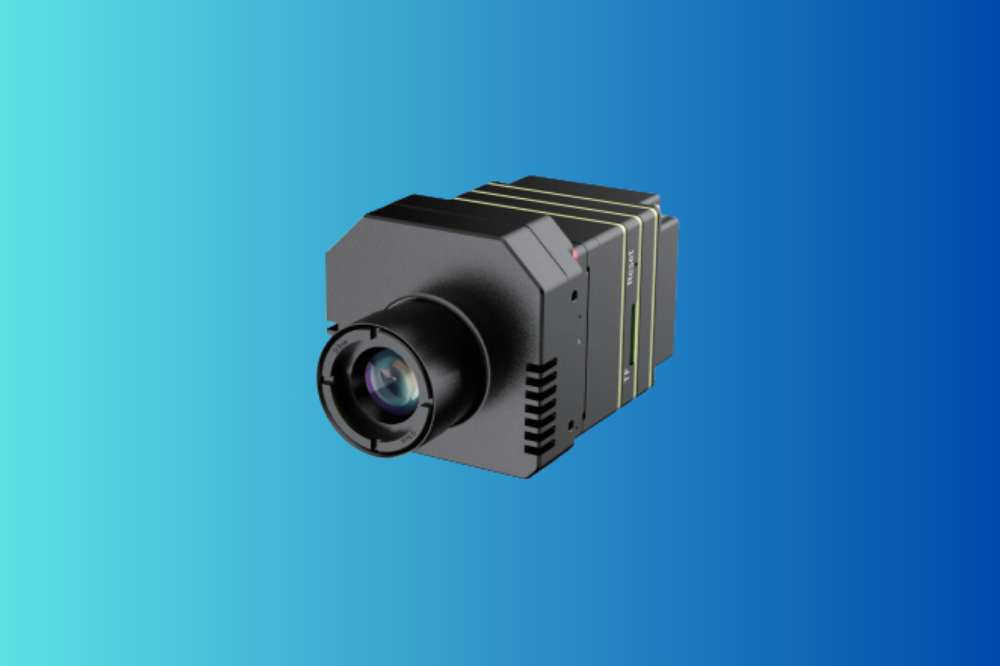
Bulk material storage is one of the most difficult areas to monitor continuously. Grain silos, biomass bunkers, coal piles, and liquid tanks can hide slow-developing hot spots deep inside the material. By the time smoke or flames are visible, damage is often severe.
Table of Contents
ToggleAn industrial online thermal imaging system offers a different approach. Instead of periodic manual checks, thermal cameras watch the surface and critical structures 24/7, looking for abnormal heat patterns that indicate self-heating, friction, or process faults. When designed correctly, they give operators early warning and clear guidance on where to intervene.
This article explains how online thermal imaging works for bulk storage, how to choose the right temperature monitoring camera setups, and what OEM/ODM buyers should look for in a China manufacturer. It draws on practical experience with thermal imaging modules and integrated systems for industrial customers worldwide.
Industry pain points in bulk storage safety
Hidden hot spots and self-heating
Materials such as coal, biomass, and grain can self-heat due to oxidation, fermentation, or residual process heat. The problem areas often start:
- Deep inside a pile
- Behind structural members
- In dead zones with poor ventilation
Traditional point sensors or occasional handheld inspections easily miss these early stages. When a hot spot finally reaches the surface, fire or explosion risk may already be high.
Large areas and dynamic surfaces
Bulk storage areas are wide and constantly changing:
- Bulldozers and stacker-reclaimers reshape coal piles.
- Grain levels in silos rise and fall.
- Tanks may be insulated, painted, or exposed to sunlight.
Covering such environments with conventional temperature probes is almost impossible. An industrial online thermal imaging system must therefore combine:
- Wide area coverage
- Sufficient spatial resolution
- Robust algorithms that handle moving piles and changing fill levels.
Nuisance alarms and operator fatigue
Any safety system that triggers too many false alarms will be ignored. For bulk storage:
- Sunlight, reflections, and weather patterns cause natural temperature variations.
- Vehicles and humans appear as hot objects but do not always represent a process fault.
- Poorly configured thresholds create constant “cry wolf” situations.
A good design uses temperature monitoring cameras together with intelligent logic so that only meaningful events reach operators.
Compliance, audits, and insurance
For large storage sites, regulators and insurers increasingly ask:
- How do you detect self-heating and fire risk?
- How quickly can you locate and respond to hot spots?
- What historical evidence can you show after an incident?
Online thermal imaging provides traceable records and clear evidence that risk is actively managed—provided the system is engineered and documented correctly.
What is an industrial online thermal imaging system for bulk storage?
Working principle
At each monitoring point, a thermal camera or temperature monitoring camera uses an uncooled VOx microbolometer:
- A dedicated infrared lens focuses long-wave IR radiation (8–14 μm) from the scene onto the sensor.
- Each pixel’s resistance changes with incident radiation.
- Camera electronics read out the pixel array and apply calibration and non-uniformity correction.
- Firmware converts pixel values into a temperature map and outputs images, temperatures, or processed alarms.
In many OEM projects, the core is a compact thermal imaging module integrated into a rugged housing suitable for dusty, corrosive, or outdoor environments.
System architecture: from cameras to decisions
A typical industrial online thermal imaging system for bulk storage includes:
- Field layer
- Fixed thermal cameras overlooking coal piles, silo roofs, hoppers, and tank farms.
- Optional pan-tilt units or motorized focusing for flexible coverage.
- Communication layer
- Ethernet/PoE, fiber, or industrial networks linking cameras to control rooms.
- Processing and analytics
- Servers running thermal analytics: region-of-interest (ROI) temperatures, trend curves, rate-of-rise detection, and alarm classification.
- Operator & safety integration
- Human-machine interfaces (HMI) in control rooms.
- Outputs to fire systems, PLCs, or SCADA for automatic or guided responses.
Bulk storage sites often combine multiple technologies. Thermal imaging is not a standalone fire system; it is a continuous temperature monitoring layer feeding data into a wider safety design.
Key specs, technical factors, and trade-offs for bulk storage monitoring
Detector resolution and coverage
The required resolution depends on:
- Size of the smallest hot spot you want to detect on the surface
- Distance from camera to pile, silo roof, or tank wall
- Need for detailed localization versus simple “area hot” alarms
Common resolutions for industrial systems:
- 256 × 192 – basic coverage, simple alarm zones.
- 384 × 288 – balanced option for many coal yard and silo applications.
- 640 × 512 – large yards, tall silos, or cases where precise location is critical.
Wide-angle optics can cover large areas, but they reduce pixel density on small hot spots. For long coal yards, integrators often use several 384 × 288 or 640 × 512 cameras, each covering a segment with overlapping fields of view.
NETD and contrast in real conditions
Bulk materials rarely have uniform temperatures. Sun-exposed surfaces, shaded areas, and moisture differences create natural gradients. To detect abnormal heating, you need cameras with sufficient thermal sensitivity (NETD):
- ≤ 40 mK – helpful for early detection of slow self-heating.
- ≤ 50–60 mK – acceptable where hot spots become significantly hotter than surroundings.
Because piles and tanks are large thermal masses, the difference between a safe spot and a dangerous one may start small. A lower NETD improves early warning capability.
Optics, FOV, and camera placement
Placement depends on the geometry:
- Coal yards and open piles – cameras mounted on masts, conveyors, or buildings, typically 15–40 m from the monitored surface.
- Silos – cameras looking at the top surface through roof openings or from nearby towers.
- Tanks – cameras watching shell areas, floating roofs, or adjacent bunds.
When designing layouts:
- Use FOV and distance to compute coverage width and height.
- Ensure overlap between adjacent cameras to avoid blind strips.
- Keep critical zones (chutes, feeders, vents) within the most accurate part of the FOV, not at the edges.
Focusing and mechanical stability
In dusty, outdoor environments, cameras often sit far from the surface. Over time, mechanical shifts or structure modifications may change distances.
A motorized focusing design is attractive because it allows:
- Remote refinement of focus during commissioning and after any structural work.
- Compensation for slight shifts due to temperature cycles or ground movement.
- Flexible re-tasking of cameras when pile shapes or process layouts change.
Better focus means clearer hot spot patterns and more robust alarm discrimination.
Temperature range, emissivity, and realism
Bulk materials and tanks may see:
- Surface temperatures from below freezing to 80–100 °C in fault conditions.
- Hot spots much hotter than average material.
Industrial cameras normally support multiple ranges, such as:
- –20 °C to 150 °C for general monitoring
- Higher ranges for special processes
Emissivity varies between coal, grain, painted steel, and shiny surfaces. To maintain realistic alarms, systems typically:
- Use emissivity settings appropriate to each material type.
- Focus on relative differences (e.g., ΔT versus surrounding area) rather than pure absolute temperature.
- Combine thermal information with process measurements (e.g., gas sensors or load data) where possible.
Firmware, analytics, and integration
For bulk storage, firmware and analytics matter as much as optics:
- Smart ROI definition for pile segments, transfer points, or silo roof zones.
- Trend and rate-of-rise detection to distinguish slow self-heating from normal diurnal swings.
- Exclusion zones or masks for vehicles and equipment paths.
A mature manufacturer can provide SDKs and integration documentation, allowing OEM/ODM partners to build their own alarm logic on top of the core temperature monitoring camera hardware.
Application scenarios and use cases
Coal piles and stockyards
Environment: large open-air yards with stacker-reclaimers, conveyors, and bulldozers. Coal is prone to self-heating, especially when stored for long periods or handled repeatedly.
Technical challenges:
- Constantly changing pile shape.
- Solar loading and weather effects.
- Moving equipment that can obscure parts of the pile.
Online thermal imaging approach:
- Install multiple cameras on towers or building roofs to create overlapping views of the pile surface.
- Define ROIs along pile length, focusing on areas near walls, peaks, and reclaim points.
- Use relative thresholds (e.g., area 15 °C hotter than average pile surface) plus absolute caps for confirmed alarms.
The industrial online thermal imaging system can trigger early alerts when hot zones appear, helping operators to move material, apply cooling measures, or increase surveillance before ignition.
Biomass bunkers and renewable fuel storage
Environment: enclosed or semi-enclosed bunkers storing wood chips, pellets, or agricultural residues.
Technical challenges:
- Dust and explosive atmospheres (ATEX considerations).
- Fermentation and moisture gradients.
- Limited access for manual checks.
Online thermal imaging approach:
- Deploy cameras in certified housings, targeting bunker surfaces, feed chutes, and discharge points.
- Use high-sensitivity settings to detect small hot spots under the surface.
- Integrate alarms with inerting or suppression systems.
Here, an industrial online thermal imaging system acts as a continuous condition monitor, supporting safety systems rather than replacing them.
Grain silos and feed storage
Environment: tall silos with grain, flour, or feed; explosion risk from dust and gas mixtures.
Technical challenges:
- Deep internal volumes where hot spots may develop out of sight.
- Surface patterns that change as material moves.
- Need to avoid false alarms from temporary spills or equipment.
Online thermal imaging approach:
- Mount cameras at the top, looking down through inspection hatches, or on nearby structures viewing side walls and roof areas.
- Combine thermal imaging with gas detection and level sensors for a more complete picture.
- Alarm on abnormal hot spots or patterns on the surface that persist over time.
Even though the camera cannot see deep internal layers, early self-heating often produces subtle surface signatures before serious incidents.
Liquid tanks and floating roofs
Environment: fuel tanks, chemical storage, or process vessels with large surfaces and structural elements.
Technical challenges:
- Heat patterns influenced by solar radiation, insulation, and process conditions.
- Potential leaks or hot spots along shell seams, nozzles, or floating roofs.
Online thermal imaging approach:
- Position cameras at distances that cover selected shell zones or roof segments with adequate resolution.
- Use ROI-based monitoring of welds, supports, and piping interfaces.
- Use differential alarms comparing similar structural areas to flag anomalies.
In many tank farms, thermal imaging complements existing leak detection, corrosion monitoring, and level systems.
How to choose a China industrial online thermal imaging system manufacturer or OEM supplier
Engineering and customization ability
Bulk storage sites are rarely identical. Look for a Chinese manufacturer that can:
- Offer a portfolio of thermal imaging modules with different resolutions and optics.
- Customize housings, windows, and mounting hardware for dusty or corrosive atmospheres.
- Provide flexible firmware and APIs so integrators can implement their own alarm logic.
This level of engineering support is essential for OEM/ODM partners in coal, biomass, or grain industries.
Sensor, lens, and firmware competence
Ask how much of the solution the supplier controls internally:
- Long-term sensor sourcing and second-source policies.
- Lens design and quality control for different FOVs.
- Firmware development teams capable of supporting analytics, masking, and advanced ROI logic.
Suppliers who also develop laser rangefinder modules or thermal + LRF fusion solutions often have strong embedded-software capabilities, which benefits industrial systems.
QA/QC system and documentation
For industrial safety applications, QA/QC is non-negotiable. Review:
- Calibration procedures, including blackbody references and traceability.
- Environmental, vibration, and ingress-protection testing.
- Descriptions of manufacturing control, such as those on Manufacturing & Quality.
A trustworthy supplier will be transparent about its production processes and willing to share test reports with OEM/ODM customers.
Lifecycle, logistics, and support
Bulk storage facilities expect systems to operate for many years. Choose partners who:
- Communicate product lifecycles and change-management policies.
- Offer stable pricing and delivery plans for wholesale and long-term projects.
- Provide clear service and support channels, documented on pages like Why Choose Us and Contact.
Gemin Optics as your OEM/ODM partner for bulk storage thermal monitoring
Gemin Optics is a China-based factory specializing in thermal imaging and rangefinding technologies for B2B customers. Our portfolio includes:
- OEM thermal imaging modules for integration into industrial online systems.
- Laser rangefinder modules and advanced thermal + LRF fusion concepts.
- Support for outdoor, industrial, and defense-related devices, giving us extensive field experience.
Full-stack support from module to system
For bulk storage projects, Gemin Optics can help you:
- Select resolutions, optics, and temperature ranges tailored to coal yards, silos, and tank farms.
- Integrate modules mechanically and optically via thermal camera module integration.
- Develop custom analytics and alarms using our SDKs and firmware options.
Because we operate as an OEM/ODM supplier, we can adapt designs to fit your own branded solutions or system architectures.
Quality, traceability, and long-term cooperation
Our Manufacturing & Quality processes include calibration, aging tests, and detailed documentation, giving operators confidence that every temperature monitoring camera behaves consistently.
On Why Choose Us, you can see how we work with international partners—from design studies through pilot systems and into volume production.
FAQ: B2B questions about industrial online thermal imaging for bulk storage
1. What resolution is recommended for coal piles and large yards?
For typical coal yards, 384 × 288 cameras with suitable optics can cover segments of the pile with good detail. For very large yards or long detection ranges, many integrators choose 640 × 512 sensors to maintain enough pixels on small hot spots.
2. Can an industrial online thermal imaging system detect internal hot spots?
Thermal cameras see surface temperatures, not deep internal layers. However, many self-heating processes eventually create surface signatures or areas warmer than surroundings. Properly configured ROIs and alarm logic can identify these patterns early enough for intervention.
3. How does a temperature monitoring camera differ from a general thermal camera?
A temperature monitoring camera is optimized for stable temperature measurement and alarm zones rather than human viewing comfort. It may provide fewer visualization modes but more robust ROI and alarm functions, which is ideal for bulk storage monitoring.
4. How do you reduce false alarms from sunlight or vehicles?
Design combines relative thresholds, time delays, and masking:
- Alarms require persistent hot spots, not brief spikes.
- ROIs exclude known vehicle paths and reflections.
- Algorithms compare each area to overall pile or silo behavior.
A good OEM design, supported by a capable Chinese manufacturer, adjusts these settings to the site.
5. What certifications are relevant for bulk storage applications?
Requirements vary, but CE, FCC, and RoHS are common baselines. In dusty or explosive atmospheres, ATEX or similar certifications for housings and complete systems may be required. Gemin Optics can support certification roadmaps as part of OEM/ODM cooperation.
6. How stable is the supply chain for long-term projects?
Gemin Optics manages key components and product lifecycles to support long-term industrial deployments and wholesale programs. Our change-notification processes help OEM/ODM partners plan upgrades and spares.
7. How does warranty and service work for large sites?
Industrial customers receive defined warranty terms and access to technical support. For large fleets, we discuss spare strategies, service levels, and training during project planning.
Work with a China industrial online thermal imaging system manufacturer you can trust
Bulk storage safety is a complex challenge. An industrial online thermal imaging system provides continuous visibility of silos, tanks, and coal piles—but only when cameras, layouts, and alarm logic are engineered correctly.
As a China-based manufacturer with strong R&D and OEM/ODM experience, Gemin Optics can help you:
- Design temperature monitoring camera layouts that cover your critical zones.
- Select and integrate thermal imaging modules optimized for coal, biomass, grain, or tank farms.
- Build scalable, standards-compliant solutions that deliver real risk reduction, not just images.
To move your project forward:
- Contact our engineering team via the Contact page to discuss your industrial online thermal imaging system requirements.
- Share your OEM/ODM specifications so we can propose suitable modules, optics, and analytics.
- Explore long-term OEM/ODM solutions on Why Choose Us and build a reliable global partnership.