Many reliability teams already know that infrared technology can find hot spots before they turn into failures. What is changing now is how this is done. Instead of sending technicians out with handheld tools once a month, more plants are installing an industrial online thermal imaging system that watches critical assets 24/7.
Table of Contents
ToggleInsurers and risk engineers are paying attention. When underwriters see continuous thermal monitoring on transformers, switchgear, coal piles, or silos, they often reassess the site’s fire and outage risk profile. In some cases, that translates directly into lower insurance premiums, higher insurable limits, or more favorable terms.
This article explains how online thermal imaging systems influence both insurance and operational risk. We will look at what underwriters care about, how continuous monitoring changes the loss picture, and how B2B buyers can build a business case that goes beyond simple equipment cost.
Why insurers care about thermal risk
Insurers think in probabilities and severities. They ask two basic questions about every site:
- How likely is a loss event to occur?
- If it happens, how big could the claim be?
Thermal issues are central to both questions. A large proportion of industrial fires and electrical failures start with overheating: loose connections, overloaded cables, failing bearings, self-heating coal or biomass, or process upsets in furnaces and kilns. These problems usually involve a thermal phase long before smoke or flames appear.
Traditional risk control measures—periodic handheld inspections, basic smoke or flame detection, manual patrols—only see part of this picture. If a critical connection overheats 10 days after the last inspection and fails 3 days later, the loss is “invisible” until it is too late.
From an underwriter’s perspective, that means high uncertainty. They may increase premiums, apply higher deductibles, or impose conditions. When a site adds continuous monitoring with industrial temperature monitoring cameras, the risk picture becomes more favorable:
- The probability of a thermal issue growing unnoticed drops.
- The expected size of a loss falls, because early detection allows controlled shutdowns rather than catastrophic failures.
- The insurer gains better documentation, making claims and investigations clearer.
In other words, thermal monitoring is not just a maintenance tool; it is a risk control measure with direct financial impact.
How an industrial online thermal imaging system works
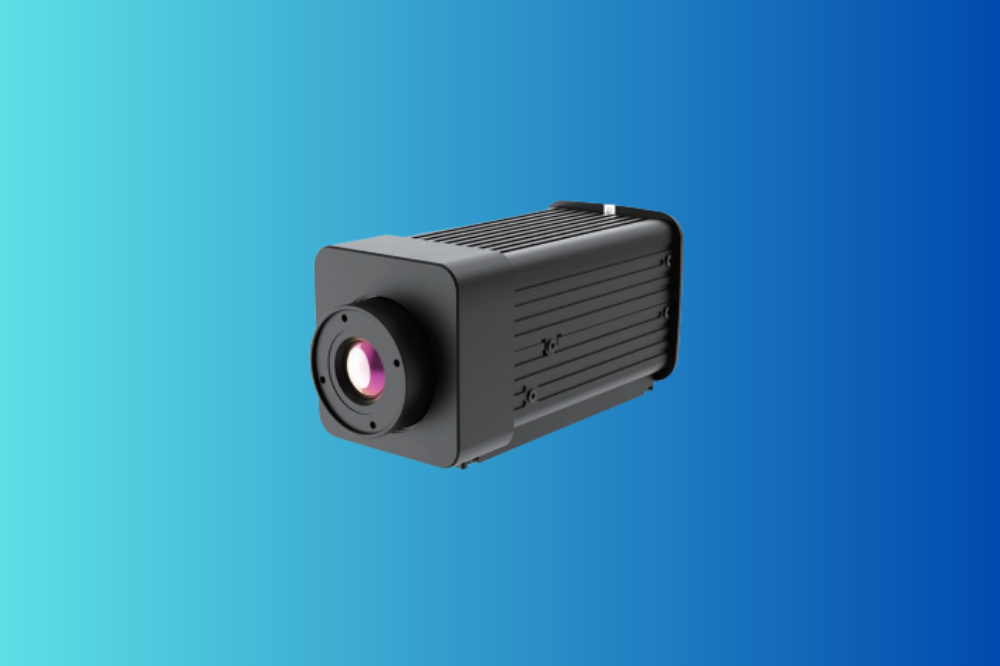
An industrial online thermal imaging system arranges cameras around the plant to cover the most critical assets. Each camera uses an uncooled VOx microbolometer, similar to the cores used in compact thermal imaging modules, but packaged and networked for permanent installation.
Instead of an operator walking past equipment and pointing a handheld device, fixed cameras continuously capture thermal images and temperature data. The system processes these streams to extract:
- Maximum or average temperatures in defined regions of interest.
- Temperature differences between phases, phases and ambient, or different sections of a conveyor.
- Trends and rate-of-rise indicators that show whether a hot spot is stable, increasing slowly, or escalating rapidly.
Alarms and events are passed to SCADA or dedicated dashboards. Operators see not just an alarm text, but the associated thermal image and trend curve. This makes it easier to distinguish between harmless variations and issues that require immediate action.
In contrast to a consumer-grade wireless thermal security camera, which often sends images to a cloud server, an industrial system is usually integrated into the plant’s OT network. This allows tighter control over cybersecurity, deterministic behavior, and alignment with existing maintenance workflows.
From snapshots to continuous awareness: the risk difference
With manual handheld inspections, each asset is seen at discrete intervals. Imagine a switchgear panel checked once per month. In a typical year, an inspector looks at it 12 times. For the remaining 8,748 hours, nobody is watching.
Online thermal imaging replaces this with continuous coverage. The camera “looks” at the same panel every few seconds and stores the resulting data. The difference in risk is not subtle.
First, early detection improves. Many failures have stages:
- Slightly elevated temperature, only a few degrees above normal.
- Noticeably hot, but still within design limits.
- Severe overheating, with insulation damage and risk of arcing or fire.
Manual programs may miss stage 1 and catch stage 2 if the timing is lucky. Online systems often detect stage 1 and nearly always catch stage 2 early enough for planning.
Second, operators can see how fast a situation develops. Is temperature rising slowly over weeks due to deteriorating contact pressure, or spiking in minutes due to a sudden overload? That distinction is vital for deciding whether to schedule maintenance, reduce load, or shut down immediately.
Third, data quality improves. Continuous data allows automatic baselining. The system “learns” what normal looks like at different loads and ambient conditions. This makes thresholds smarter and reduces false alarms, which in turn increases operator trust.
For insurers, the message is clear: continuous monitoring provides a stronger argument that the plant controls its thermal risk, especially for high-value assets.
Mechanisms that reduce insurance premiums
Underwriters rarely say, “Install an online thermal system and we will cut your premium by exactly X%.” Instead, they evaluate how the system affects risk factors they track in their models and engineering surveys.
One mechanism is declared risk improvement. When a plant can show that critical switchgear, transformers, or bulk storage areas are monitored 24/7 by an industrial online thermal imaging system, risk engineers may enter qualitative adjustments in their reports: “enhanced early detection,” “improved condition monitoring,” or “automatic hotspot detection.”
Another mechanism is compliance with best practices. Some insurers publish or reference guidelines for electrical and fire risk management. These typically emphasize regular inspections, documentation, and early detection. Online thermal monitoring aligns with these guidelines and often goes beyond their minimum requirements.
A third mechanism is evidence in loss history and near-miss reporting. If a plant can demonstrate that the thermal system has already prevented incidents—by showing event logs where hot spots were discovered and corrected—underwriters see a concrete reduction in realized risk. Over several policy years, this may lead to more favorable terms.
Finally, online systems can support higher insurable values or tighter deductibles. When risk control is strong, insurers may be more willing to underwrite larger assets or reduce the share of a loss that the plant must bear itself.
The exact financial effect depends on industry, loss history, and market conditions, but properly presented, online thermal imaging becomes a lever in premium negotiations.
How online thermal imaging lowers outage risk
Insurance premiums are important, but plant managers often care more about operational losses from unplanned downtime. Here, too, continuous monitoring delivers several advantages.
Outages become more predictable. Instead of reacting to sudden failures, maintenance teams can schedule interventions during planned shutdowns when thermal trends show early issues. This reduces the amount of production lost and avoids secondary damage.
Outage scopes can be narrower. Because temperature monitoring cameras pinpoint the location of hot spots, maintenance can focus on specific joints, bearings, or circuit elements rather than unnecessarily pulling entire systems apart “just in case.”
Restart risks decrease. After an incident or maintenance event, online thermal imaging provides immediate feedback on whether all components are behaving normally under load. If a connection was not tightened properly or a cooling path remains obstructed, the system can flag it early.
For grid-connected facilities, thermal monitoring also supports better communication with utilities. Being able to show objective temperature data when requesting or negotiating outage windows strengthens the plant’s position and can reduce penalties or contractual disputes.
Translating technical benefits into a business case
To justify investment, engineers must translate these technical benefits into financial terms.
A simple approach is to estimate:
- The average cost of a significant incident (fire, major equipment failure, prolonged outage).
- The probability of such an event in a given time period without online monitoring.
- The expected reduction in probability with an industrial online thermal imaging system.
Even conservative assumptions often show meaningful savings. If a $500,000 transformer failure has a 5% annual probability, the expected loss is $25,000 per year. If continuous monitoring and improved maintenance practices reduce that probability to 2%, the expected loss drops to $10,000. Over ten years, this is a $150,000 difference in expected loss, before considering indirect costs.
Add to that potential premium reductions. If insurers offer, for example, a 3–5% reduction on a $400,000 annual industrial property premium because of enhanced risk controls, that is $12,000–$20,000 per year—again, quickly exceeding the cost of several cameras and integration.
The key is to present these numbers carefully: not as guarantees, but as reasonable expectations based on engineering judgment and insurer feedback. A well-structured business case, reinforced by risk engineers’ comments, makes it easier for management to approve CAPEX.
Implementation patterns that insurers and auditors like
Installing cameras randomly will not impress underwriters. They look for systematic approaches.
First, coverage must be risk-based. The industrial online thermal imaging system should clearly target the assets that drive the largest potential losses: main transformers, critical switchgear, bulk storage, high-temperature processes, and bottleneck equipment. Documentation should explain why each location was chosen.
Second, alarm logic and response procedures must be defined. It is not enough to generate alarms; the plant must show what happens when an alarm occurs. Who is notified? What time frames are expected for response? How are actions recorded? Insurers like to see that processes are integrated into existing work management systems.
Third, testing and maintenance plans should exist. Cameras, housings, and communication links must be checked periodically. It is good practice to include the thermal system in regular functional tests, ensuring that dummy alarms propagate correctly through SCADA and notification channels.
Fourth, cybersecurity is increasingly part of risk assessment. Insurers may ask how the system is segmented from business networks, how firmware is maintained, and how remote access is controlled. Treating the thermal system as part of OT cybersecurity—not as a stand-alone gadget—aligns with modern best practice.
Finally, sites that maintain well-organized histories of events, images, and corrective actions can present a strong narrative during audits and renewals: “The system raised X thermal alarms last year; Y led to corrective work; Z incidents were prevented or mitigated.” This narrative is much more powerful than “we own some cameras.”
Role of a temperature monitoring camera in mixed strategies
Few plants go 100% online. Most operate a hybrid strategy where fixed systems cover the most critical or hard-to-reach assets, and handheld inspections remain in use elsewhere.
In these mixed setups, temperature monitoring cameras play a gatekeeper role. They continuously watch high-risk areas and feed data into maintenance systems. When alarms appear, technicians use handheld imagers to investigate nearby equipment or confirm boundaries of the hot zone.
This “online + handheld” approach is attractive to insurers because it shows that:
- Early detection is automated and continuous.
- Human expertise is still applied where nuance and context are needed.
- Resources are focused intelligently rather than spread thinly across all assets.
From a cost perspective, this hybrid model often delivers the best TCO: you avoid over-installing fixed cameras while still capturing most of the risk reduction benefits.
Choosing a China industrial online thermal imaging system partner
For B2B buyers, selecting the right China manufacturer or OEM/ODM supplier is part of the risk picture.
A good partner provides robust thermal cores, consistent production quality, and documentation that supports both engineering design and insurance discussions. For example, a vendor that offers modular thermal cores, described as thermal imaging modules, allows integrators to tailor housings and optics for each site without changing the fundamental, tested core.
Equally important is quality management. Manufacturers who describe their calibration, environmental testing, and QA processes transparently on pages such as their Manufacturing & Quality information give you material that can be shared with insurers and auditors. This supports the argument that your thermal system is not experimental but built on industrial-grade processes.
Long-term support matters too. Insurers know that systems degrade if updates stop. You should ask how the supplier handles firmware updates, component obsolescence, and spare parts. OEM/ODM partners who present clear cooperation models, such as those found in a “Why Choose Us” section, usually understand that lifecycle and risk management go hand-in-hand.
Finally, having a responsive technical contact is invaluable. When risk engineers ask detailed questions about measurement accuracy, alarm reliability, or environmental performance, being able to obtain quick, precise answers from your supplier strengthens your case.
Gemin Optics as your OEM/ODM partner for risk-focused thermal imaging
Gemin Optics is a China-based manufacturer focusing on thermal imaging and rangefinding technology for global OEM and system integrator customers. Our experience spans industrial monitoring, outdoor observation, and integrated thermal modules.
For projects where insurance and outage risk are key drivers, we help customers design industrial online thermal imaging system architectures that align with both engineering and financial objectives. Our thermal imaging modules provide the core technology for fixed cameras and specialized devices, enabling tailored solutions without sacrificing reliability.
From concept to deployment, we support:
- Risk-based camera placement and FOV selection.
- Integration with existing SCADA, historian, or maintenance systems.
- Documentation suitable for insurance surveys and internal risk committees.
Our manufacturing and quality practices are designed for long-term consistency, giving you confidence that systems installed today will behave predictably for years. For OEM/ODM cooperation and export-focused projects, our team can discuss roadmaps, support models, and training tailored to your markets.
Commercial and technical inquiries can be directed through the Contact page, where our engineers and sales staff are available to explore site-specific requirements.
FAQ: insurance and outage risk with online thermal imaging
Can insurers really reduce premiums just because we install an online system?
There is no universal formula, but many insurers view continuous thermal monitoring as a significant risk improvement, especially for high-value electrical and storage assets. When combined with documented procedures, it can support better terms or lower premiums over time.
Is an industrial online thermal imaging system a replacement for fire detection?
No. It is a complementary layer focused on early detection of thermal anomalies. Smoke, gas, and flame detection remain important for later stages of an incident, but online thermal imaging can alert you long before those systems activate.
Do we still need handheld thermal inspections after installing fixed cameras?
Yes, in most cases. Handheld inspections remain useful for less critical areas, troubleshooting, and verifying conditions beyond fixed camera views. The online system prioritizes where and when handheld assessments are most valuable.
What kind of assets benefit most from continuous thermal monitoring?
High-consequence assets such as main transformers, MV/LV switchgear, large motors, kilns, furnaces, coal or biomass piles, and grain silos are typical candidates. These are the places where early detection can truly change the outcome of an incident.
How do we present the system to underwriters?
Provide a concise description of coverage, number and type of cameras, alarm procedures, and maintenance plans. Include sample reports or event histories where the system detected anomalies. Your thermal system should appear in risk surveys alongside other protection measures.
Are Chinese-made systems acceptable to international insurers?
Insurers focus more on functionality, reliability, and documentation than on country of origin. When a China-based supplier can demonstrate strong QA, calibration, and support processes, and when integrators implement the system professionally, insurers typically evaluate the solution on its merits.
Work with a China industrial online thermal imaging system manufacturer you can trust
In modern plants, risk management is as important as production capacity. An industrial online thermal imaging system is not just a set of cameras; it is a tool for preventing fires, avoiding unplanned outages, and convincing insurers that your site is serious about control.
When designed and implemented correctly, online thermal imaging can reduce expected loss, support lower insurance premiums, and deliver more stable operations. The capital investment often pays for itself many times over in avoided incidents and improved contract terms.
If you are evaluating how online thermal imaging could strengthen your risk and insurance strategy, consider partnering with a China-based OEM/ODM manufacturer that understands both the engineering and business sides of the equation. Reach out via the Contact page to discuss how Gemin Optics can support your next industrial online thermal imaging system deployment.