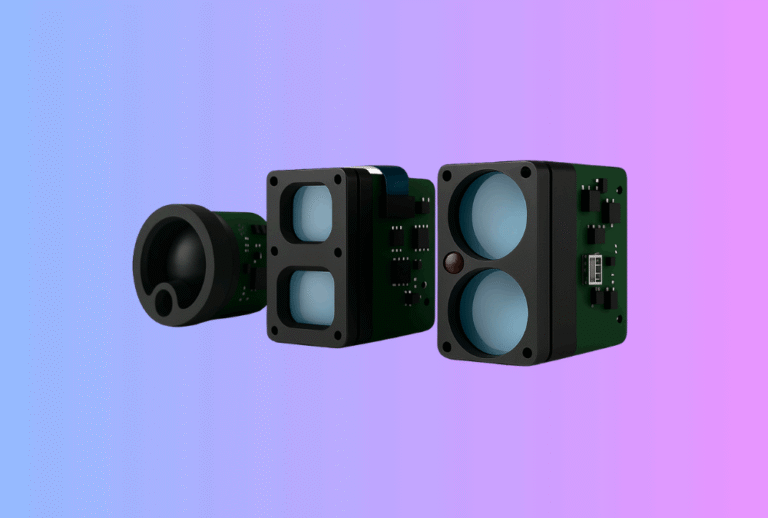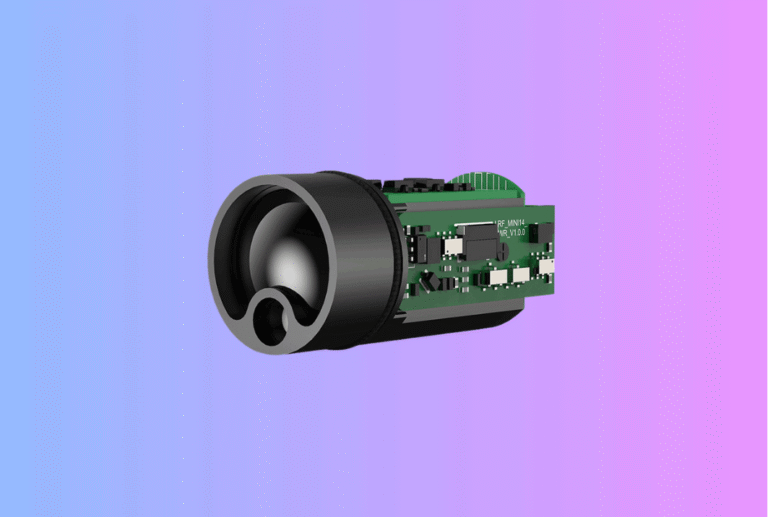
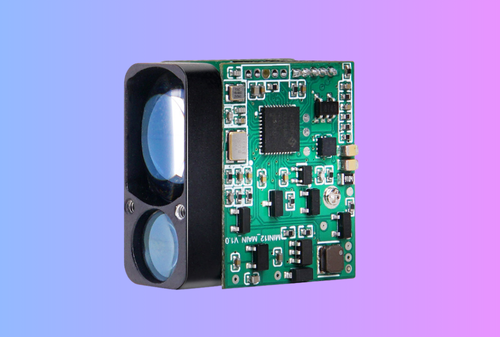
A laser rangefinder module anti-fog, condensation, and dew control guide is one of the most practical documents an OEM team can develop, because many products that appear optically sound in the lab become unreliable in the field for a much simpler reason: moisture on or around the optical path. The module may be electrically healthy, mechanically intact, properly calibrated, and fully responsive to host commands, yet the final product still becomes difficult to trust because the front window fogs, the housing breathes moisture, dew forms during temperature transition, or repeated condensation slowly changes the product’s usable optical margin.
Table of Contents
ToggleThis matters because condensation-related failure is rarely dramatic. The product does not always stop working completely. More often, it becomes inconsistent. Range performance varies by time of day, by warm-up state, by weather, or by whether the product was just moved from one environment to another. Operators may report that the system was fine in the afternoon, but weak at dawn. A service team may see no obvious fault when the unit returns indoors. Engineering may reproduce nothing on a dry bench. Meanwhile, the real field problem remains unresolved because the platform was never designed to control moisture behavior across real thermal transitions.
That is why anti-fog and condensation control should not be treated as a cosmetic front-window topic. In a serious OEM product, it is part of system architecture. It affects range consistency, target confidence, maintenance frequency, service diagnosis, and long-term customer trust. In outdoor, mobile, UAV, PTZ, maritime, utility, and industrial products, it is often one of the real boundaries between a good prototype and a truly usable field product.
Why fog and condensation are often underestimated
Many teams think of fogging as a minor nuisance because they picture it as something visible and temporary. If a window fogs a little, wipe it, wait for it to clear, and continue. That thinking is too shallow for real OEM systems. In practice, moisture behavior is one of the most deceptive causes of performance loss because it often creates intermittent, condition-dependent, and difficult-to-reproduce complaints.
A laser rangefinder product may show weaker behavior only after sunrise, only after coming out of a vehicle, only after long idle outdoor deployment, only after heavy humidity, or only when a warm internal core meets a cool front window. None of these conditions necessarily look like a classic hardware defect. They look like “sometimes it works, sometimes it does not.” That ambiguity is precisely why condensation control deserves more engineering attention than it often gets.
The problem is also underestimated because teams tend to think about the laser rangefinder module itself instead of the final optical path the user actually experiences. A clean and stable core module does not guarantee a clean and stable front-end system. Once the module is integrated behind a window, inside a housing, near heat-generating electronics, or inside a partially sealed outdoor platform, the moisture behavior of the whole package becomes the real product behavior.
Fog, condensation, and dew are related, but not identical
The terms are often used loosely, but they describe slightly different moisture conditions, and that difference matters in design. Fogging is usually the visible formation of fine moisture on a surface, often the front window or an internal optical surface, reducing clarity and transmission. Condensation is the broader process by which airborne moisture turns into liquid on a cooler surface when temperature and humidity conditions cross the dew point boundary. Dew is the practical field condition in which moisture settles on exposed surfaces, especially during temperature drop, overnight cooling, or early-morning transition.
For OEM teams, this distinction is useful because the physical controls are related but not always identical. An external dew problem may be driven by exposure geometry, ambient humidity, and front-window temperature. Internal condensation may be driven by trapped moisture, pressure breathing, poor sealing strategy, or thermal gradients inside the housing. Fogging may be the visible symptom, but the deeper cause may lie in airflow, material choice, coating performance, or thermal behavior.
In other words, the user may simply report “the window fogs,” but the engineering response should be more precise. Is the moisture external or internal? Is it transient or recurring? Is it triggered by cold soak, rapid warming, partial sealing, trapped humidity, or poor front-end temperature management? Without that separation, corrective actions become expensive and vague.
The optical path is only as good as its driest weak point
A laser rangefinder module depends on an optical path that remains sufficiently clear and predictable for the beam to exit and the return to be interpreted with confidence. In many products, the weak point in that path is not the module itself but the first exposed surface, the inner side of the front window, or the trapped air volume around the front end.
This is why anti-fog design should not be reduced to “use a clear window.” A window that is optically acceptable when dry may still become the limiting factor in real operation if it cools too quickly, traps humidity on its internal face, encourages external dew formation, or is mounted in a geometry that promotes local temperature imbalance. The product may not lose all ranging function, but it may lose enough signal margin or operator confidence to become commercially weak.
That is especially true in systems with small targets, difficult backgrounds, or long-distance use. When the scene is already challenging, the platform cannot afford extra optical uncertainty caused by moisture. A little fogging may seem small in isolation. In real use, it can be the difference between stable and uncertain performance.
External moisture and internal moisture should be treated separately
A mature OEM design treats external moisture exposure and internal moisture management as two related but separate engineering problems. The external side concerns what happens on the outer face of the window or optical cover. The internal side concerns what happens inside the housing volume, between the module and the front-end optics, or on the inner face of the window.
External moisture is driven by field environment. Dew, mist, rain residue, marine haze, and rapid temperature drop can all cause visible surface degradation. Internal moisture is usually more architectural. It is influenced by trapped assembly humidity, breathing through seals, temperature cycling, imperfect enclosure strategy, component heating, and how the front-end space exchanges air or vapor with the environment.
This distinction matters because the wrong fix is common. Teams may apply a coating to the outer window while ignoring trapped moisture inside the enclosure. Or they may improve sealing, only to trap humid air during assembly and create internal fogging later. The best products usually solve both sides with a coordinated design rather than one isolated treatment.
Sealing alone is not a complete moisture strategy
A very common mistake in OEM product design is to assume that stronger sealing automatically solves condensation risk. Better sealing can help, but only if the team understands what is being sealed in, what is being sealed out, and what thermal behavior the enclosure will create afterward.
A tightly sealed enclosure assembled in humid conditions may trap enough moisture to create internal condensation later when temperature falls. A partially sealed enclosure may breathe moisture in and out through weak interfaces during pressure and temperature change. A housing with poor pressure equalization may mechanically survive, yet still encourage moisture migration over repeated cycles. In other words, sealing is important, but sealing without moisture strategy is not the same as moisture control.
That is why the OEM team should treat sealing as part of a broader environmental design question. What humidity level exists during assembly? Is the internal volume dry enough at closure? Are there materials inside the housing that store or release moisture? Is there a controlled venting concept? How will the front window temperature compare with the internal air and the external environment? These questions usually determine whether sealing helps or simply relocates the problem.
Window temperature behavior often drives dew formation
Many external dew problems are not caused by “bad glass” or “bad coatings” alone. They are caused by the temperature of the window relative to the ambient dew point. If the front window cools below the dew point under real conditions, moisture will form on it, no matter how good the rest of the module is.
This is why window temperature behavior deserves more attention in product design. A window that is thermally isolated, strongly exposed to open sky, poorly coupled to internal warmth, or mounted in a geometry that encourages cold soak may be especially prone to dew. A different design with better thermal balance, modest heating, or a more favorable front-end structure may remain usable under the same ambient humidity.
The practical implication is that anti-fog design often requires thermal thinking, not only optical thinking. Teams should not ask only what material the window is made from. They should ask how the window behaves thermally in the real enclosure, in the real mounting position, at dawn, after rain, during shutdown, and during transitions from indoor to outdoor use.
Thermal gradients inside the product create internal condensation risk
Internal condensation is often created not by absolute temperature alone, but by thermal gradients. If one part of the housing or front-end optics cools much faster than the air volume or nearby electronics, vapor can condense onto that cooler surface. This is especially common near front windows, optical cavities, or partially isolated subchambers.
In laser rangefinder products, the front-end optical package often sits at exactly this kind of thermal boundary. The internal electronics may warm the main body, while the window remains exposed to external air. During temperature drop, the internal volume may still contain enough moisture to condense on the inner surface of the cooler window. During warm-up, a different gradient may appear. In both cases, the user only sees the symptom: fogging or degraded performance.
This is why anti-condensation design should include a thermal map mindset. Which parts of the front-end system heat quickly? Which parts cool quickly? Where is the likely coldest surface? How does that change during startup, shutdown, outdoor soak, transport, and sunlight exposure? Products that ignore these gradients often end up chasing moisture complaints after launch.
Anti-fog coatings help, but they do not replace system design
Coatings can be useful, but they are not magic. A well-selected anti-fog or hydrophilic treatment can improve surface behavior under certain moisture conditions. However, coatings should be treated as one layer of defense, not as the entire strategy. If the product architecture is poor, coatings will rarely save it.
This is particularly important because coatings themselves come with design tradeoffs. They can influence cleaning rules, durability, abrasion sensitivity, chemical compatibility, and long-term environmental behavior. A coating that works well in controlled handling may degrade under aggressive field cleaning. A coating that improves external moisture shedding may do little for internal condensation. A coating that performs well in one climate may not be enough in another if thermal control is weak.
So the correct engineering question is not “do we have an anti-fog coating?” The better question is “what moisture scenario does the coating help with, what does it not solve, and how does it fit into the rest of the front-end architecture?”
Heating can be effective, but only if controlled intelligently
In some platforms, active or passive thermal assistance is the most reliable way to reduce dew and condensation risk. Modest controlled heating of the front window or surrounding structure can prevent the optical surface from dropping below the dew point, especially in high-humidity outdoor conditions. This can be highly effective in PTZ, security, maritime, and fixed surveillance products.
But heating also needs discipline. Too little heating may do almost nothing. Poorly distributed heating may create gradients without solving condensation. Excessive heating may introduce power burden, thermal signatures, material stress, or unwanted temperature interaction with adjacent optical channels. In multi-sensor systems, unmanaged heat can also affect image behavior or long-term mechanical stability.
So if heating is part of the anti-fog strategy, it should be designed as a controlled function, not an afterthought. The OEM team should know when heating is active, what it is trying to prevent, how it affects power budget, and how it interacts with startup behavior and field workflow. Heating can be a strong tool, but only when it is integrated with the real product logic.
Venting and breathing need deliberate design
Some products try to solve moisture by sealing harder. Others benefit from controlled breathing or venting. Neither approach is universally correct. The right choice depends on the product’s internal volume, thermal transitions, field environment, maintenance model, and assembly conditions.
A controlled vent may help equalize pressure and reduce harmful breathing through unintended gaps. It may also reduce long-term stress on seals. But if the vent strategy is careless, it may become a moisture pathway rather than a moisture-control tool. A fully sealed design may protect against direct ingress, but if assembly humidity is high or internal materials outgas moisture, the system may still fog internally later.
That is why venting should be treated as a deliberate moisture-management decision, not as a mechanical convenience. The OEM team should know whether the enclosure is truly intended to be sealed, whether it is expected to breathe, and what that means for internal humidity over life. A product that behaves “almost sealed” is often one of the hardest to stabilize.
Assembly conditions affect field moisture behavior later
A point that many teams overlook is that moisture control begins in production, not only in field use. A product assembled in high humidity, closed too early, or contaminated with moisture-holding materials may carry that risk into the field even if the design itself is otherwise reasonable.
For laser rangefinder products, this means production discipline matters. Front windows should be installed under controlled cleanliness and humidity conditions where appropriate. Internal cavities should not be treated as generic assembly spaces. Materials used near the optical path should be reviewed for moisture interaction. If the design depends on dryness at closure, then the build process must actually support that requirement.
This is another reason why anti-fog strategy should be part of the Laser Rangefinder Module Pilot Build Readiness Checklist. By pilot stage, the team should already understand not just whether the product can be assembled, but whether it can be assembled in a way that supports stable moisture behavior later.
Different verticals experience moisture differently
One reason anti-fog design is so important is that different application verticals trigger moisture problems in different ways. Security PTZ products often experience early-morning dew, nighttime cooling, and long exposed idle periods. Maritime products face salt-laden moisture, persistent humidity, and residue accumulation. Utility and powerline products may experience rapid transport between environments, UAV altitude changes, and outdoor temperature swing. Vehicle or handheld inspection tools may move repeatedly between air-conditioned interiors and humid field sites.
This matters because the same module and front-end architecture can behave acceptably in one vertical and poorly in another. The OEM team should therefore define the real environmental transitions the product will face, not just the static weather category. Will it sit motionless outdoors overnight? Will it move from a warm cabin into cold humid air? Will it heat internally while the window stays cold? Will it shut down outdoors after being warm? These transitions are often where moisture problems become visible.
In other words, dew control is not just about climate. It is about thermal history and usage pattern.
Moisture problems are often mistaken for alignment, calibration, or EMC issues
One reason anti-fog deserves its own article is that moisture-related behavior often looks like something else. The user may say range is unstable. Engineering may suspect boresight. Service may suspect calibration drift. Software may suspect timing. In some cases the product may even be shipped back as an apparent module fault. Yet the actual problem is that the front-end optical path is intermittently degraded by moisture.
This is why good failure analysis should include a moisture hypothesis early when symptoms depend on time of day, warm-up state, weather, storage condition, or recent movement between environments. A unit that behaves poorly outside and normally indoors may not be “self-recovering.” It may simply be drying out before service sees it. A product that seems worse after rain or dawn may not be aging. It may be crossing a dew boundary.
This connects directly to the earlier Laser Rangefinder Module Failure Analysis Guide. Moisture is one of the clearest examples of a fault mechanism that creates real symptoms while still hiding behind other explanations.
Validation should reproduce transitions, not just steady conditions
A weak anti-fog validation program checks the product only in stable temperature and humidity conditions. A stronger program checks transitions. Moisture problems are often created not by static environment but by movement across environments, by startup after soak, by cooling after operation, or by exposure timing relative to dew point.
So validation should include realistic transition testing. What happens when the product moves from warm and dry to cool and humid? What happens after overnight cold soak followed by activation? What happens when the internal electronics warm up while the window remains externally cooled? What happens after repeated daily cycles? These are often much more revealing than one steady environmental chamber point.
This is why the logic behind the Laser Rangefinder Module Environmental Test Plan should include functional moisture behavior, not just survival behavior. The goal is not merely to see whether the product remains alive. The goal is to see whether the optical path remains usable through the actual thermal and humidity transitions that the field will create.
Service workflow should classify moisture cases explicitly
A strong service model should not treat fogging complaints as vague customer feedback. It should classify them explicitly. Is the moisture external or internal? Is it temporary or persistent? Is it field-removable or evidence of enclosure weakness? Is it linked to contamination, coating wear, vent failure, seal damage, or assembly humidity? Does it appear only in certain transitions? Can it be verified under controlled environmental recreation?
This matters because service action depends on the class. An external dew issue may require design review of thermal control or coating strategy. Internal condensation may indicate enclosure, venting, or assembly moisture problems. Recurrent field fogging after service may indicate handling or resealing weaknesses. If all of these are labeled simply as “window fog,” the organization learns very little.
A better service path therefore uses structured intake and structured reproduction. The more clearly the team can connect moisture symptoms to environmental triggers, the faster it can separate maintenance guidance from real design correction.
What OEM buyers should ask suppliers
A buyer evaluating a laser rangefinder module for real field use should ask more than whether the product is “weather resistant.” Useful questions include these. How is external dew on the front window controlled? How is internal condensation prevented? What assembly humidity assumptions exist? Is the housing meant to be sealed or to breathe in a controlled way? Are anti-fog coatings used, and what are their limitations? Is any window heating used or recommended? How should the service team classify external fogging versus internal condensation? What transition tests were considered during validation?
These questions matter because they reveal whether the supplier understands moisture as a system-behavior topic rather than a generic outdoor checkbox.
A practical review framework for OEM teams
Most teams manage this topic more effectively when they structure it before design freeze.
| Review area | What the OEM team should confirm | Why it matters |
|---|---|---|
| External moisture control | Outer window behavior is managed under dew and fog conditions | External fogging quickly reduces user trust |
| Internal moisture control | The enclosure does not trap or repeatedly condense internal humidity | Internal fogging is hard to diagnose and hard to ignore |
| Thermal behavior | Window temperature and internal gradients are understood | Moisture forms when temperature behavior is poorly managed |
| Sealing and venting concept | The product is intentionally sealed or intentionally breathing | Ambiguous enclosure behavior creates unpredictable fogging |
| Production conditions | Assembly humidity and front-end cleanliness support moisture stability | Field performance often begins in factory conditions |
| Transition validation | Real thermal-humidity transitions are tested, not only steady states | Moisture failures are often transition-driven |
| Service classification | Field teams can separate dew, fog, contamination, and enclosure faults | Better classification leads to better corrective action |
This kind of framework helps the team treat anti-fog and condensation control as a product discipline, not just a window accessory choice.
Final thought
A laser rangefinder module anti-fog, condensation, and dew control guide is really a guide to optical stability under real environmental change. It explains why a product can look excellent in dry testing and still become unreliable in the field, why front-window moisture is not a cosmetic issue, and why the final system must control thermal behavior, enclosure behavior, and service behavior together if it wants the optical path to remain trustworthy.
For suppliers, this topic is a chance to show true OEM maturity in environmental design rather than only nominal module performance. For buyers, it is a way to avoid one of the most frustrating classes of intermittent field complaints. And for the finished product, it is one of the clearest examples of how real reliability depends not only on the module core, but on whether the product around it keeps moisture from becoming the hidden owner of performance.
FAQ
Why does a laser rangefinder product work well in the lab but become unreliable outdoors?
Because dry lab conditions often hide front-window dew, internal condensation, thermal gradients, and enclosure breathing behavior that only appear during real field transitions.
Is stronger sealing always the best answer for condensation control?
No. Better sealing helps only when the internal moisture condition and thermal behavior are also controlled. A tightly sealed humid enclosure can still fog internally later.
Are anti-fog coatings enough to solve window moisture problems?
Usually not by themselves. Coatings can help, but they do not replace thermal management, enclosure design, controlled venting, or disciplined service handling.
Why should OEM teams test transitions instead of only steady humidity conditions?
Because many moisture problems occur during movement between environments, overnight cooling, startup after soak, or warm-to-cold changes rather than during static steady conditions.
CTA
If your OEM product uses a laser rangefinder module in outdoor, mobile, humid, or thermally variable conditions, anti-fog and condensation control should be designed into the front-end system from the beginning. You can discuss your application with our team through our contact page.
Related articles
You may also want to read:
- Laser Rangefinder Module Window Cleaning Guide
- Laser Rangefinder Module Environmental Test Plan
- Laser Rangefinder Module Failure Analysis Guide
- Laser Rangefinder Module Multi-Sensor Alignment Guide