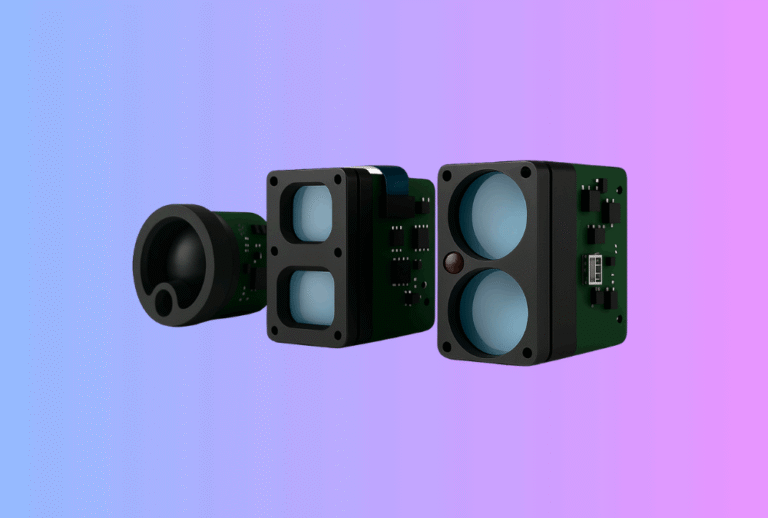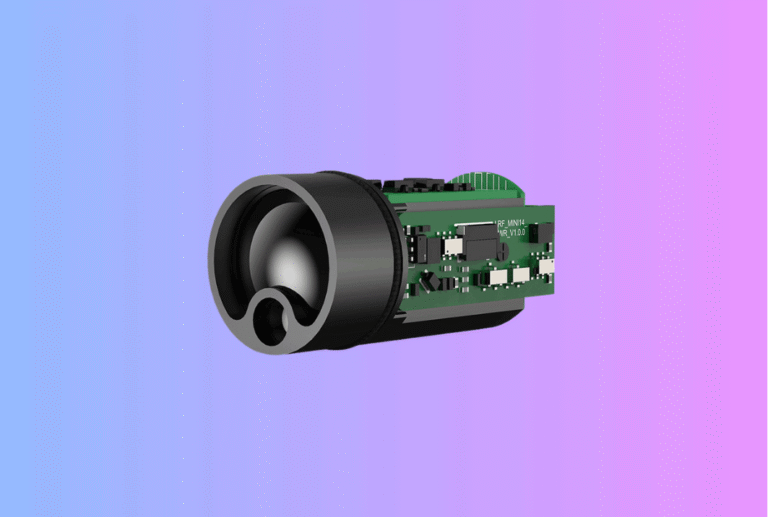
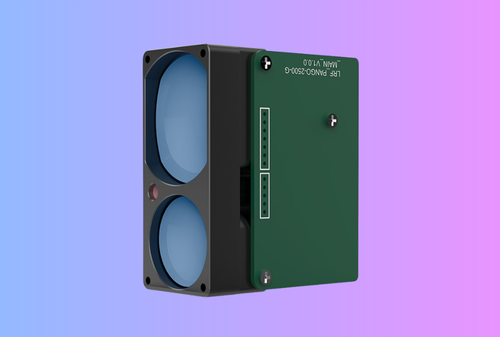
A laser rangefinder module shock and vibration retention guide is one of the most important documents an OEM team can create, because many products do not fail when they are first assembled. They fail after they are moved, shipped, vibrated, dropped slightly, mounted to a dynamic platform, or used repeatedly in the real world. In those cases, the module may still power on, still communicate, and still return distance values, yet the final product becomes harder to trust because it no longer retains the geometric, optical, electrical, or mechanical condition it had when it first passed validation.
Table of Contents
ToggleThat is why shock and vibration should not be treated as a narrow reliability checkbox. In a serious OEM laser rangefinder program, the real question is rarely only “does the hardware survive.” The more important question is “what exactly does the product still retain after the mechanical event.” A system may survive vibration electrically but lose boresight confidence. It may survive transport structurally but develop cable-routing sensitivity. It may remain visually intact while a front window seating condition changes just enough to affect signal margin or alignment. It may pass a basic functional check after shock and still become less consistent in difficult scenes.
This is what makes retention such an important word. The OEM team is not only validating survival. It is validating the ability of the product to preserve its intended state through shock, vibration, repeated handling, transport, mounting stress, and real deployment. Without that discipline, many field complaints appear late, vaguely, and expensively. The product does not seem catastrophically broken. It simply no longer feels dependable. In B2B products, that is often worse.
Why retention matters more than simple survivability
A great many product-validation discussions use the language of pass or fail. Either the product still works after vibration, or it does not. Either the module powers back up after shock, or it does not. That logic is too simple for laser rangefinder products. In most OEM systems, the more meaningful issue is whether the product still behaves the same way after the event as it did before.
A platform may pass a post-vibration communication check and still have lost a meaningful amount of boresight agreement. It may pass an output check and still have higher susceptibility to future cable movement. It may appear fine on a simple large target and become much worse on small targets because the retained geometry is no longer as precise. It may remain acceptable in a clean bench condition but become less stable in the full product because grounding contact, shielding behavior, or front-window seating changed slightly.
So when OEM teams talk about shock and vibration performance, they should not ask only whether the module survived. They should ask what functions, relationships, and margins the product retained afterward. Survival is the minimum threshold. Retention is what determines field confidence.
Mechanical shock and vibration affect more than one layer of the system
One reason this topic is frequently underestimated is that teams often think of mechanical stress as a purely structural question. In reality, shock and vibration affect multiple layers of the final product at once. They can influence the optical path, the relative geometry of sensors, the seating of the front window, cable routing stability, connector retention, ground contact behavior, enclosure stress, adhesive performance, and sometimes even long-term serviceability.
This multi-layer effect is especially important in products that integrate a laser rangefinder module with visible or thermal channels, mount the module behind a window, or place it inside moving platforms such as UAV payloads, PTZ systems, vehicle products, portable tools, or outdoor field devices. In such systems, a small mechanical change may not be visible from outside, but it can still move the product enough to affect user trust.
That is why shock and vibration should not be reviewed in isolation from alignment, moisture behavior, EMC behavior, and host-platform logic. A module can be mechanically secure in one sense and still become operationally weaker because the mechanical event changed another subsystem relationship that the user depends on.
Why field complaints often appear late after transport or deployment
Many shock and vibration issues do not appear during development in a dramatic way. Instead, they appear late, after transport, after repeated mounting, after a few weeks on a platform, after service disassembly and reassembly, or after a sequence of small mechanical stresses that individually seem harmless. This makes them difficult to diagnose because the product often worked earlier in the project and still appears mostly alive later.
Users rarely report these cases with precise mechanical language. They do not say the optical axis shifted by a small angle or that a grounding contact became marginal after repeated vibration. They usually say the product seems less consistent, seems to target the wrong thing sometimes, behaves differently after being moved, or became sensitive after travel. In many organizations, such complaints get sent immediately toward optics, calibration, or firmware. Sometimes that is justified, but very often the root issue is retention loss after mechanical stress.
This is why transport history, platform history, and handling history should be part of serious OEM troubleshooting. If the product began to feel wrong only after shipping, field deployment, UAV integration, vehicle installation, or repeated tripod and bracket use, the team should consider a retention problem early rather than only as a last possibility.
Boresight retention is one of the most important post-vibration questions
For many laser rangefinder products, the most important function to preserve through shock and vibration is not just measurement availability. It is boresight alignment. A laser rangefinder module can remain fully functional internally and still become much less useful if the laser path and the user’s aiming reference no longer agree after transport or vibration.
This is especially important in products where the rangefinder is paired with thermal or EO channels, reticles, crosshairs, or user-targeting overlays. A small shift that is easy to overlook on a large nearby target can become a serious field problem on a distant or narrow target. The product still returns distance, but it may no longer be returning the distance to the object the user believes was selected.
That is why shock and vibration qualification should include more than a quick post-test power check. It should ask whether the relationship defined in the Laser Rangefinder Module Boresight Alignment Guide is still preserved afterward. In many products, this is the single most important retained function. If boresight confidence is lost, the product may remain technically alive yet practically weakened.
Mounting architecture determines how well the product resists drift
Shock and vibration retention usually begin with the physical architecture of the mount. A mounting concept that looks secure in static assembly may still be poor under mechanical stress if it allows micro-motion, concentrates load in the wrong place, transmits force into sensitive optical structures, or creates too much dependence on variable fastener behavior.
A good mount does more than prevent obvious movement. It defines repeatable seating, controls how forces travel through the product, reduces the chance of creep or loosening, and avoids making alignment depend on fragile adjustment conditions. In many OEM products, the mount is also responsible for how the laser rangefinder module relates to the thermal or EO channel, which means its behavior under shock or vibration affects more than one subsystem.
This becomes even more important when the system uses brackets, adhesive joints, shim structures, adjustable features, or thin front-end carriers. A mount may appear rigid while still being poor at long-term retention. Conversely, a mount with slight flexibility in the right places may protect the module better than a mount that is overly stiff in a harmful way. The real design question is not only how hard the mount holds. It is how predictably it holds the intended geometry over time and stress.
Window seating and front-end structures can move without obvious damage
In many products, the front window or optical cover is treated mainly as a protection part. Under shock and vibration, however, the front-end assembly often becomes one of the most important hidden variables. A window can remain visually intact while its seating, stress condition, or angle changes enough to matter. A bezel can remain attached while the optical geometry beneath it becomes slightly less stable. A sealing structure can remain apparently closed while local stress changes the behavior of the front end.
These changes are especially dangerous because they are easy to miss in quick inspection. The product may show no obvious crack, no dramatic looseness, and no complete function loss. Yet the combination of slight window shift, altered stress distribution, or changed front-end contact can reduce optical margin, introduce alignment uncertainty, or make moisture and contamination behavior worse later.
This is why front-end structures should be part of any serious retention discussion. The earlier Laser Rangefinder Module Window Cleaning Guide and anti-fog content remain relevant here because a front end that is mechanically weakened may later become more vulnerable to contamination, fogging, or subtle signal degradation as well.
Cables, connectors, and grounding paths often become marginal after vibration
One of the most common but least glamorous retention failures appears in the electrical path rather than the optical path. A product may survive shock and vibration without losing hard connectivity, yet a cable may move into a more sensitive routing position, a connector may become slightly less stable, or a grounding or shielding contact may become more variable than before. The resulting behavior often shows up as intermittent resets, mode-sensitive instability, or communication irregularity rather than obvious hardware breakage.
This is why the retention question should include not just “does the connector stay plugged in?” but “does the full electrical path still behave with the same margin afterward?” A cable harness that works on a bench can become a vibration amplifier if its strain relief is weak. A connector that remains seated can still become more sensitive to dynamic movement. A ground path that was adequate before stress may become noisy later if the contact conditions change.
This directly connects to the earlier Laser Rangefinder Module EMI and EMC Guide. In real field products, some EMC complaints are actually retention complaints in disguise. The platform did not suddenly become electrically noisy by design. It became less robust because mechanical events weakened the stability of its electrical environment.
Adhesives and shims can create delayed retention problems
Many precision products rely partly on adhesives, shims, compressive stacks, or constrained interfaces to achieve alignment and packaging goals. These can work well, but they also create a special retention risk if the mechanical design depends too heavily on materials or geometries that change slowly after stress, temperature cycling, or repeated vibration.
An adhesive joint may not fail openly, but its local creep behavior may change after shock. A shimmed assembly may remain in position during initial test but become more sensitive after transport. A compressive stack may relax slightly over time, turning a previously good alignment state into a marginal one. None of these changes necessarily produce instant failure. They produce delayed trust loss.
That is why shock and vibration retention should consider not only immediate damage but also post-event stability. The key question is not simply what moved during the test. It is what will continue to move or relax after the test, and what that means for boresight, optical path, and electrical margin later in field use.
Platform type changes the retention problem
Not all laser rangefinder products experience shock and vibration in the same way. A handheld outdoor product sees transport, user handling, and occasional impact. A UAV payload sees repeated vibration, airframe dynamics, landing shocks, and limited structural mass. A PTZ system sees repeated motion cycles, cable motion, and environmental exposure. A vehicle-mounted platform sees broadband vibration, transport shock, mounting stress, and long-term structural fatigue.
This matters because the right retention strategy depends strongly on platform type. The same module can behave differently in each of these environments even if its internal design is unchanged. A structure that retains alignment well on a static tripod may not retain it in a UAV. A cable routing concept that works in a handheld product may become poor in a pan-tilt head. A front-end design that survives shipping may still lose confidence after months on a marine mast or utility vehicle.
So OEM teams should not validate the module in generic mechanical terms only. They should ask what real stress profile the finished platform will impose and whether the retention strategy is specific to that reality.
Transport is often the first real shock event the product sees
In many programs, the first significant mechanical exposure is not field use. It is transport. Samples, pilot units, and early production units may travel by courier, air freight, field hand-carry, or internal logistics before the platform ever enters normal use. If the product loses confidence after that journey, the user will often experience the problem before the engineering team ever sees it.
This is why transport should not be treated as a non-engineering event. Packaging, mechanical support, front-end protection, connector protection, and how the internal assembly reacts to handling all matter. A product that ships repeatedly between teams, sites, and customers without controlled retention is already showing part of its real product character.
Transport-induced change is also one of the reasons field complaints can appear so confusing. The product may have been approved in-house, then sent to a field team, then reported as inconsistent. When it comes back to engineering, the exact original transport stress is rarely recreated. This is one reason structured packaging and post-transport verification deserve more respect than they often receive.
Shock and vibration can expose weak calibration assumptions
A product with a weak retention design often becomes overly dependent on calibration or one-time setup. It may look correct immediately after build because it was adjusted carefully, but once the assembly is stressed, the underlying geometry is not stable enough to preserve that calibrated state. The result is a product that appears to “drift” even though the deeper issue is mechanical retention.
This is why calibration should not be used to hide weak shock and vibration behavior. The right sequence is to build a structure that can hold its intended state, then use calibration to refine or confirm that state. If the structure does not retain the alignment or optical relationship under realistic mechanical stress, then the calibration model is being asked to carry too much of the product’s burden.
This connects naturally to the earlier Laser Rangefinder Module Calibration Guide. A good calibration policy assumes the geometry is basically stable. If it is not, then more and more field complaints will be misread as calibration cases when they are really retention cases.
Validation should check before and after, not just after
A weak mechanical-validation habit is to perform a stress event and then ask whether the product still works afterward. A stronger habit is to compare a meaningful before-and-after state. In retention work, that difference matters a great deal.
The product should not only be checked for post-test function. It should be checked for post-test change. Did the boresight shift? Did the response timing change? Did communication become more sensitive? Did the front-end optical path show new weakness? Did the product become noisier or more variable under the same target conditions? Did any mounting or cable-related behavior become less repeatable?
This is important because the most expensive field failures often come from products that still pass simple go/no-go checks but no longer behave the same way they did before the event. A before-and-after mindset is therefore one of the clearest ways to make shock and vibration validation more meaningful for real OEM products.
Retention should be part of pilot, not only qualification
Many teams treat shock and vibration as a later qualification step, but retention thinking really belongs much earlier. By pilot build stage, the OEM team should already know where the product is structurally sensitive, which relationships matter most after stress, and what quick checks can reveal early retention weakness.
Pilot is the right time to learn whether the design is robust enough to scale. It is much cheaper to discover a weak mount, poor cable strain relief, unstable window seating, or fragile alignment architecture during pilot than after production release. It is also easier to decide which characteristics need tighter production control once the team understands what the mechanical stress path actually threatens.
This is why retention should sit naturally alongside the Laser Rangefinder Module Pilot Build Readiness Checklist. The product is not truly pilot-ready if it only works in static assembly and has no evidence of mechanical-state retention.
Production control should protect retention-critical features
A product that is only marginal in retention will become much more variable in production if the build process is loose. Small differences in torque, seating, adhesive amount, shim condition, cable routing, front-window mounting, or bracket position can have a larger effect once the product is exposed to shock and vibration. That means production control should explicitly protect the features that matter most to retention.
For some products, those features are alignment datums. For others, they are strain relief, connector support, front-end stack control, bracket geometry, or screw sequence. The important point is that the OEM team should know which build attributes most affect retained performance and make sure those are controlled in release logic.
This is where the Laser Rangefinder Module End-of-Line Test Strategy becomes highly relevant. EOL cannot fully simulate life, but it can protect the product from shipping with avoidable weakness in the very features that mechanical stress will challenge later.
Failure analysis should ask whether a mechanical event changed the state
When field complaints involve trust loss after shipping, deployment, UAV mounting, vehicle use, PTZ cycling, or servicing, the analysis team should ask a direct question early: did a mechanical event change the system state the product was supposed to retain?
This is an important shift in thinking. Instead of asking only “what failed?” the team asks “what relationship changed?” Did boresight move? Did the front window or housing relationship change? Did cable routing or ground contact become more sensitive? Did the product lose the stability it had at release? These questions often lead to better diagnosis than immediately replacing the module.
This is one of the reasons the Laser Rangefinder Module Failure Analysis Guide and the current topic are so closely linked. In many OEM products, mechanical retention failure is not the first explanation that teams reach for, but it should often be much earlier in the analysis tree.
What OEM buyers should ask suppliers
A buyer evaluating a laser rangefinder module for a dynamic or field-deployed system should ask more than whether the product passes a vibration test. Useful questions include these. What alignment relationships are most sensitive to shock and vibration? How is the module mounted relative to critical datums? What front-end structures are most likely to affect retained performance? What cable and connector practices matter most after vibration? What kind of pre- and post-stress checks are recommended? What transport-related complaints are commonly seen? Which features should be treated as retention-critical in production?
These questions are valuable because they help the buyer distinguish between nominal survivability claims and real integration maturity. A supplier that understands retention can usually discuss geometry, mounts, windows, cables, and service consequences together rather than as isolated topics.
A practical review framework for OEM teams
Many teams manage retention more effectively when they structure it before final design release.
| Review area | What the OEM team should confirm | Why it matters |
|---|---|---|
| Alignment retention | Boresight and channel relationship survive mechanical stress | Users notice trust loss faster than total failure |
| Front-end stability | Window and housing structures do not shift into weaker optical states | Small front-end changes can cause large field effects |
| Electrical retention | Cables, connectors, shields, and grounding remain robust after motion | Some “EMC problems” begin as retention problems |
| Mount architecture | The module seats and stays in a predictable way under stress | Weak mounts amplify later variation |
| Transport readiness | Packaging and handling do not create invisible state changes | Shipping is often the first real shock event |
| Before/after validation | The team checks change, not only simple survivability | Products often degrade before they fully fail |
| Production discipline | Retention-critical build features are protected | Loose build process weakens field margin quickly |
This kind of framework helps the team treat shock and vibration as a retained-performance topic rather than a pass/fail mechanical checklist.
Final thought
A laser rangefinder module shock and vibration retention guide is really a guide to keeping the product in the state the user expects after the world touches it. It explains why simple survivability is not enough, why retained geometry and retained confidence matter more than many teams realize, and why shock and vibration should be linked to alignment, windows, EMC, packaging, and service rather than treated as a narrow mechanical topic.
For suppliers, this is a chance to show that they understand real platform life instead of only bench life. For buyers, it is a way to reduce the late, vague, trust-damaging complaints that appear after transport and deployment. And for the finished product, it is one of the clearest examples of how durability is not only about staying alive, but about staying the same in the ways that matter.
FAQ
Why is shock and vibration retention more important than simple survivability?
Because a product can remain electrically alive after stress and still lose boresight, optical margin, cable stability, or grounding consistency. The user notices that loss of trust even when the hardware still powers on.
Can transport alone create retention problems?
Yes. Shipping and handling are often the first significant mechanical stresses the product sees, and they can change alignment, front-end behavior, or cable stability before field deployment even begins.
Why do some vibration problems look like EMC or calibration problems?
Because mechanical stress can weaken cable routing, grounding contact, or retained geometry. The visible symptom may be electrical instability or apparent drift even though the deeper cause is retention loss.
What is the best way to validate retention?
Use before-and-after comparisons that check meaningful relationships such as boresight, signal stability, and interface robustness, not only whether the product still powers on after the event.
CTA
If your OEM product uses a laser rangefinder module in a portable, mobile, UAV, PTZ, vehicle, or otherwise mechanically dynamic platform, shock and vibration retention should be designed into the product from the start. You can discuss your application with our team through our contact page.
Related articles
You may also want to read:
- Laser Rangefinder Module Boresight Alignment Guide
- Laser Rangefinder Module EMI and EMC Guide
- Laser Rangefinder Module Failure Analysis Guide
- Laser Rangefinder Module End-of-Line Test Strategy