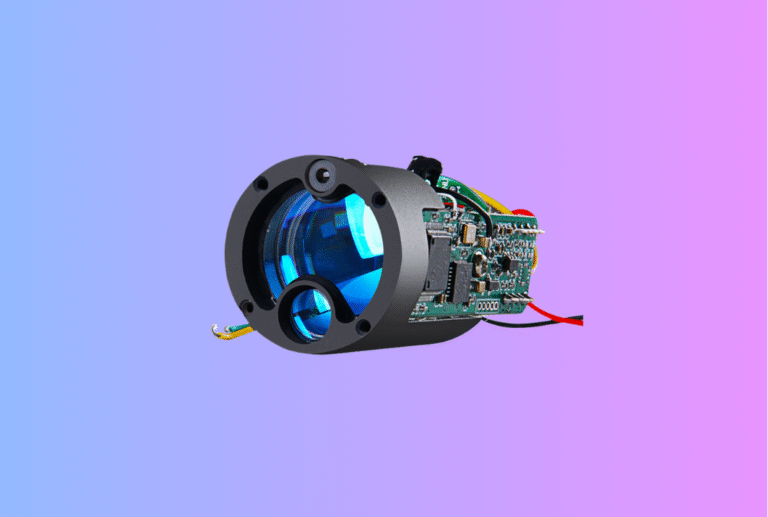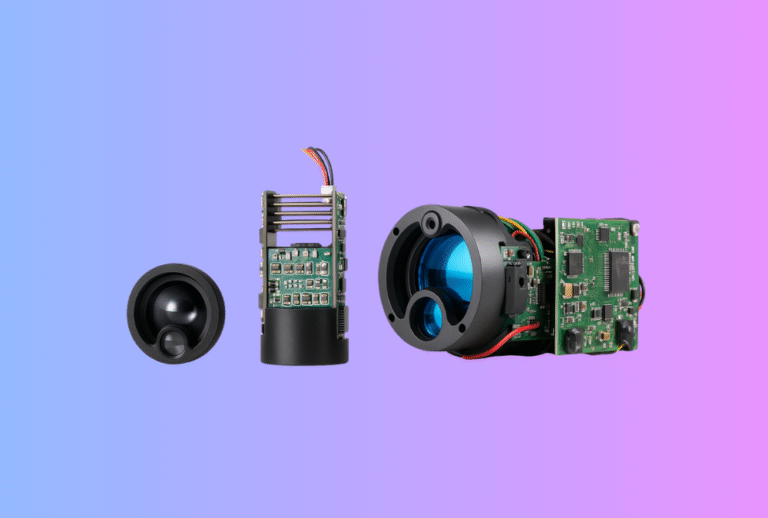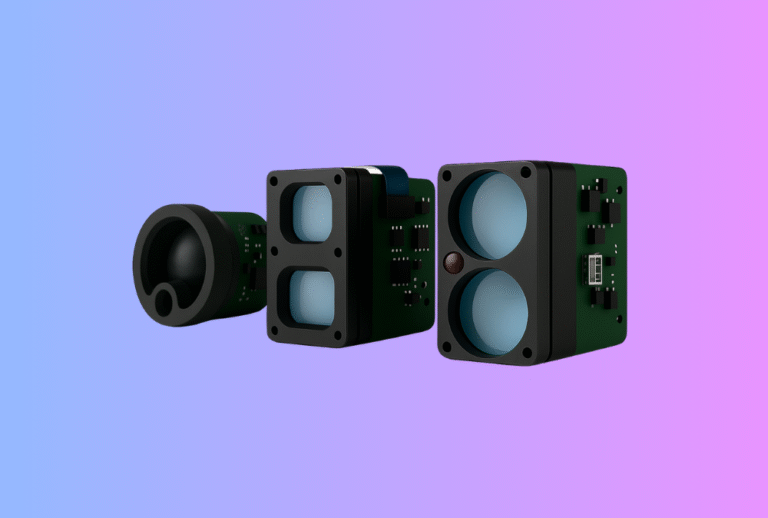
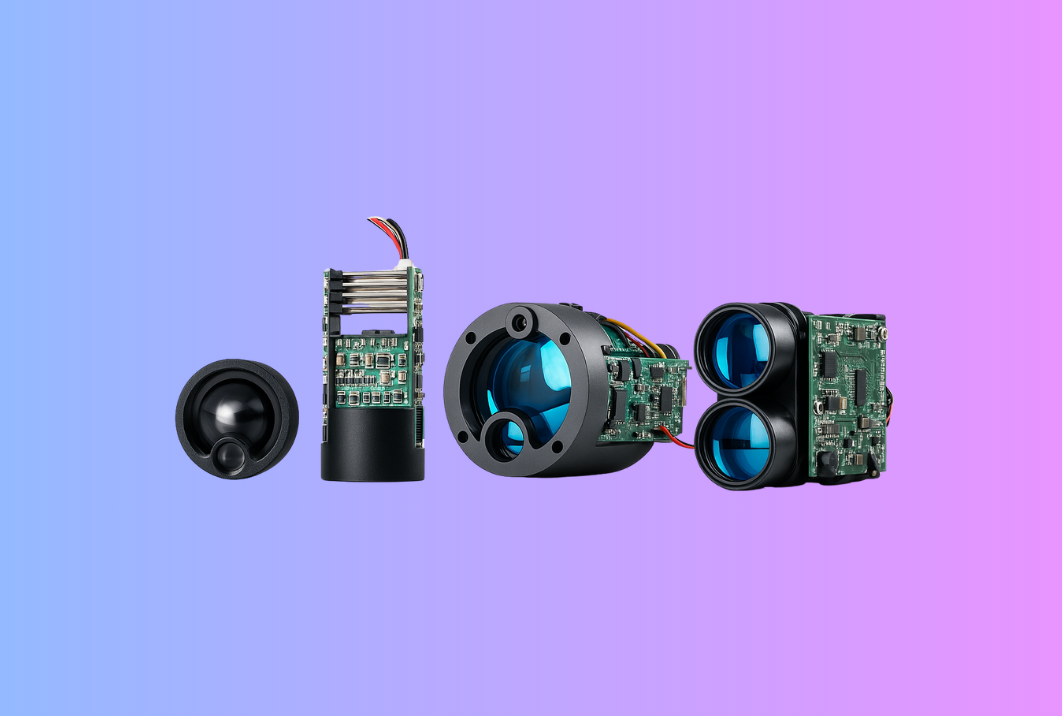
A laser rangefinder module documentation pack for OEM projects is not just a collection of files sent before an order. In a serious B2B program, it is one of the clearest indicators of whether the supplier understands real OEM work or is only prepared for sample-level selling. A module can look competitive on price, size, and nominal performance, but if the documentation is weak, the project will almost always become slower, more expensive, and harder to control once engineering, pilot build, quality approval, and field service begin.
Table of Contents
ToggleThis matters because OEM projects are not won only by a good part number. They are won by reducing uncertainty. Engineering teams need to know how to integrate the module. Quality teams need to know how to verify it. Purchasing teams need to know what configuration is stable. Manufacturing teams need to know what is controlled. Service teams need to know how to distinguish normal use issues from true faults. None of that can be handled cleanly if the documentation pack is incomplete, inconsistent, or immature.
That is why a documentation pack should be treated as part of the product itself. It is not a side deliverable. It is one of the main ways the supplier proves that the module can move from quotation to pilot, from pilot to mass production, and from shipment to after-sales support without creating constant ambiguity. In many OEM programs, documentation maturity becomes the difference between a supplier that is technically possible and a supplier that is commercially usable.
Why documentation matters so much in OEM programs
A laser rangefinder module may be technically strong and still cause project friction if the supporting documents do not match the real work the customer needs to do. In OEM projects, the customer is not simply buying a finished off-the-shelf device and using it unchanged. They are integrating the module into a larger product, with their own mechanical structure, electrical system, front window, firmware logic, production flow, regulatory obligations, and service expectations. That means the supplier is not only providing hardware. The supplier is also providing clarity.
A good documentation pack reduces repeated questions, avoids incorrect assumptions, and helps different teams inside the customer organization work from the same reference. Engineering, sourcing, quality, manufacturing, and after-sales do not all need the same depth of detail, but they do need a consistent package that describes what the module is, how it behaves, how it should be handled, what is controlled, and what can change.
This is especially important for laser rangefinder modules because they sit at the intersection of optics, mechanics, electronics, firmware behavior, environmental robustness, and system integration. If documentation maturity is weak, the customer ends up discovering critical information through delay, rework, and field issues instead of through controlled project planning.
A documentation pack is a project-control tool, not just a reference folder
Many suppliers think of documentation as a static archive. They provide a datasheet, maybe a drawing, perhaps a quick command description, and consider the requirement basically complete. That is not how OEM customers experience documentation. For them, the documentation pack is a project-control tool.
A useful pack helps teams answer specific operational questions. Which module revision are we buying? Which dimensions are controlled? Which interface behavior is final and which is still subject to change? What are the recommended operating assumptions? What should incoming inspection verify? What should be tested again after integration? Which service actions are allowed? Which changes would trigger a revalidation need? These are not marketing questions. They are the questions that determine whether the program stays controlled once real work starts.
This is why a mature documentation pack should be organized around project use, not only around product description. It should help the customer move through selection, design, pilot, validation, production, and service with less ambiguity at each stage.
The datasheet is necessary, but it is never enough
The datasheet is usually the first document the buyer asks for, and it is obviously necessary. But in OEM projects, it is never enough by itself. A datasheet is typically a condensed product summary. It gives the customer a general view of dimensions, power, interface, operating range, and key features. That is useful for screening. It is not enough for integration control.
The problem is that many project-critical details do not fit well inside a simplified datasheet. Tolerances may need a separate drawing. Interface timing may need a protocol note. Validation assumptions may need a test plan. Versioning rules may need a change-control note. Incoming inspection may need a checklist. Environmental behavior may require more explanation than a small table can provide. If the supplier tries to compress the full OEM support need into the datasheet alone, the result is usually either incomplete or vague.
So the right way to think about the datasheet is as the first layer of the documentation pack, not the complete pack. It opens the door, but it should not be expected to carry the whole project.
The core technical documents every serious OEM customer expects
A mature laser rangefinder module documentation pack usually starts with a core technical set. This set should be stable, internally consistent, and version-controlled. At minimum, most serious OEM customers expect the following categories.
First is the product datasheet, which defines the general performance envelope and main characteristics. Second is the mechanical drawing package, including outline dimensions, mounting features, reference datums where applicable, connector position, and critical tolerances. Third is the electrical interface description, covering power input, I/O definitions, logic assumptions, startup behavior, and protection considerations. Fourth is the communication or command document, explaining how the host should talk to the module, what responses mean, and how abnormal interface conditions should be interpreted. Fifth is an operating-environment summary, explaining the intended temperature, humidity, storage, and handling boundaries.
These are the minimum technical documents that allow an OEM team to begin controlled integration work. Without them, the customer is forced to guess too much, and guessed integration is usually expensive integration.
Mechanical drawings must support real integration, not only quoting
In many supplier packages, the drawing set is good enough for quotation but not good enough for engineering. That is a problem. OEM customers do not need only approximate size. They need integration-grade geometry information.
A useful mechanical drawing package should do more than list length, width, and height. It should identify mounting surfaces, critical datum relationships, connector and cable exit geometry, keep-out zones where needed, and the tolerances that matter for fit and alignment. If the module is likely to sit behind a front window or to be aligned with visible or thermal channels, then the customer may also need clearer reference information about how the module geometry relates to the optical axis or integration plane.
This is especially important because many later project disputes come from mechanical assumptions made too early. If the drawing package is vague, the customer may design around an incomplete understanding, and the correction cost later will be much higher than the cost of better documentation at the beginning.
This is also why the current topic connects strongly to the Laser Rangefinder Module Boresight Alignment Guide and Laser Rangefinder Module Multi-Sensor Alignment Guide. Mechanical documentation and alignment confidence are closely linked.
Interface documents should explain behavior, not only pin names
Another common weakness in documentation packs is that the interface file lists pin names and voltage levels but does not explain how the module actually behaves. For OEM work, that is not enough. The host team needs to understand behavior, timing, and abnormal-case handling.
A mature interface package should explain at least these points clearly. What is the expected startup state? When is the module ready to receive commands? What response timing should the host expect under normal conditions? How should busy states be interpreted? What are the retry expectations? What happens after reset, power interruption, or wake-up? What response classes indicate invalid input, temporary unavailability, or real faults? These are exactly the questions that determine whether the host will integrate cleanly or create fragile software around the module.
That is why the interface section of the documentation pack should align with the logic described in the Laser Rangefinder Module Host Interface Error Handling and Recovery Guide. A good protocol document is not only a list of commands. It is a reliability-support tool.
Optical and front-end assumptions should be documented explicitly
Laser rangefinder module integration is frequently weakened because optical assumptions remain informal. The supplier may know that front-window quality matters, that contamination affects performance, that boresight is sensitive to mounting, or that certain target behaviors are scene-dependent, but if these assumptions are not written down, the OEM customer may not fully respect them during design.
A strong documentation pack should therefore state the most important optical assumptions explicitly. Does the module expect a clean, controlled front window? Are there window material or coating considerations? Are there mounting or alignment sensitivities that affect target confidence? Are certain target classes more difficult? Does moisture behavior need to be managed carefully in the final product? What service handling should be avoided around the front end?
This does not mean every pack needs a full optical textbook. It means the documents should make clear where the product’s final behavior depends on the OEM system architecture, not only on the core module. That clarity saves time later because it helps the customer avoid designing a preventable field problem into the product.
Test documents are what turn hardware into a manageable project
One of the strongest signs of documentation maturity is the presence of good test-oriented documents. Many suppliers provide specifications, but far fewer provide a useful testing framework. For OEM customers, however, testing documents are often what turn a promising sample into a manageable program.
A mature documentation pack should support at least three different testing moments. It should support incoming inspection, integration validation, and production release logic. These may not all require separate full documents, but the information should exist clearly. The customer needs to know what is worth checking when the module arrives, what must be rechecked after integration into the final product, and what kinds of acceptance conditions matter before product release.
This is why content such as the Laser Rangefinder Module Acceptance Test Plan, Laser Rangefinder Module Environmental Test Plan, and Laser Rangefinder Module End-of-Line Test Strategy fit naturally into documentation-pack thinking. A serious supplier may not always deliver full customer-specific test plans up front, but it should at least provide a coherent testing philosophy and the records needed to support it.
Quality documents matter because buyers need confidence before scale
The importance of quality documents increases sharply once the project moves from sampling into pilot or production. At that point, the customer is no longer asking only “can the module work.” They are asking “can this supplier control the module repeatedly.”
A useful quality portion of the documentation pack should typically include basic quality and traceability logic. This may involve serial traceability method, lot identification, version control approach, outgoing inspection structure, handling of nonconforming units, and where relevant, summaries of calibration or controlled process logic. The exact depth depends on the project, but the principle is consistent: the buyer needs evidence that the module is not only individually functional but also controllable across lots.
This is especially important in OEM programs because one of the biggest hidden costs is inconsistency. A single good engineering sample proves very little if the product behavior cannot be repeated. Documentation is what helps the customer judge whether repeatability is likely to be real.
Change control documents are essential in long-running OEM projects
A weak documentation pack usually treats the product as if it will remain static forever. Real OEM projects rarely behave that way. Components change, firmware evolves, process adjustments happen, drawings are revised, and supply-chain substitutions may be considered. None of these realities are automatically a problem. The real problem appears when changes happen without clean documentation boundaries.
That is why a mature documentation pack should include a clear change-control philosophy. The customer should understand how revisions are identified, what types of changes are likely to trigger notification, how engineering changes are communicated, and how configuration differences are marked in the records. In some programs this may take the form of PCN logic, revision history, or controlled release notes. In others it may be simpler. But the principle remains the same.
This topic connects directly to the broader project-management logic already reflected in your warranty, lead-time, pilot, and supplier-scorecard content. A supplier that does not document change well will create avoidable risk even if the hardware is good.
Production-support documents become critical before pilot and mass production
Once the project approaches pilot or MP, the customer needs more than design reference files. They need production-support clarity. That includes how the module should be handled on the line, what build conditions matter, how the module should be inspected on receipt, what conditions should trigger quarantine, and what assumptions must remain true in the final product architecture.
In many cases, a good production-support section of the documentation pack also needs to clarify what the module supplier controls and what the OEM now controls. For example, the supplier may control the core calibration state, but the OEM controls final front-window behavior. The supplier may define startup timing, but the OEM controls how the host sequence is implemented. The supplier may define environmental boundaries for the module, but the OEM controls how the housing helps or hurts those boundaries. A mature documentation pack makes those boundaries easier to understand.
This is one reason the Laser Rangefinder Module Pilot Build Readiness Checklist is so relevant here. Documentation maturity is part of pilot readiness, not only a paperwork issue after the product is already frozen.
Service documents are part of the pack, not an afterthought
Many suppliers think of documentation as something that ends when the product ships. OEM customers do not experience it that way. Once the module enters the field, service and failure diagnosis become part of the product value. That means the documentation pack should include at least a basic service-support layer.
This may include handling cautions, approved cleaning rules, basic troubleshooting logic, common symptom boundaries, RMA intake expectations, and where appropriate, guidance on what the customer should verify before concluding there is a module fault. In more advanced projects, the supplier may also provide structured failure-screening guidance, service data collection requirements, or field-verification instructions.
This is exactly why the current topic connects to the Laser Rangefinder Module Failure Analysis Guide and the Laser Rangefinder Module Warranty, RMA and Service Policy for OEM Programs. A documentation pack that stops at shipment is not enough for real OEM programs.
Documentation should match the phase of the project
A good documentation pack is not always static across the whole project. Early in the relationship, the customer may need a lighter package to screen the opportunity. As the project moves forward, the depth should increase. By pilot build and before MP, the pack should be much more controlled and complete.
This does not mean suppliers should overwhelm every first inquiry with every internal file. It means the supplier should know what a phase-appropriate package looks like. For early screening, that may be a datasheet, a preliminary drawing, and a high-level interface overview. For engineering engagement, it may expand into detailed drawings, protocol definitions, and basic test guidance. For pilot and production, it should add controlled revisions, test support documents, quality logic, and change-control discipline.
This staged approach is useful because it keeps the documentation practical without making it shallow. It also signals professionalism. The supplier shows that they understand how OEM work matures rather than treating every customer at every stage as if they need exactly the same file set.
Inconsistent documents are worse than missing documents
A hard truth in OEM work is that a pack full of inconsistent documents is often more dangerous than a thinner but internally consistent pack. If the drawing revision does not match the datasheet, the protocol note does not match actual module behavior, and the test assumptions do not match the latest release, then the customer loses trust quickly. Worse, they may continue integrating around the wrong information.
This is why documentation governance matters almost as much as documentation content. Revisions should be clear. Deprecated files should not continue circulating without warning. Titles, dates, and version identifiers should be traceable. When a file is updated, the supplier should understand what else in the pack is now affected.
This sounds administrative, but in practice it is deeply technical. Mismatched documentation creates mismatched integration. Mismatched integration creates cost. In B2B OEM programs, avoidable ambiguity is one of the fastest ways to turn technically possible business into operationally weak business.
A documentation pack should help the buyer ask better questions
One subtle but important function of a strong documentation pack is that it improves the quality of the buyer’s questions. Weak documentation causes repetitive, shallow, reactive questions. Strong documentation causes better, more project-relevant questions. Instead of asking only “what is the range,” the customer starts asking “how should the front window be handled,” “which state must be revalidated after reset,” “what build feature is critical to boresight retention,” or “what change would trigger requalification.” Those are the questions of a stronger OEM program.
This matters because the supplier-customer relationship improves when both sides are discussing the real project risks rather than repeatedly clearing up preventable ambiguity. Documentation therefore is not only informative. It is catalytic. It raises the level of the whole project conversation.
What OEM buyers should expect in a mature documentation pack
A practical way to judge documentation maturity is to ask whether the pack supports the main decisions the customer needs to make. Can engineering integrate from it? Can quality verify from it? Can manufacturing control from it? Can service classify faults from it? Can purchasing understand revision stability from it? Can project management understand what is likely to change and what is controlled?
If the answer is no for several of those groups, the pack is not mature enough yet, even if a datasheet exists. For most serious OEM buyers, the goal is not maximum file count. The goal is a coherent package that reduces uncertainty across the entire product lifecycle.
A practical review framework for OEM teams
Many teams find it easier to structure documentation maturity into a review table.
| Document area | What the pack should provide | Why it matters |
|---|---|---|
| Product definition | Datasheet, version identity, general spec boundaries | Establishes the commercial and technical baseline |
| Mechanical package | Drawings, datums, mounting and connector information | Supports real integration rather than approximate quoting |
| Electrical and interface package | I/O, power, protocol, timing, abnormal-case behavior | Allows the host system to integrate reliably |
| Optical and environmental assumptions | Window, contamination, alignment, environmental use boundaries | Prevents false assumptions about final product behavior |
| Test and quality support | Acceptance logic, outgoing records, traceability approach | Enables controlled validation and scaling |
| Change control | Revision history, notification logic, controlled updates | Reduces risk in long-running OEM programs |
| Service support | Handling, troubleshooting, RMA-related guidance | Improves field diagnosis and after-sales clarity |
This kind of structure helps both supplier and buyer treat documentation as a product-enablement system rather than a loose folder of files.
Final thought
A laser rangefinder module documentation pack for OEM projects is really a package of controlled clarity. It explains what the module is, how it should be integrated, how it should be verified, how it may change, and how it should be supported after shipment. When that clarity is strong, the project moves faster with less friction. When it is weak, teams spend time rediscovering what the documents should have made obvious.
For suppliers, this is a chance to prove that they are not only selling hardware but supporting a real OEM lifecycle. For buyers, it is a way to reduce integration ambiguity, quality risk, and service confusion before those problems become expensive. And for the project as a whole, it is one of the clearest examples of how professional documentation is not bureaucracy. It is one of the most practical forms of engineering support.
FAQ
Is a datasheet enough for an OEM laser rangefinder module project?
No. A datasheet is necessary, but it is only the first layer. OEM projects usually also need drawings, interface documents, testing support, quality logic, and service-related clarity.
What is the biggest documentation mistake suppliers make?
Providing incomplete or inconsistent documents. A pack with mismatched revisions and vague assumptions often creates more risk than a smaller but well-controlled pack.
Should documentation change as the project matures?
Yes. Early-stage screening may need a lighter set, while engineering, pilot, and production stages require a much more controlled and complete package.
Why should service information be part of the documentation pack?
Because OEM projects do not end at shipment. Service teams need structured guidance to separate misuse, integration issues, and real module faults efficiently.
CTA
If your OEM project needs a laser rangefinder module supplier who can support engineering, quality, production, and service with a more complete documentation pack, you can discuss your application with our team through our contact page.
Related articles
You may also want to read: